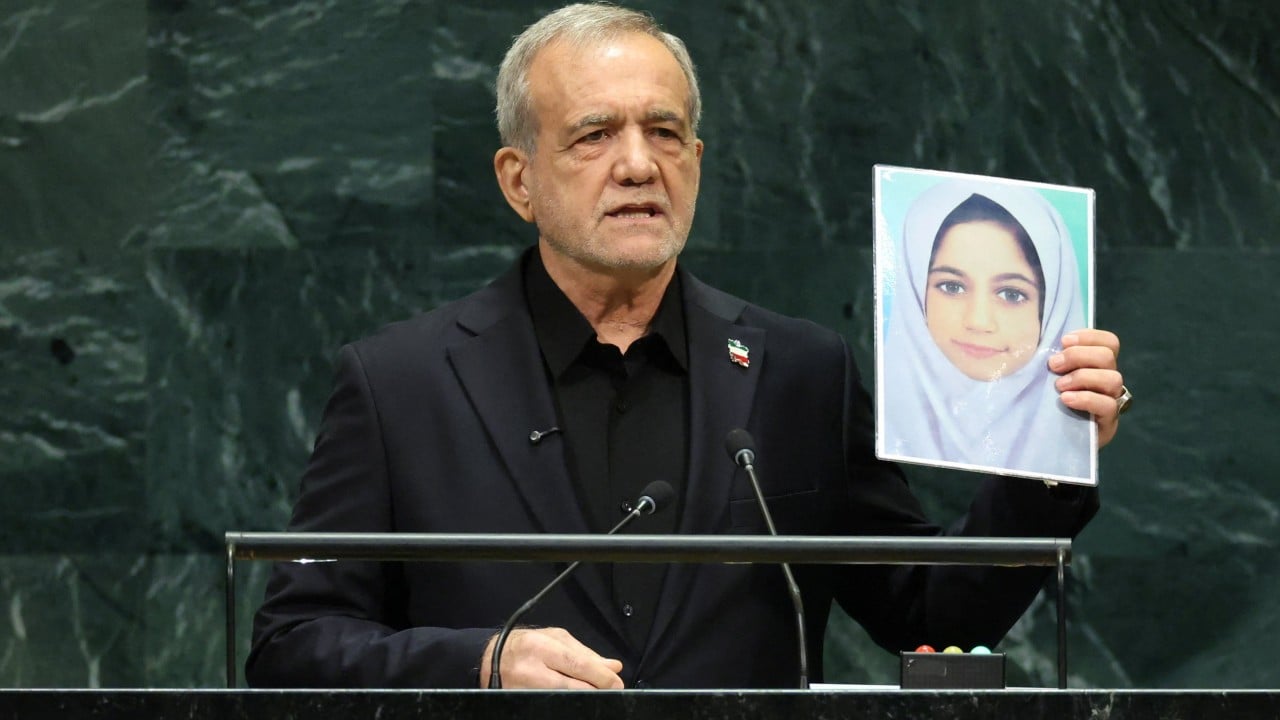
When Iranian President Masoud Pezeshkian stepped up to the podium at the United Nations General Assembly, he didn't waste time with diplomatic pleasantries. Instead, he pointed directly at the White House, accusing Donald Trump of driving a dangerous "bullying mentality" while vowing that Tehran will never bend the knee. It’s a high-stakes standoff defining the geopolitical landscape. But beneath the fiery rhetoric lies a much more complicated reality of fragile peace talks, domestic political pressure, and a locked-down Strait of Hormuz.
If you look at how this conflict escalated, you realize both sides are trapped in a corner. The confrontation ignited fiercely after initial strikes hit Iranian soil, including a devastating attack on a school in Minab that killed over 175 children and teachers. For ordinary Iranians, those moments crystallized the conflict not as a distant political dispute, but as an existential threat. When Pezeshkian held up photographs of civilian casualties during his UN address, he was speaking directly to a domestic audience that demands defiance against foreign military pressure.
The Broken Promises of Diplomacy
Talks between Washington and Tehran have repeatedly flirted with breakthroughs only to crash against the rocks of mutual distrust. Back in June, a preliminary agreement nearly unlocked the Strait of Hormuz, a vital artery for global energy markets. Within weeks, however, renewed shipping attacks and a sweeping US port blockade shattered the fragile arrangement.
Trump has taken a hardline stance, claiming publicly that the United States doesn't need a deal and pointing to hundreds of billions in seized leverage. Meanwhile, hardliners inside Iran view any sign of compromise as weakness. Pezeshkian walks a razor-thin line. He has to signal to the international community that Iran remains open to dialogue, yet he cannot afford to look submissive to a military superpower that views regime pressure as a core objective.
Why the Strait of Hormuz Remains the Ultimate Leverage
Control over maritime shipping lanes is basically Tehran’s strongest card at the negotiating table. Pezeshkian made it clear at the UN that Iran views access to the waterway as a matter of national dignity.
"It cannot be the case that everyone benefits from the Strait of Hormuz while we are denied access to shipping through this waterway," Pezeshkian stated.
As long as hostile naval fleets remain permanently deployed in the region, genuine de-escalation remains out of reach. Western leaders argue that Iran's regional proxy networks and nuclear ambitions threaten global stability. Iranian officials counter that foreign interference and crippling economic sanctions are the true drivers of instability. Until both sides find a way to reconcile these completely opposite worldviews, the standoff will continue to dictate economic uncertainty across the Middle East.
The rhetoric coming out of New York proves that neither Washington nor Tehran is ready to surrender its strategic objectives. Expect further economic friction, ongoing naval posturing, and a prolonged diplomatic stalemate as both administrations test each other's limits.


