Walking Through History Before The Silence Of September Thirtieth
Every September, communities across Canada pull on bright orange shirts to honor residential school survivors and remember the children who never returned home. But in the southern interior of British Columbia, the Lower Similkameen Indian Band (LSIB) does things a little differently. While the rest of the nation marks the National Day for Truth and Reconciliation on September 30, members of the LSIB gather for their community walk a day early, on September 29.
This scheduling choice isn't accidental or administrative convenience. It's a deliberate strategy born from lived experience, collective wisdom, and a profound understanding of what true emotional processing requires. At the heart of this early observance stands Mary Louie, an elder whose personal history reads like a masterclass in survival and resilience. When you look at why her community walks on the twenty-ninth, you start to understand a deeper truth about trauma, public performance, and personal grief. People need space to breathe before they can truly reflect.
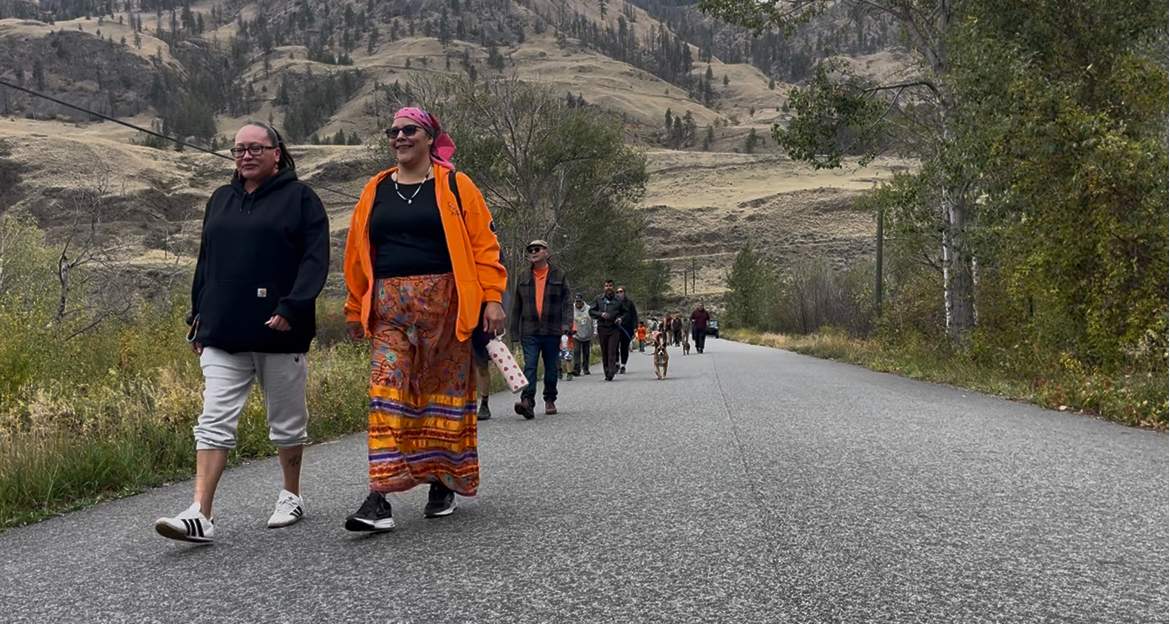
National days of remembrance carry immense social weight. They involve crowds, speeches, media cameras, and organized demonstrations. For survivors like Mary Louie, carrying that weight in public on the exact statutory holiday can feel overwhelming. By holding their community walk on September 29, the LSIB creates a buffer. They share their stories, march four kilometers through the valley near Cawston and Keremeos, sing, chant, and lift each other up. Then, when September 30 arrives, they have the emotional breathing room required to process everything in solitude. It changes the entire dynamic of remembrance from a scheduled obligation into an authentic personal reckoning.
The Incredible Escape And Survival Of Mary Louie
To understand why Mary Louie's presence anchors this community event, you have to look back at her childhood. Like thousands of Indigenous children across Canada, she was forced into the residential school system. At the time, she didn't fully grasp the massive political machinery or the ideological goals driving the institutions designed to strip her culture away. She just knew one urgent, overriding truth. She wanted to get home.
She didn't wait for permission, and she didn't wait for things to improve. She ran away.
Escaping a residential school took an extraordinary level of courage for a young girl. Mary Louie navigated her escape late at night, slipping away into the dark without a map, a compass, or any modern tools. She stayed off the main roads entirely, choosing instead to move through the rugged mountain terrain. She waited for moments of darkness to cross the highway, then kept walking through the wilderness until she reached home.
Imagine that journey for a moment. Pitch black darkness. Cold mountain air. The constant, gnawing terror of being caught and dragged back to an institution designed to erase your identity. Yet, she did it. She walked back because the alternative—staying inside those walls—was entirely unacceptable.
When she finally made it back to her family, her life changed course permanently. She refused to ever return to school. Instead, she chose to stay home, dedicating her days to helping raise her younger siblings and absorbing traditional knowledge directly from her grandmother. Decades later, when she participates in the LSIB community walk, she isn't just marching down a gravel road. She is walking a path of reclamation. She looks at the children walking alongside her today and offers a quiet prayer that parents will love their kids fiercely and teach them their true history.
Why Timing Matters For Community Healing And Reflection
If you talk to organizers within the Lower Similkameen Indian Band, the reasoning behind the September 29 walk becomes crystal clear. Darian Ueusta-Che-Peone, who works closely with the band, points out that the calendar separation is about pacing emotional energy.
When a community crowds together for a high-intensity national remembrance event, everyone spends the day managing external expectations. There are speeches to listen to, media interviews to give, and ceremonial protocols to maintain. While these public gatherings are vital for political visibility, they don't always leave room for internal healing.
By shifting the active community mobilization to the twenty-ninth, the LSIB accomplishes two distinct goals. First, they ensure that the communal solidarity is loud, visible, and deeply felt. People chant, walk shoulder-to-shoulder, and share collective grief. Second, it leaves the official statutory date—September 30—open for quiet, individual introspection. As Ueusta-Che-Peone explains, having that buffer day gives people the chance to rest, decompress, and think deeply about the generational impacts of the schools without the distraction of a massive public itinerary.
This approach challenges the rigid, one-size-fits-all templates often imposed by government-mandated holidays. Reconciliation isn't a checklist item that fits neatly into a standard nine-to-five calendar window. It requires flexibility, deep emotional pacing, and respect for how different survivors need to handle their memories. Some survivors want to march in massive crowds; others need absolute silence. By hosting their event a day early, the LSIB accommodates both needs in sequence.
The historical roots of Orange Shirt Day itself stem from Phyllis Webstad's experience of having her brand-new orange shirt stripped away on her first day at a residential school. That single act symbolizes how the system systematically discarded childhood innocence, family love, and cultural identity. When communities gather to wear orange, they are pushing back against that erasure. But the emotional toll of confronting that loss year after year is staggering. By modifying their calendar by twenty-four hours, the LSIB acknowledges that survivors and their descendants need physical space to process exhaustion, grief, and solidarity without burning out under the spotlight of a single synchronized national day.
Confronting Denial And Preserving Truth In British Columbia
Observing Orange Shirt Day isn't happening in a vacuum. Across Canada, initiatives aimed at truth and reconciliation face growing pushback, skepticism, and outright denialism. In recent years, public displays, cultural monuments, and educational programs have occasionally become flashpoints for ideological friction.
LSIB council member Janet Cherbaskin addresses this reality head-on. She notes that no amount of public demonstration, political posturing, or contrarian rhetoric can erase the lived realities of residential school survivors. When critics try to minimize the historical record, survivors don't need academic debates to know what happened. They carry the physical and emotional proof in their bones.
For elder Herman Edward, the legacy of the residential school system extends far beyond the physical abuse or the iconic orange shirts that symbolize the movement. Edward points out that the institutions targeted the fundamental pillars of Indigenous existence. They took away languages, traditional governance structures, parental bonds, and entire ways of life. Orange shirts serve as a visual reminder, but the underlying wound requires structural and cultural rebuilding that takes generations.
This context makes community walks led by survivors extraordinarily powerful. When Mary Louie walks alongside younger band members, she embodies living proof that the system failed to extinguish her spirit. Her presence acts as an anchor against revisionist narratives. History isn't something written by detached bureaucrats in textbook chapters; it is written in the footprints of survivors who walked out of the mountains in the middle of the night to find their way home.
What We Can Learn From The Lower Similkameen Community
The story of Mary Louie and the Lower Similkameen Indian Band offers a blueprint for how communities can approach historical trauma with agency and self-determination. Too often, national remembrance days risk turning into performative exercises where institutions tick a box, wear a shirt, and move on without changing underlying behaviors.
By shifting their schedule, the LSIB reclaims ownership over their commemoration. They dictate the terms of their own healing. They demonstrate that honoring survivors means listening to what they need, rather than forcing them into rigid national scheduling constraints.
If you are looking at how to engage with Truth and Reconciliation in your own life or community, take a cue from the Similkameen valley. Don't treat remembrance as a single passive day on the calendar where you change your social media profile picture or buy a shirt. Treat it as an ongoing practice of listening, learning, and making space for those who survived the darkest chapters of modern history. Listen to the elders who walked out of the dark. Support the youth who are learning their languages. And above all, recognize that true reconciliation always starts with honoring the unvarnished truth, exactly when and how survivors choose to tell it.