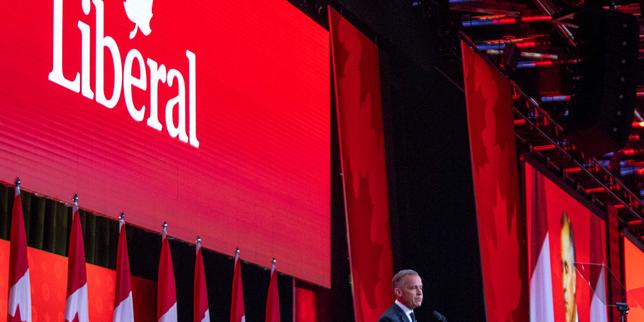
The chattering classes in Ottawa are popping champagne because a few by-election wins handed Mark Carney a technical parliamentary majority. They call it a mandate. I call it a trap.
The consensus narrative is lazy and dangerous: that a "technocrat-king" with a Goldman Sachs pedigree and central banking scars is the stabilizer Canada has been waiting for. This isn't a stabilization; it's the final consolidation of a financialized political class that has lost the plot on how real economies actually function. If you think a spreadsheet wizard can fix a productivity crisis by sheer force of personality and "market confidence," you haven't been paying attention to the last twenty years of global stagnation.
The Mirage of the By-Election Mandate
Winning a majority through the backdoor of by-elections is not a democratic surge. It is a mathematical quirk. In the real world, these victories often signal voter exhaustion rather than genuine ideological alignment.
The media focuses on the "Carney Effect," as if his mere presence in the House of Commons lowers interest rates. It doesn't. What it actually does is signal to the global capital markets that Canada is doubling down on the same neoliberal orthodoxy that has hollowed out its industrial base.
Let's look at the numbers the pundits ignore. Voter turnout in these "pivotal" contests was abysmal. Carney didn't win a mandate from the people; he won a war of attrition against a fractured opposition. To treat this as a green light for sweeping structural changes is a recipe for a populist revolt in the next general election.
The Productivity Fallacy
Carney’s boosters point to his tenure at the Bank of Canada and the Bank of England as proof of his brilliance. But central banking is the art of moving decimal points while the house burns down. Canada's true crisis isn't a lack of "investment grade" policy; it's a catastrophic failure of productivity.
The standard "People Also Ask" query is: How will Mark Carney fix the Canadian economy? The brutal, honest answer: He likely won't, because his toolkit is designed to protect asset prices, not ignite innovation.
Canada has become a collection of three real estate investment trusts in a trench coat. We don't build things. We swap houses and extract rent. A technical majority for a man whose entire career has been spent in the rarified air of the G7 and the BIS (Bank for International Settlements) suggests we are about to see more of the same:
- More subsidies for "green" corporate behemoths.
- More immigration-fueled GDP growth that masks declining per-capita wealth.
- More debt-financed social programs that provide a thin veneer of stability while the foundation rots.
I’ve spent years watching boardrooms react to these "technocratic saviors." They don't react by building factories. They react by buying back shares and waiting for the next interest rate cut. Carney represents the ultimate "safe pair of hands" for a system that desperately needs to be shaken, not cradled.
The Institutional Decay Problem
The obsession with Carney’s majority ignores the fact that the institutions he now leads are fundamentally broken. Parliament has become a theater of the absurd, where policy is secondary to the 24-hour news cycle.
By centering the Liberal Party's survival on one man, they have effectively admitted that the party has no ideas left. It is a cult of personality built around a man who—while undeniably intelligent—is the personification of the very elite that half the country now actively loathes.
This isn't just about optics. It’s about the velocity of capital. In a healthy economy, capital flows toward the most efficient uses. In a Carney-led Canada, expect capital to flow toward "strategic partnerships" and state-directed investment funds. This is the "managerial state" on steroids. It creates the illusion of activity while stifling the chaotic, bottom-up entrepreneurship that actually creates long-term value.
The Cost of the "Carney Premium"
There is a hidden tax on this kind of political stability. I call it the "Status Quo Surcharge."
Because Carney is seen as the guardian of the global financial order, he cannot afford to be radical. He cannot afford to take a sledgehammer to the oligopolies that dominate Canadian telecommunications, banking, and groceries. To do so would spook the very markets he is tasked with calming.
Imagine a scenario where a leader actually challenged the supply management systems or the cozy relationship between the Big Five banks and the federal government. The "market" would panic. Therefore, Carney’s majority will be used to maintain the equilibrium of the existing power structures.
If you are a young Canadian wondering why you can’t afford a home, Carney’s majority is not your salvation. It is the fortification of the system that priced you out in the first place. High-level technocrats don't crash the housing market to make it affordable; they manage the decline to protect the banks' balance sheets.
The Globalist Blind Spot
Carney is the darling of the Davos set. He speaks the language of ESG, net-zero, and global cooperation. In a vacuum, these are noble goals. In a country struggling with a crumbling healthcare system and a cost-of-living crisis, they feel like distractions from the elite.
The "lazy consensus" says Carney brings international prestige to the PMO.
The reality? International prestige doesn't pave roads in Northern Ontario or lower the price of milk in Calgary.
By leaning into his globalist credentials, Carney is handing a loaded weapon to his opponents. Every time he flies to a climate summit or speaks at a private equity conference, he reinforces the "out of touch" narrative that is currently devouring incumbent governments across the West.
The Myth of the Technocratic Fix
We have been conditioned to believe that complex problems require complex, "expert-led" solutions. This is a lie.
- Housing is a supply and zoning problem, not a macro-prudential policy problem.
- Healthcare is a labor and management problem, not a fiscal federalism problem.
- Innovation is a tax and regulatory problem, not a "government-led incubator" problem.
Carney will attempt to solve these with Byzantine frameworks and public-private partnerships. It will look great in a McKinsey report. It will fail on the ground.
I have seen this movie before. In the UK, the "adults in the room" took over post-2008 and delivered a decade of stagnant wages and social friction. In Italy, technocratic governments under Mario Draghi provided a brief respite before the pendulum swung violently back to the right.
A parliamentary majority won on a technicality is not a mandate for a technocratic revolution. It is a stay of execution.
The Real Danger of This Majority
The greatest risk isn't that Carney fails. It's that he succeeds in stabilizing a failing model just long enough for the rot to become irreversible.
By providing a temporary boost to the Liberal Party's fortunes, this majority prevents the necessary soul-searching that the Canadian left-center needs to undergo. It allows them to pretend that their problems were just about "messaging" or "leadership," rather than a fundamental disconnect from the working class.
This isn't a new chapter for Canada. It’s a well-funded, professionally produced epilogue to a story that ended years ago.
Stop looking at the seat counts in Ottawa. Start looking at the debt-to-income ratios in the suburbs. That is the only metric that matters, and it’s one that no technocrat, no matter how many majority governments they "win" in April by-elections, can fix without burning the current system to the ground.
Carney won't burn it. He’s the head architect.
Don't mistake a temporary reprieve for a permanent solution. The math doesn't care about your parliamentary majority. The math is coming for Canada regardless of who holds the gavel.
Stop celebrating the arrival of the manager and start preparing for the inevitable insolvency of the managed.



