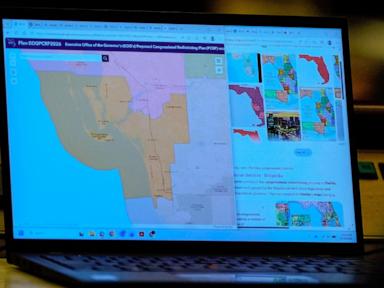
The United States Supreme Court recently sent a shockwave through the engine rooms of state legislatures, effectively reviving the Voting Rights Act’s power to challenge racially discriminatory maps. In Allen v. Milligan, the Court upheld a lower court ruling that Alabama’s congressional map likely violated Section 2 of the Voting Rights Act by diluting the power of Black voters. This decision was not merely a legal correction. It was a catalyst. Within weeks, the ripples reached Louisiana, Georgia, and South Carolina, forcing a chaotic, high-stakes redrawing of the political boundaries that determine who goes to Washington and who stays home.
At the heart of this struggle is the concept of the "majority-minority" district. For decades, mapmakers have used two primary tools to neutralize the voting strength of specific groups: packing and cracking. Packing involves cramming as many minority voters as possible into a single district to limit their influence elsewhere. Cracking does the opposite, splintering a cohesive community across several districts so their preferred candidates never stand a chance. The Milligan ruling signaled that the Court’s conservative majority is not yet ready to abandon the established metrics used to identify these tactics, even as some justices signal a desire to move toward a "colorblind" Constitution. For an alternative look, see: this related article.
The Alabama Precedent and the Math of Representation
Alabama’s population is roughly 27% Black, yet for years, only one of its seven congressional districts was drawn to allow Black voters a realistic opportunity to elect a representative of their choice. The math didn't add up. When the Supreme Court ruled 5-4 that Alabama must create a second district where Black voters constitute a majority, or something close to it, it dismantled the argument that geography and "traditional redistricting principles" could be used as a shield for discriminatory outcomes.
This wasn't just about Alabama. The legal framework used there—the Gingles test—requires plaintiffs to prove that a minority group is sufficiently large and geographically compact to constitute a majority, that the group is politically cohesive, and that the white majority votes as a bloc to defeat the minority’s preferred candidate. By reaffirming this test, the Court handed a loaded weapon to civil rights attorneys across the South. Further coverage on the subject has been shared by TIME.
Louisiana and the Fight for the Second District
Louisiana followed Alabama into the legal meat grinder almost immediately. The state’s population is roughly one-third Black, but like Alabama, it had long operated with only one majority-Black district out of six. The Republican-led legislature initially resisted calls for a second district, arguing that the state’s Black population was too dispersed to meet the Gingles criteria without engaging in "racial gerrymandering."
The tension here is palpable. Legislators are caught between a federal mandate to provide fair representation and a political reality where creating a new Democratic-leaning district almost certainly means unseating a Republican incumbent. In January 2024, under intense judicial pressure, Louisiana lawmakers finally blinked. They passed a map that created a second majority-Black district, stretching from Shreveport down to Baton Rouge. It is a jagged, unconventional shape, but it satisfies the court's immediate demand for equity. This shift could flip a seat in the House of Representatives, proving that redistricting is the most effective, albeit least understood, way to swing the balance of national power.
Georgia and the Illusion of Compliance
Georgia presents a more complex shell game. Unlike Alabama and Louisiana, Georgia’s population growth has been explosive, driven largely by Black, Hispanic, and Asian American residents moving into the Atlanta suburbs. Following the Milligan logic, a federal judge ordered Georgia to create several new majority-Black districts at both the congressional and state legislative levels.
The Georgia legislature complied, but with a twist that highlights the cynicism of modern partisan mapmaking. While they created the mandated Black-majority districts, they simultaneously dismantled other "crossover" districts—areas where minority voters and white liberals teamed up to elect Democratic candidates. The result was a map that technically met the court's numerical requirements for "Black districts" while ensuring the overall partisan advantage for Republicans remained untouched. This "compliance through cannibalization" strategy shows that while the courts can demand specific racial outcomes, they struggle to police the partisan intent buried underneath.
The Ghost of the Colorblind Constitution
While the recent rulings feel like a victory for voting rights advocates, a deeper look at the concurring and dissenting opinions reveals a fragile foundation. Justice Brett Kavanaugh, the swing vote in Milligan, hinted that his support for Section 2 may have an expiration date. He suggested that while race-based redistricting is permissible now to remedy past discrimination, it cannot continue indefinitely.
This is the "why" behind the aggressive legal challenges coming from conservative states. They aren't just fighting for one or two seats; they are playing a long game to convince the Court that the very act of considering race when drawing lines is itself a violation of the 14th Amendment. They want to move to a system where mapmakers are prohibited from looking at racial data at all. On the surface, this sounds equitable. In practice, because housing patterns and socioeconomic status are so closely tied to race in the American South, "colorblind" mapping would likely lock in the advantages of the current majority for a generation.
The Statistical Reality of the South
To understand the scale of what is being litigated, look at the demographic shifts across the "Black Belt"—a region stretching from East Texas to Virginia.
| State | % Black Population | Current Minority-Opportunity Districts | Potential Districts Under Section 2 |
|---|---|---|---|
| Alabama | 26.8% | 1 of 7 | 2 of 7 |
| Louisiana | 32.8% | 1 of 6 | 2 of 6 |
| Georgia | 33.1% | 5 of 14 | 6 of 14 |
| South Carolina | 26.3% | 1 of 7 | 2 of 7 |
The gap between population and representation is where the legal battles live. In South Carolina, the dispute centers on the 1st Congressional District, currently held by Republican Nancy Mace. Civil rights groups argue the state "bleached" the district by moving 30,000 Black voters into a neighboring district to make Mace’s seat safer for Republicans. The Supreme Court's handling of the South Carolina case will determine if "partisan gerrymandering" can continue to be used as a legal excuse for maps that happen to disenfranchise minority voters.
The Tech Behind the Trenches
Redistricting used to be done with paper maps and highlighters in smoky backrooms. Today, it is done with sophisticated MCMC (Markov Chain Monte Carlo) algorithms that can generate 100,000 "neutral" maps in seconds.
Both sides use these tools to prove their point. Plaintiffs use them to show that the current map is an extreme outlier that could never have been drawn by accident. Defendants use them to show that it is impossible to draw two majority-minority districts without violating other rules, like keeping counties whole or districts compact. We have reached an era where the law is being dictated by the limits of geometry and the precision of census block data.
The Administrative Burden of Chaos
The human cost of this legal volatility is often ignored. Election officials are being forced to move precincts, update voter rolls, and print new ballots on impossibly tight deadlines. In some states, voters have been assigned to three different congressional districts in as many years. This creates a "voter confusion tax" that disproportionately affects people who are already marginalized. When the maps change every cycle, the relationship between a constituent and their representative is severed before it can even begin.
The strategy of "litigate until the clock runs out" has become a standard tactic. By dragging out court cases, legislatures can often force at least one election cycle to be held under an unconstitutional map, simply because there isn't enough time to draw a new one before the primary. This is not a flaw in the system; for those in power, it is a feature.
The Shift Toward State Courts
As the federal judiciary becomes more conservative, the battleground is shifting toward state supreme courts. In North Carolina, the state supreme court's political makeup flipped from liberal to conservative in the 2022 elections. Almost immediately, the new court reversed previous rulings that had banned partisan gerrymandering, effectively giving the legislature a green light to draw one of the most aggressive maps in the country.
This creates a fractured legal landscape where a voter's rights depend entirely on which side of a state line they stand. In one state, the state constitution might be interpreted to require fair representation; in the neighbor, the state constitution might be seen as silent on the matter, leaving the legislature with absolute power.
Power is Never Given
The current rush to redraw maps is a reminder that in American politics, power is never ceded voluntarily. It is extracted through the courts. The Supreme Court’s recent actions have opened a narrow window for more equitable representation, but that window is being defended by a thin 5-4 margin and a collection of justices who have expressed open skepticism about the long-term viability of the Voting Rights Act.
The maps being drawn today in Montgomery, Baton Rouge, and Atlanta will define the legislative priorities of the 2030s. They will determine which communities receive infrastructure funding, how healthcare resources are allocated, and whose voices are heard during the next national crisis. The mapmakers are at war because they know that in a representative democracy, the lines on the map are more important than the names on the ballot.
Control the boundaries, and you control the future.
Stop looking at the candidates and start looking at the census blocks.
The most important vote in your state wasn't cast by a citizen; it was cast by a judge deciding where a line should be drawn through a neighborhood in the middle of the night.