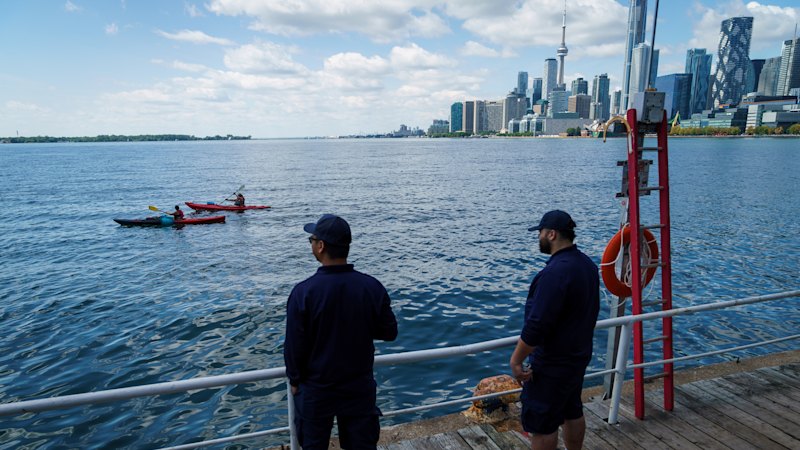
The coffee at the diner on Main Street in Kingston is always lukewarm, but the view out the window on a Tuesday morning in October is indisputable. Beyond the low-slung rooftops and the weathered brick of the waterfront warehouses sits Lake Ontario. It stretches flat, slate-grey, and immense, holding the sky down with its sheer weight. For generations, people on both sides of this international water have taken that name for granted. It is an old word, rooted in the Wyandot language, meaning the lake of shining waters. It belongs to nobody and everyone.
Until someone decides to pull out a red pen and cross it out.
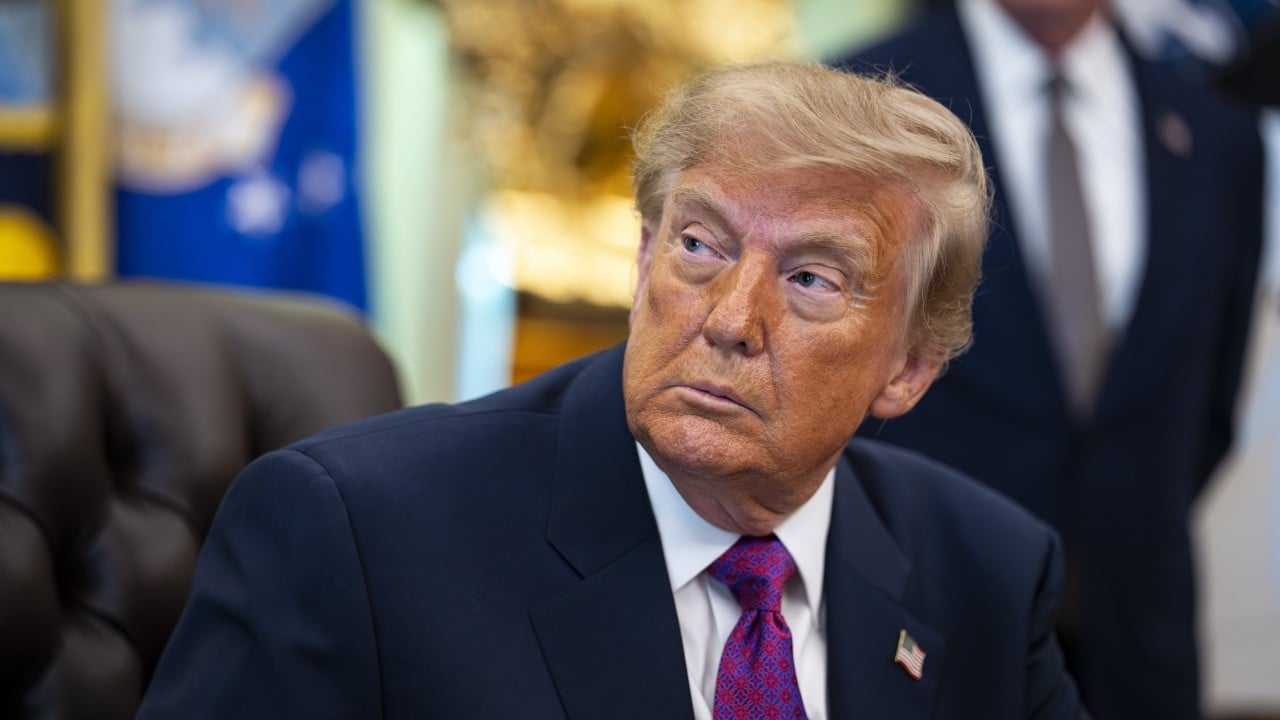
When the announcement drops—staccato, digital, delivered via late-night keystrokes from a Florida estate—the shockwaves do not register on seismographs. They register in the tightening of jaws across dinner tables from Toronto to Rochester. The decree is simple in its absurdity and heavy in its intent: Trump orders Lake Ontario to be renamed Lake America.
Ink is cheap. Geography is stubborn.
To understand why a stroke of a pen can rattle millions of people who have never met a head of state, you have to stand on the shore when the wind is coming off the north. You have to smell the damp cedar, the diesel from the cargo ships, the cold breath of the Canadian Shield. Water does not care about executive orders. Waves crash against the limestone bluffs of Prince Edward County with the same indifferent fury whether the charts call the basin Lake Ontario or Lake America. But the people watching those waves? They care very much.
(Note: The renaming order described here is a hypothetical scenario used to examine the psychological friction of economic nationalism and cross-border identity.)
We have entered an era where cartography has become a weapon. Trade wars rarely start with armies clashing in the fog; they start with tariffs, then quotas, then supply chain chokers, and finally, with the symbols we stamp onto our maps. When economic friction turns bitter, language follows. If you can rename the water, you can rewrite the ownership. If you can make the map yours, you can make the market yours.
Arthur Pendelton knows this better than most. Arthur is a retired logistics manager who spent forty years moving grain and manufactured goods across the Thousand Islands bridge. Sit across from him at his kitchen table in Watertown, and he will slide a grease-stained binder across the laminate surface. Inside are manifests, shipping weights, and customs logs dating back to the Reagan administration.
"People talk about countries like they're painted on a globe with thick black lines," Arthur says, stirring three packets of sugar into his coffee until the spoon rattles. "They aren't. They're porous. This lake is a highway. It’s an assembly line. When you start renaming the highway out of spite, you aren't just insulting your neighbors. You're putting tollbooths on logic."
Arthur remembers the softwood lumber disputes of the nineties. He remembers the steel tariffs that turned lifelong business partners into suspicious litigants. But those were commercial fights. They were fought by lawyers in tailored suits in Washington and Ottawa, behind frosted glass, using dense tax code as ammunition.
This is different. This is personal.
When a politician reaches for a geographic landmark and tries to brand it like a failed hotel or a line of steaks, the conflict migrates from the boardroom to the psyche. It touches the fisherman pulling yellow perch out of the Bay of Quinte. It touches the bartender in Kingston pouring pints for American tourists who drove across the border three hours earlier without having to show a passport until recently. It treats a shared ecosystem like a conquered province.
Consider what happens next in a trade war that has abandoned economic rationale for theatrical dominance.
First, the rhetoric escalates. Talk radio hosts in Buffalo and Toronto start treating the St. Lawrence Seaway like a demilitarized zone. Then, the symbolic retaliations begin. You see local councils in Ontario voting to ban American fuel from municipal fleets. You see bumper stickers appear on pickup trucks in upstate New York that weren't there a week ago, defiant little patches of text declaring loyalty to an old name that maps have carried for centuries.
Meanwhile, the water keeps flowing.
Water is the great connector and the ultimate solvent. It flows from Lake Superior down through Huron, Erie, and Ontario, rushing past Niagara and churning into the St. Lawrence on its relentless march to the Atlantic. It does not stop at the maritime boundary line defined by the 1909 Boundary Waters Treaty. A zebra mussel doesn't check its passport before attaching to a water intake pipe in Oswego. An algal bloom off the coast of Rochester doesn't care which flag flies higher on the flagpole at Fort Niagara.
To believe that you can rename a body of water by proclamation is to misunderstand the nature of ecological reality. It is a child's game played with adult stakes.
Yet, to dismiss it as mere noise is equally dangerous. Symbols matter because they license behavior. When leaders treat shared spaces as trophies to be renamed, they signal to the public that cooperation is weakness and neighbors are adversaries. The invisible stakes of this rhetorical brinkmanship are found in the small cracks of daily cross-border life.
They are found in the family reunion held every summer on Wolfe Island, where half the relatives live in Michigan and the other half live in Kingston. For decades, that family didn't think about borders. They thought about the cottage, the dock, the depth of the water off the southern point where the bass are biting. Now, across the mashed potatoes and the grilled corn, political tension hangs like cigarette smoke in a small room. Someone makes a joke about the new name of the lake. Someone else doesn't laugh. Knives scrape against plates. A silence falls that takes hours to fill back up.
That is the true cost of renaming the map. It fractures the invisible architecture of trust.
Economic interdependence is fragile. It is built on millions of micro-transactions and assumptions of good faith. When a cargo ship loaded with Ontario potash leaves the port of Hamilton bound for a chemical plant in Ohio, the captain relies on uniform protocols, predictable customs officers, and a baseline of mutual respect. When the political class starts treating geography as personal property, those foundations begin to vibrate.
Insurance rates for cross-border shipping inch upward. Corporations quietly begin looking for domestic suppliers, even if they cost five percent more, simply to eliminate geopolitical risk from their spreadsheets. Jobs that relied on frictionless movement across the water find themselves choked by new layers of bureaucratic red tape, justified by politicians eager to prove they are standing up to the other side.
By the time the sun goes down over Lake Ontario—or Lake America, depending on whose browser you are looking at—the water is black and cold. The lighthouse at Tibbetts Point flashes its steady white beam across the dark expanse, sweeping in a clean, blind circle that illuminates American soil and Canadian water with absolute impartiality.
The machine of commerce will grind on tomorrow morning. The freighters will cast off their lines before dawn. The customs agents will stamp their papers.
But the map has a scar on it now. And once a map is taught to bleed, it is very difficult to get it to heal.