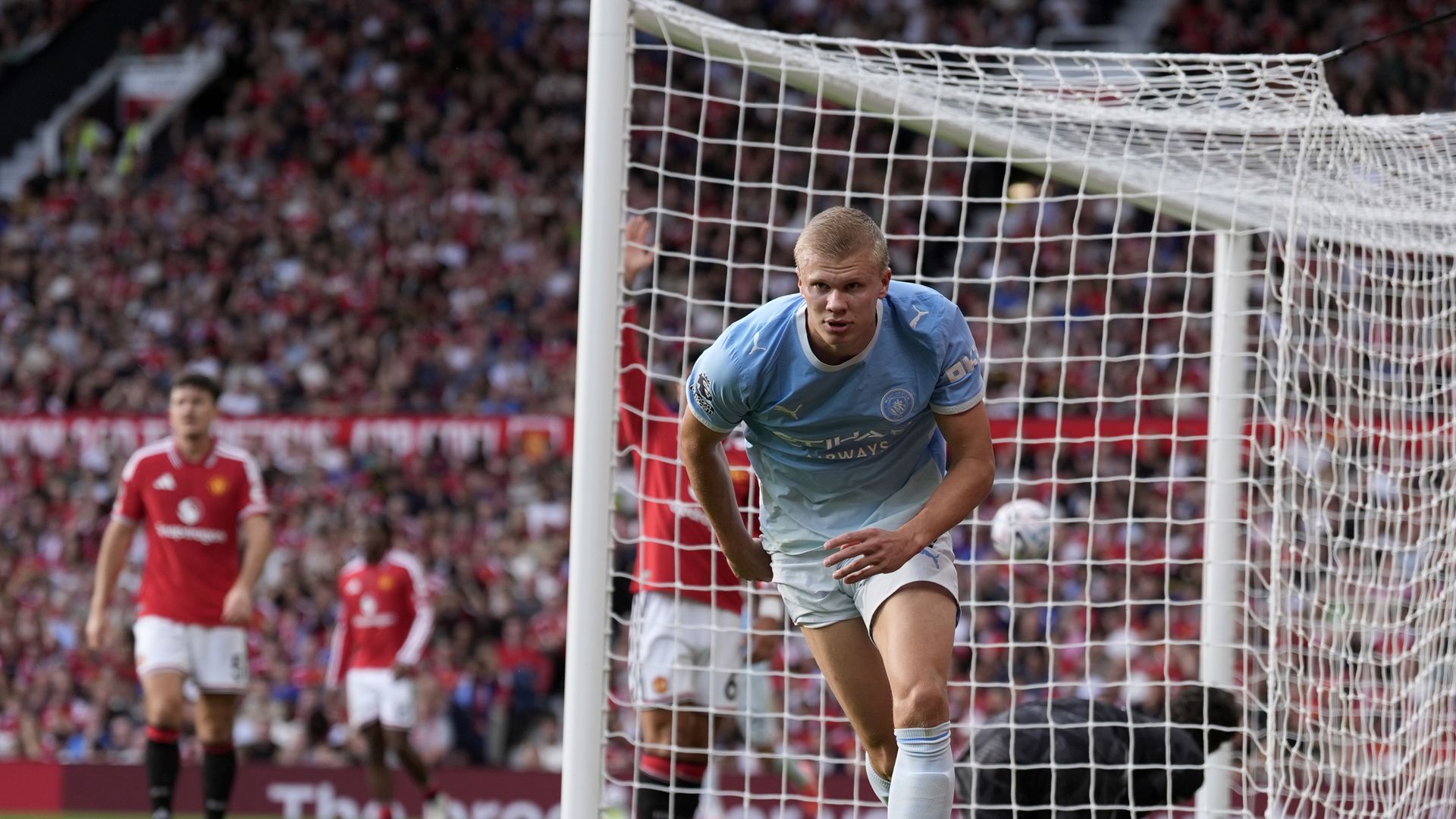
The official admission by refereeing authorities that a decisive goal in the Manchester derby should have been disallowed offers zero comfort to the losing side and lays bare an alarming structural rot. When the Professional Game Match Officials Limited acknowledges a major video assistant referee blunder hours after the final whistle blows, it does not represent accountability. It represents a confession of operational failure. Fans, players, and clubs are left holding the wreckage of a corrupted contest while officials retreat behind closed doors with mild wrist-slaps and muted apologies.
This latest crisis in English football officiating is not an isolated anomaly. It is the predictable symptom of an institution struggling to manage the intersection of high-stakes competition and poorly calibrated technology. When a player running twenty yards alongside the ball while clearly positioned in an offside zone can legally be judged not to be interfering with play, the rulebook has detached itself from reality. The lawmakers designed the interference clause to introduce nuance, yet it has achieved the exact opposite. It has turned football into a courtroom where common-sense realities are sacrificed on the altar of hyper-literal legalism, leaving referees paralyzed by ambiguity and supporters bewildered by inconsistency.
The Anatomy of a Flawed Decision
To understand how a multi-million-pound entertainment product can be derailed by a single glaring oversight, one must examine the microscopic environment of Stockley Park. When the controversial derby goal occurred, the officials on duty faced a split-second evaluation window. Marcus Rashford sprinted down the left flank, chasing a through ball while caught in an offside position. He did not touch the leather. Under the strict wording of the current interpretation, running toward the ball without making physical contact or directly obstructing an opponent does not automatically constitute active offside interference.
Yet every single defender on the pitch altered their positioning because of Rashford's run. The Manchester City backline panicked, tracking his movement, adjusting their defensive shape, and abandoning their defensive line. To argue that Rashford did not influence the play is to ignore the fundamental psychological and physical realities of professional defending. Defenders do not stand frozen like statues while an opponent streams toward the penalty box; they react to threats. By treating the play as a sterile geometry problem divorced from human behavior, the officials committed a catastrophic error of judgment.
The technology was supposed to eliminate these grey areas. Instead, it magnified them. The video assistant referee and the assistant assigned to the monitors had the benefit of slow-motion replays, multiple camera angles, and unlimited time to review the sequence. Yet they chose inaction. They deferred to the on-field referee's initial feeling, hiding behind the high threshold required to overturn a decision. This institutional reluctance to intervene unless a mistake is glaringly, indisputably obvious creates a dangerous vacuum of responsibility. The referee on the pitch assumes the video team checked every variable, while the video team assumes the referee saw the entire context. In the end, nobody owns the mistake.
The Illusion of Transparency at PGMOL
When Howard Webb took the helm of PGMOL with promises of radical reform, supporters anticipated a new era of openness. The introduction of televised audio broadcasts featuring referees reviewing their own mistakes was hailed as a revolutionary step toward trust-building. However, transparency without structural consequence is nothing more than public relations management. Releasing audio recordings weeks after the damage has been done does not restore lost points or soothe aggrieved supporters. It merely exposes the terrifying reality that the people making high-stakes decisions under immense pressure are frequently guessing just as frantically as the fans in the stands.
Listening to officials scramble through complex rule interpretations while looking at freeze-frames highlights a deeper incompetence. They sound hesitant, rushed, and excessively deferential to one another. When the primary objective of a video review team becomes finding a reason to uphold the on-field decision rather than ensuring the correct sporting outcome is achieved, the entire exercise loses its purpose. Apologies issued forty-after hours after a match ends are cheap currency. They cost the organization nothing while robbing clubs of the rewards earned through months of grueling preparation.
Financial and Competitive Distortion
The financial stakes of the Premier League amplify every single refereeing error into a crisis of competitive integrity. Champions League qualification, multi-million-pound broadcasting revenues, relegation survivals, and managerial terminations hang on the flick of an official's wrist or the arbitrary drawing of pixelated offside lines. When a derby match swings on a blatant oversight that gets acknowledged only after the points are already distributed, the integrity of the entire league takes a permanent hit.
Clubs invest hundreds of millions of pounds into squads, training facilities, and tactical evolution, only for their season to be derailed by an official who misinterprets a fundamental clause of the rulebook while staring at high-definition monitors. The trickle-down effect of these errors alters the economic landscape of English football. A club missing out on top-tier European football due to a refereeing blunder loses out on tens of millions in revenue, which directly impacts their ability to compete in subsequent transfer windows. When the margins between success and failure are measured in millimeters, institutional mistakes carry catastrophic financial consequences that ripple across balance sheets for years.
The Outsourcing of Human Instinct
Technology was intended to be an assistive tool. Instead, it has crippled the natural authority of match officials. Referees on the pitch now defer their instincts to the safety blanket of the video booth, while officials in the video booth hide behind protocol to avoid stepping on their colleagues' toes. This diffusion of accountability creates a culture of passivity that infects every tier of the sport.
Consider how the speed and flow of the game have deteriorated. Matches are constantly punctuated by agonizing delays while officials draw lines across screens, measuring boots and shoulders down to the centimeter. The spontaneity and raw emotion that define football are slowly being drained away by a bureaucratic obsession with microscopic precision. When fans celebrate a goal, the first reaction is no longer unadulterated joy; it is an anxious glance toward the referee waiting for a signal from an invisible room miles away. That cultural shift is slowly destroying the emotional core of the sport.
Breaking the Cycle of Post Match Apologies
Fixing this structural rot requires an overhaul that goes far beyond issuing apologies or tweaking rulebook wording during the summer recess. Professional refereeing needs to become a fully accountable, independent industry with rigorous performance metrics, demotions for persistent underperformance, and public post-match accountability from the officials themselves.
Football must follow the lead of other elite sports where officials face the press immediately after the final whistle to explain their decisions. Referees should be required to justify their interpretations on record, just like managers and players do every single week. Shielding officials from media scrutiny under the guise of protection only fuels conspiracy theories and public distrust. Until referees are held to the same standards of professional excellence and openness as the athletes they govern, the Premier League will remain a multibillion-dollar spectacle where the final score is too often dictated by a coin toss in a remote control room.
Apologies issued forty-eight hours too late are worth less than the ink used to print them. Until accountability becomes an active, daily practice rather than a reactive public relations exercise, the game will continue to suffer under the weight of its own administrative failure.