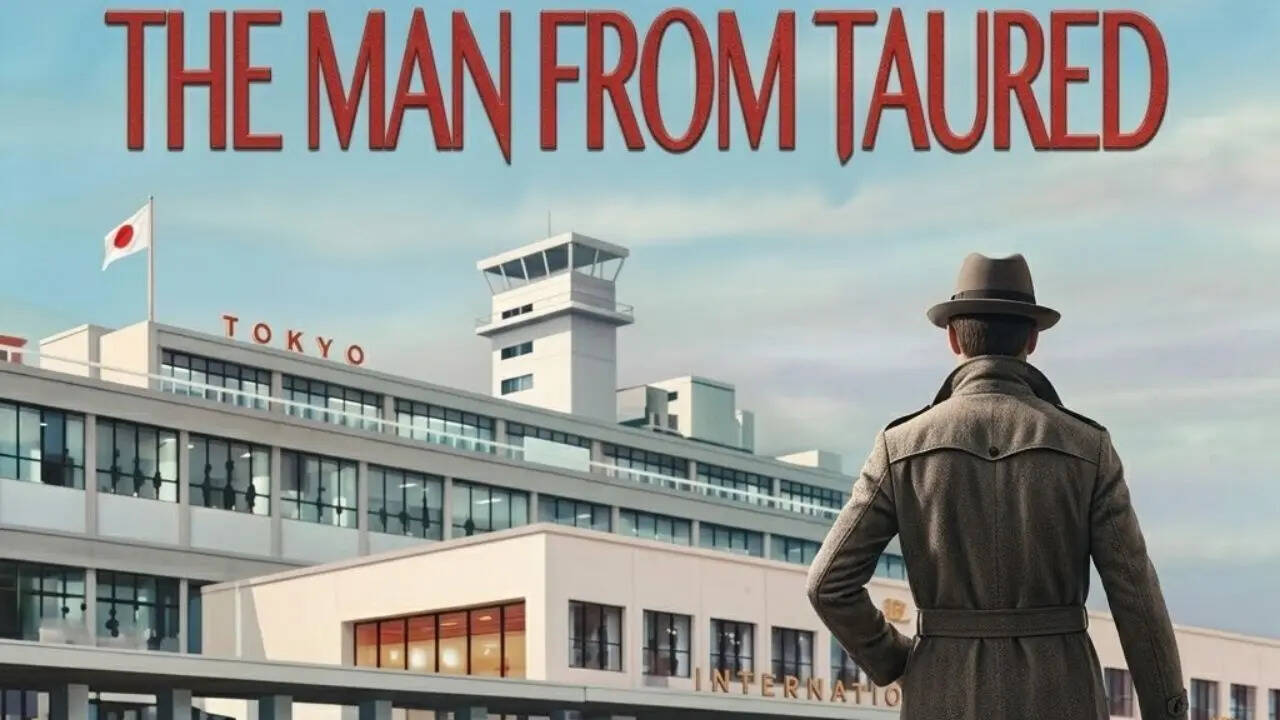
In July 1954, a tall, bearded man stepped up to the customs desk at Tokyo’s Haneda Airport. He looked like any other businessman traveling for work. He spoke French primarily, but he was fluent in Japanese and several other languages. Everything seemed routine until he handed over his passport.
The document was legitimate. It had official stamps from various countries he’d visited. The problem was the country of origin. The passport claimed he was from Taured.
Customs officials had never heard of it. They asked him to point to his country on a map. He pointed his finger at the space between France and Spain. That's where the small principality of Andorra sits. The man grew angry. He insisted Taured had existed for a thousand years. He couldn't understand why Andorra was on the map instead of his homeland.
He wasn't a prankster. He was genuinely confused and increasingly distressed.
This story has become one of the most enduring urban legends of the 20th century. People love it because it touches on our fascination with parallel universes and glitches in the matrix. But if you strip away the internet creepypasta layers, you're left with a weirdly specific historical anomaly that defies easy explanation.
The locked room mystery at the heart of Tokyo
Japanese authorities didn't know what to do with him. They couldn't just let a man with a "fake" passport from a non-existent country wander into Tokyo. They took him to a nearby hotel for the night. Two immigration officials stood guard outside his room.
They kept his passport and personal documents at the airport office to prevent any tampering.
The next morning, the room was empty.
The man had vanished. There was no way out except the door guarded by the officers. The room was several stories up with no balcony. His documents? They vanished from the airport security office too.
It's a perfect "locked room" mystery. Critics argue the story is just a tall tale that grew legs over decades of retelling. Others think it’s evidence of a traveler who slipped through a rift in space-time. I think the truth usually lies in the messy details people ignore when they’re looking for ghosts.
Searching for the paper trail
If this happened, there should be a record. 1954 wasn't the dark ages. Japan was under heavy scrutiny post-WWII. Airport security was tight.
I’ve looked into the various claims. Most "investigations" into the Man from Taured lead back to a 1959 book by Bryan Edgar Wallace called The Man Who Lost His Past. However, that’s a work of fiction. Some skeptics point to a real case from 1954 involving a man named John Alan Zegrus.
Zegrus was arrested in Tokyo for using a fake passport. His passport claimed he was from "Tamanrosset," the capital of "Sahara." He wasn't a dimension traveler. He was a highly sophisticated con artist and possibly a spy. He’d fabricated an entire identity, language, and nation to move across borders during the Cold War.
Why the Taured version won't die
Why do we prefer the Taured version over the Zegrus reality? Because the Zegrus case is about a guy lying for profit. The Taured legend is about the universe being more mysterious than we want to admit.
The Taured story changed over time. "Tamanrosset" became "Taured." The "Sahara" became a kingdom in Europe. The escape from a locked hotel room was added later to make the story "unsolvable."
You see this all the time with modern myths. A grain of truth—a man with a weird passport at Haneda—gets polished by years of internet forum storytelling until it’s a shiny, supernatural diamond.
The psychology of the urban legend
The Man from Taured stays relevant because it captures the "uncanny." We've all felt that brief moment of disorientation where a street looks different or a memory doesn't match a friend's. This story validates that feeling. It suggests that maybe you aren't crazy; maybe the world just shifted.
It’s the ultimate "what if" scenario. What if you went home today and your house was gone, replaced by a park that’s supposedly been there for centuries?
Most people who share this story don't care about the 1954 Haneda logs or the technicalities of Japanese immigration law. They care about the shiver they get down their spine when they think about a man standing in a Tokyo airport, holding a passport to a place that only he remembers.
How to spot a modern myth
The Taured story is a masterclass in how legends evolve. To understand what's actually happening when these stories go viral, you have to look for the "myth-making" markers.
- The lack of names: Notice the original story rarely names the man. He’s just "the traveler." This makes it easier for the reader to project themselves into the story.
- The disappearing evidence: The disappearance of the documents is a convenient plot device. It explains why there’s no physical proof left for us to examine today.
- The specific date: Using a specific year like 1954 gives the story a veneer of historical authenticity.
If you want to dig deeper into these kinds of anomalies, start by looking at the actual news archives from the era rather than "mystery" blogs. The Tokyo Shimbun and other local papers from the mid-50s often have the boring, non-supernatural answers to the "mysteries" that keep us up at night.
Look for the name John Alan Zegrus. You'll find a story about a brilliant, multilingual man who tried to trick a nation and failed. It's less magical than a parallel universe, but it’s a much more fascinating look at human ingenuity and the cracks in global security.
Don't let a good ghost story stop you from finding a great human one.



