History rarely announces its arrival with a trumpet blast. More often, it arrives in the quiet scuff of leather shoes across a polished marble floor, carrying the heavy scent of old paper, salt air, and nervous anticipation.
July 1, 1997. Victoria Harbour outside was choked with gray mist and the low thrum of departing British warships. Inside the newly minted Hong Kong Convention and Exhibition Centre, the air conditioning hummed too loudly, fighting against the stifling humidity of a tropical summer night. Millions watched through television screens around the globe as a flag descended, a new one rose, and a century and a half of colonial chapter slammed shut. For a different view, check out: this related article.
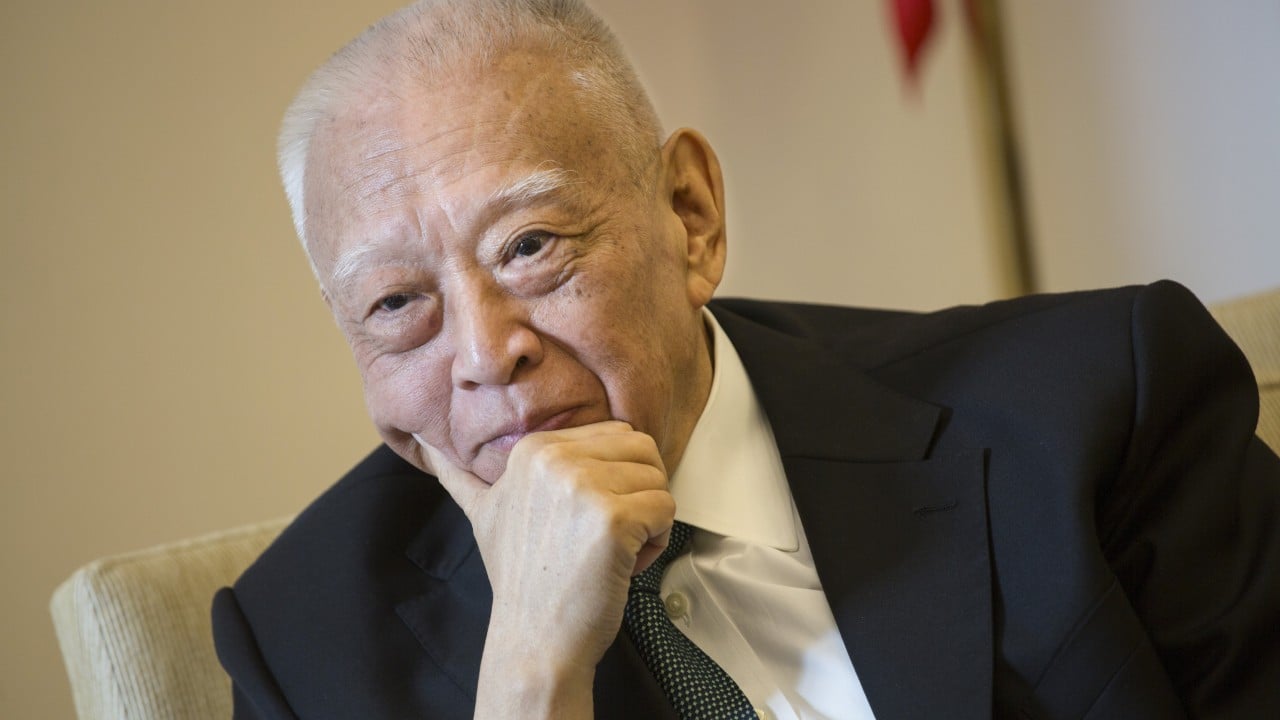
Standing near the epicenter of that tectonic shift was a man with silvering hair, a quiet demeanor, and a burden that would have crushed a lesser spirit. Tung Chee-hwa.
News broke today that Tung has died at the age of 89. With his passing, the final human link to that monumental transition dissolves into the archives of the twentieth century. But numbers and dates do little justice to the man who found himself caught in the teeth of history's most delicate gears. Related coverage regarding this has been shared by BBC News.
To understand Tung Chee-hwa, you have to understand the cargo ship.
Before he ever stood under the glare of international television lights, Tung was a shipping magnate. He ran Orient Overseas Container Line, a sprawling enterprise built by his father, Tung Chao-yung. Out on the open ocean, leadership is binary. You read the weather, you secure the hatches, and you steer the vessel through the gale. If a storm hits, you do not consult a committee; you give an order, and the crew obeys.
Beijing looked at that background in the mid-1990s and saw a safe harbor. Here was a successful businessman, fiercely loyal to his Chinese heritage, yet fluent in the language of international commerce. He was educated in Britain, respected in Washington, and trusted by the leadership in Beijing. To the architects of the "One Country, Two Systems" framework, he was the ideal shock absorber. He was supposed to bridge two entirely different worlds: a freewheeling, frantic capitalist metropolis and a centralized, socialist powerhouse.
Nobody asked if the bridge could hold the weight of both.
When he took the oath of office as Hong Kong’s first Chief Executive, Tung inherited more than an administrative structure. He inherited an anxiety attack. Millions of residents held foreign passports in their pockets just in case. They looked at the new boss not as a leader, but as a barometer. Would freedom of speech survive? Would the stock market hold? Would the legal system remain untouched?
Tung arrived with ambition that defied his cautious exterior. He genuinely believed he could fix the city's deepest structural flaws, chief among them housing. He launched an ambitious initiative to build eighty-five thousand flats a year, aiming to pop the suffocating real estate bubble that kept ordinary families trapped in subdivided shoe-box apartments.
Then, the world shifted beneath his feet.
The 1997 Asian Financial Crisis struck like a rogue wave. Property values plunged by half. Negative equity became a household curse word. Homeowners who thought they had secured their financial futures suddenly owed banks far more than their front doors were worth.
I remember talking to a retired schoolteacher in Kowloon years later who lived through those anxious months. He described the mood not with anger, but with a hollow exhaustion. "We felt like passengers on a high-speed train whose driver had suddenly lost the brakes," he told me, stirring a cup of lukewarm milk tea. "We trusted him. He was a good man. But the mountain was too steep."
Tung’s housing dream fractured under the economic reality. Critics circled. Protesters filled the streets with banners, finding in him a convenient focal point for all their accumulated fears about the future.
History often judges leaders by their outcomes, ignoring the impossible physics of their mandates. Tung was tasked with executing an unprecedented political experiment. He had to reassure a skittish populace that nothing had changed while simultaneously assuring a suspicious sovereign power that everything was under control. Every word he uttered was weighed in London, Washington, and Beijing.
He was famously reserved. Where modern politicians thrive on performative charm and soundbites, Tung remained the shipping executive: stiff, earnest, and deeply serious. He believed hard work and moral duty were enough. He did not know how to spin a narrative. He did not know how to charm a hostile television camera. When the 2003 SARS outbreak paralyzed the city, compounding the economic misery, his administration stumbled through the initial communication crisis. The public patience, already worn thin, finally snapped. Half a million people marched through the summer heat.
Two years later, citing failing health, he stepped down. He left office quietly, retreating from the front lines just as he had entered them—without grand theatrics or bitter recriminations.
Yet, looking back from the vantage point of today, the portrait softens and gains complexity.
Tung Chee-hwa laid the groundwork for an administrative system that had to invent its own grammar on the fly. He absorbed the initial shocks of reunification so that subsequent generations didn't have to face the absolute unknown. He was a transitional figure in the truest sense: a bridge built over a chasm of uncertainty, bearing the heavy, grinding traffic of history.
When the news of his death echoed through the financial districts and housing estates of Hong Kong today, the reaction was not explosive grief, but a quiet, reflective pause. People remembered the grandfatherly figure with the heavy spectacles. They remembered the impossible storm he tried to navigate with a steady hand, even when the compass spun wildly out of control.
The harbor outside the convention center looks different now. The skyline is taller, the neon brighter, the geopolitical currents far more turbulent. But the foundations of that modern city were poured during those frantic, frightening, hopeful years when Tung Chee-hwa first stepped onto the bridge.
The water remains deep. The night air still carries the scent of salt and change. And somewhere out on the dark horizon, the cargo ships keep moving, guided by the lights of those who had the courage to steer into the gale first.