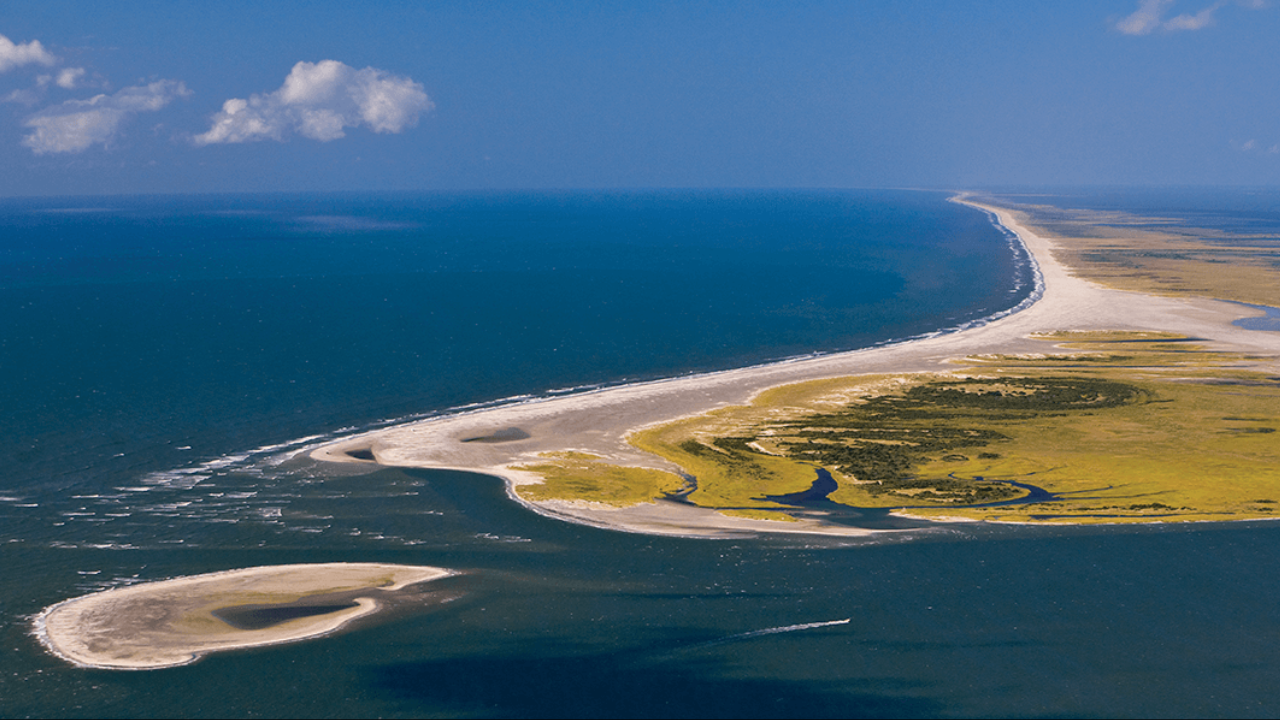
Saltwater gets into everything. It crusts on the windowpanes, rots the floorboards from underneath, and turns the hinges of a heavy oak door into stubborn orange rust within a single season. Henry Pigott knew that rhythm better than anyone. For years, his home stood on a stretch of North Carolina sand that felt less like terra firma and more like a floating raft tethered only by stubbornness and marram grass.
It was 1967. The world was loud, changing, and violently impatient. Yet out on Portsmouth Island, the air smelled only of brine, fish oil, and the endless sweep of the Atlantic wind.
Walk the shore there today, and you will find an unsettling kind of quiet. The houses are empty, bleached silver by the sun, tilting slightly on their pilings as the marsh reclaims what was briefly borrowed. But back then, Henry was one of the last permanent guardians of a fading ghost town. He ran the post office. He kept the generator humming. He watched the tides erase footprints before they had even dried.
Most people look at a map and see colors, borders, and permanent ink. They assume that land is a birthright, something to hold onto until knuckles turn white. Henry looked at a map and saw a conversation with the sea.
Consider what happens when a government comes knocking with a federal designation. In the late nineteen-sixties, the movement to protect the wild outer edges of the American continent was picking up speed. Bureaucrats in Washington had drawn a neat pencil line around Portsmouth Island and Core Banks, dreaming of a national seashore. They wanted wild horses, empty dunes, and shorebirds nesting undisturbed by human clutter. They wanted a monument to an older, untamed America.
There was just one small problem. People lived there.
Henry Pigott did not fit the mold of a stubborn land-grabber holding out for a million-dollar payday. He was a man rooted in the wind. When the negotiations began for the Cape Lookout National Seashore, the calculus was cold. Appraisals, titles, deeds, federal acquisition. To a desk clerk miles away, Henry was simply a parcel number to be cleared from the ledger.
Stop for a moment and picture the weight of that decision.
Your family history is written in the floorboards. Your memories are salted into the plaster. Every storm you survived is a notch on the kitchen doorframe. How much is that worth in federal dollars? How do you price the sound of the surf lulling you to sleep during a nor'easter?
Henry made a choice that defies modern self-interest. He sold.
He didn't do it because he hated his home. He did it because he loved something larger than his own doorstep. He understood that some places are too fragile to survive human ambition. If every inch of barrier island became private docks, weekend cottages, and asphalt driveways, the dynamic engine of the coast would break. The dunes would flatten. The turtles would turn away. The wildness would bleed out.
By letting go, Henry became part of the landscape he was trying to save.
We live in an era obsessed with accumulation. We hoard square footage, digital files, and physical possessions, terrified that if we loosen our grip for even a second, we will somehow vanish. We treat our lives like balance sheets, constantly measuring success by what we manage to fence off and claim as our own.
Henry Pigott stands as a quiet, radical rebuke to that instinct.
When the deal was done and the papers were signed, he walked away. He left behind the rusted anchors, the screeching gulls, and the sweeping horizon. The federal government absorbed the island, folding it into the protected sanctuary of Cape Lookout. Today, thousands of visitors make the boat trip across the sound to walk those empty beaches, breathing in the same salty air that Henry breathed, marveling at the utter absence of human noise.
They rarely think of him. His name is a footnote in environmental history texts, a minor administrative detail in the creation of a park.
Yet every time an oystercatcher darts through the foam, every time the tide sweeps clean a stretch of white sand, Henry's silent bargain is at work. He traded his private horizon for a public eternity. He chose to become a ghost so the island could remain alive.
The wind still howls across Portsmouth Island. The salt still eats away at the old wood of the remaining buildings, refusing to let anything stay human for too long. But out there in the empty stretch between the sound and the open ocean, the sand belongs entirely to the elements once again, resting easy in the hands of a man who knew when to let go.


