The coffee in Beirut always tastes like cardamom and ash. If you sit on a balcony in the Verdun neighborhood, watching the Mediterranean light fracture against half-ruined concrete, you learn to listen to the silence between the traffic honks. That is where Lebanon’s reality hides. In the gaps. In the pauses.
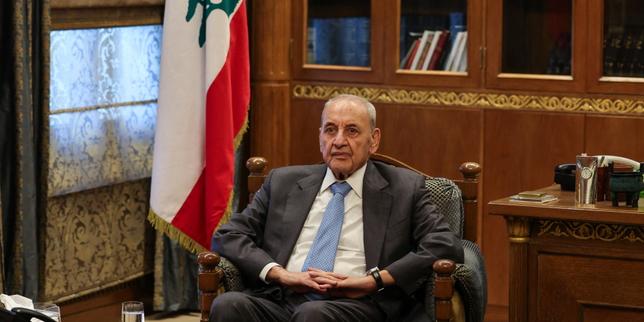
For over three decades, one man has occupied those pauses, transforming himself from a wartime militia leader into the immovable sun around which Lebanese politics helplessly orbits. Don't miss our previous post on this related article.
His name is Nabih Berri.
To understand modern Lebanon, you do not look at the central bank, nor do you look at the fractured ministries. You look at the Speaker of Parliament. He has held the seat since 1992. Presidents arrive, posture, and fade into exile or obscurity. Prime ministers cycle through like seasonal rain, washing away under the weight of systemic collapse. But Berri remains. He is the ultimate political survivor in a region that consumes its leaders with terrifying speed. To read more about the background of this, The Washington Post provides an excellent summary.
To the outside world, he is a line item in a news report about institutional paralysis. To his constituents, he is a provider, a protector, an institutional shield. To his detractors, he is the architect of a frozen system that bars the door to the future.
The truth is far heavier than any of these labels.
The Architecture of Permanence
Consider the physics of a traditional Lebanese arch. It relies on a single keystone to keep two opposing sides from collapsing into each other. Remove the keystone, and the entire structure turns to rubble. Nabih Berri fashioned himself into that keystone.
He represents the Shia community, historically one of the most marginalized demographics in Lebanon's complex confessional mosaic. Before the civil war, the Shia of the south and the Beqaa Valley were largely invisible to the merchant republic of Beirut. Berri, stepping into the shoes of the vanished cleric Musa al-Sadr, took the Amal Movement and weaponized that grievance. He gave a voice to the voiceless, but the price of that voice was total allegiance to the machine.
When the civil war ended in 1990, the warlords did not disappear. They simply traded their camouflage fatigues for Italian tailored suits. The checkpoints moved from the streets into the ministries.
Berri understood this transition better than anyone. He realized that in a state constructed on a fragile balance of eighteen distinct religious sects, power belongs not to the strongest army, but to the man who controls the traffic of compromises. He became the master mechanic of the taif, the post-war consensus. If a law needed to pass, it required his signature. If a government needed to be formed, it required his blessing.
This is not governance by consensus. It is governance by hostage-taking.
Every Tuesday, Lebanon’s political elite would gather at his residence in Ain el-Tineh. They came to kiss the ring, to barter for slices of a shrinking national pie, and to seek permission to rule. The meetings were described in official press releases as "consultations." In reality, they were theater. The script had already been written by the host.
The Invisible Toll of the Safe Bet
Step outside the gilded halls of Ain el-Tineh and walk down to the corniche.
Meet Farah. She is twenty-four, holds a master’s degree in civil engineering, and spends her afternoons filling out visa applications for Canada and France. She has never known another Speaker of Parliament. Her parents voted for Berri’s allies in the nineties, believing that stability was worth any price. Now, they watch their life savings vanish behind the locked doors of bankrupt banks, while the electricity runs for perhaps two hours a day.
"He is like the weather," Farah says, squinting against the sea glare. "You can hate the rain, but you can't vote against it. He is just there. Always."
This is the psychological cost of political immortality. When a leader becomes unchangeable, the citizens stop believing in change itself. The danger of a political figure who cannot be removed is that the state becomes synonymous with their physical body. If Berri is sick, the parliament holds its breath. If Berri is angry, the streets of Beirut grow quiet.
The system relies on a profound, manufactured dependency. In the south of Lebanon, if you need a job in the public sector, a bed in a hospital, or a scholarship for your child, you do not apply through an objective bureaucratic process. You visit the local representative of the Amal Movement. The favor is granted. The debt is registered. Come election day, that debt is repaid in green ink on a ballot paper.
It is a brilliant, tragic loop. The state is starved of resources so that the political bosses can act as the only source of charity. They break your legs, then expect applause because they bought you a crutch.
The Balancing Act on a High Wire
But reducing Berri to a caricature of an autocrat misses the sheer, terrifying brilliance of his survival strategy. He is a secular man leading a sectarian party, a moderate face allied with the region's most radical forces.
His most complex dance is with Hezbollah.
The two Shia factions fought a brutal, bloody fratricidal war in the late 1980s for control of the community's soul. Hezbollah won the military battle, backed by the ideological fervor and financial might of Tehran. Amal kept the bureaucracy.
Since then, Berri has functioned as Hezbollah’s indispensable diplomat. He is the bridge between a heavily armed, blacklisted militia and the international community. When American envoys fly into Beirut to discuss border demarcations or maritime resources, they do not go to the suburbs of Dahiyeh to meet with Hezbollah's leadership. They sit in Berri’s office.
He speaks the language of international law. He understands the nuances of diplomatic protocol. He can smile, crack a joke in French, and reassure Western diplomats that he is the only thing preventing total radicalization. Then, he turns around and ensures that no legislation ever threatens the weapons or the strategic interests of his armed partners.
It is a double life played out on a geopolitical stage. He is the institutional mask that allows a shadow state to operate with impunity.
The Illusion of the Empty Chair
In October 2019, hundreds of thousands of Lebanese filled the streets. They chanted a slogan that echoed from Tripoli to Tyre: "All of them means all of them." They wanted every single figure from the civil war era gone. They burned posters of the President, the Prime Minister, and yes, Nabih Berri.
For a brief, intoxicating moment, it felt like the architecture of permanence was cracking. The youth tore down the invisible walls of fear. They spoke his name aloud in anger, a radical act in a country where criticizing a sectarian leader can get your storefront smashed or your family threatened.
Then came the counter-offensive. It did not arrive with tanks. It arrived on motorbikes.
Young men bearing the flags of Amal and Hezbollah rode into the protest squares, batons raised, setting fire to the tents of the revolutionaries. The message was unmistakable: the keystone would not be moved by tents and slogans.
The revolution fractured. The economy cratered. The port exploded, destroying half the city and killing hundreds. Yet, when the dust settled and the next elections were held, the old guard returned to their seats. Berri was re-elected as Speaker once again. The majority was slimmer, the smiles more strained, but the gavel remained in his hand.
He is now an octogenarian ruling over a country where the median age is under thirty. The disparity is grotesque. It is a nation of the young and the desperate, governed by an oligarchy of the old and the dug-in.
The Unwritten Ending
The tragedy of political immortality is that it is an illusion. Time is the one opponent that cannot be outmaneuvered, bartered with, or intimidated by men on motorbikes.
The real anxiety in Lebanon today is not what happens while Berri stays, but what happens when he finally leaves the stage. The system he created is so bespoke, so reliant on his personal relationships, his specific institutional memory, and his unique ability to balance the demands of Iran with the anxieties of the West, that it cannot be inherited. There is no crown prince. There is no clear successor who can hold the opposing walls of the arch together.
When an entire state is built around a single man, his departure does not create a transition. It creates a void.
Back on the balcony in Verdun, the sun dips below the horizon, turning the sea the color of bruised plums. The generators click on across the city, a chorus of mechanical roars filling the twilight because the national grid has failed again. The lights flicker, stabilize, and cast long, distorted shadows across the streets.
Lebanon remains trapped in the waiting room of history, watching an old man hold a gavel, terrified of the silence that will follow its final fall.


