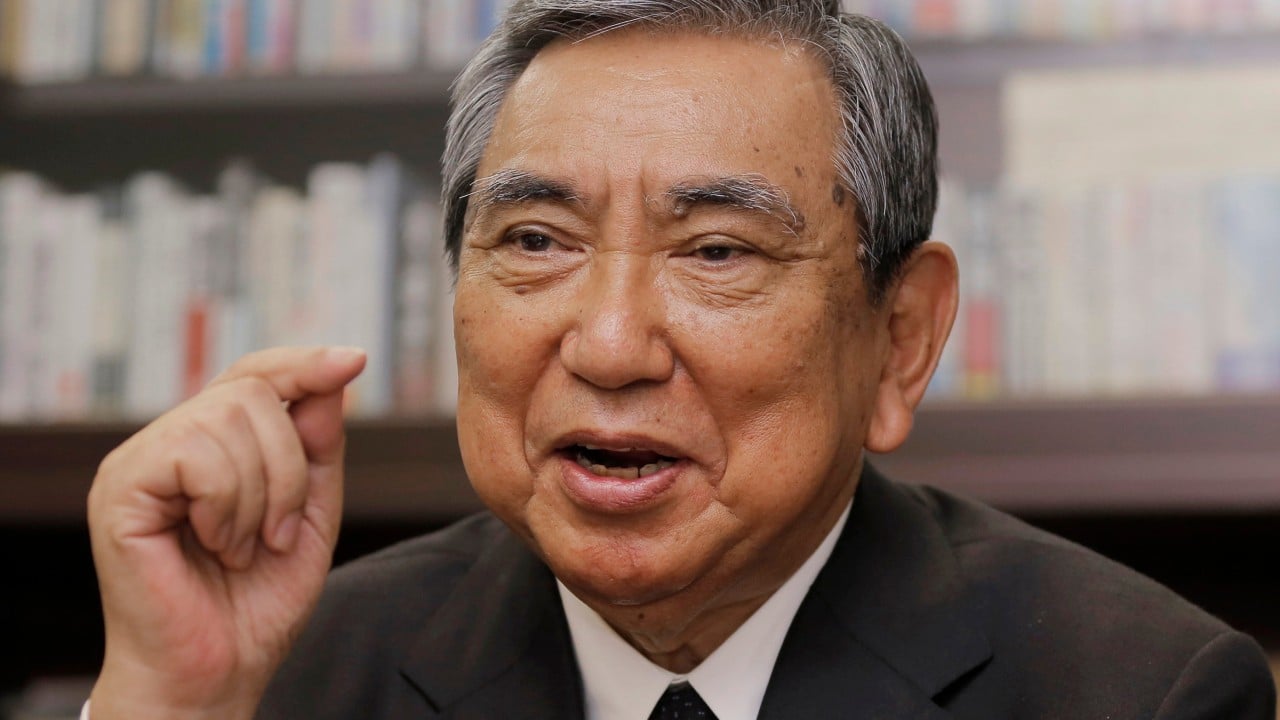
The ink on a government statement is usually cold. It passes through dozens of bureaucrats, each clipping the sharp edges off the words until what remains is a smooth, frictionless pebble of text. It is designed to say everything and mean nothing.
But on August 4, 1993, a man stood before a microphone in Tokyo and read words that carried the weight of lead.
Yohei Kono, then Japan’s Chief Cabinet Secretary, did not offer the usual evasive diplomatic dance. Instead, he spoke of pain. He spoke of coercion. He spoke of a historical scar that most of his political peers preferred to pretend was never there. He acknowledged that the Japanese military had been directly involved in the establishment of comfort stations during World War II. He admitted that women had been forced, deceived, and stripped of their dignity.
Then, he did something even more radical for a conservative Japanese politician. He apologized.
With the passing of Yohei Kono at the age of 89, a fragile, human bridge between Japan and its Asian neighbors has buckled. His death is not just a standard transition of generations. It is the quiet extinguishing of a rare political courage that chose truth over comfort, a choice that feels increasingly foreign in our modern world.
The Weight of the Unspoken
Imagine sitting across from someone who holds the power to legitimize your lifelong trauma with a single sentence, or erase it with a shrug.
For decades, thousands of women across Korea, China, the Philippines, and other occupied territories lived in that exact limbo. To their neighbors, they carried a shameful secret. To the history books of their home countries, they were casualties of war. To the official records in Tokyo, they barely existed at all.
Politicians often treat history like a buffet, selecting the triumphs and ignoring the rot. It is easy to celebrate economic miracles, bullet trains, and cultural exports. It is agonizingly difficult to look into the mirror of the past and confront the monster staring back.
Kono understood this burden. He grew up in the shadow of World War II, witnessing a broken nation rebuild itself from ashes. He knew that true strength did not come from a posture of flawless arrogance. It came from the willingness to heal.
When he issued what would forever be known as the Kono Statement, he was not just reading a press release. He was attempting to perform a delicate, painful surgery on the soul of a nation. He believed that Japan could never fully step into its future while dragging the unacknowledged chains of its past.
The Cost of the Bridge
Building a bridge is a dangerous business. You get kicked from both sides.
To the victims and their advocates, Kono’s words were a vital first step, but they were quickly shadowed by a lingering skepticism. Would the apology stick? Would the next administration honor it? History proved those fears valid. For the next thirty years, the Kono Statement became a political football, repeatedly kicked, deflated, and questioned by rising nationalist factions within Japan.
But the fiercest blows came from behind him.
Within his own political family, the Liberal Democratic Party, Kono was often viewed with deep suspicion. To the conservative hawks, his honesty was a betrayal. They accused him of weakening Japan's international standing, of groveling, of saddling future generations with a guilt that was not theirs to bear. He was subjected to intense scrutiny, public backlashes, and the quiet isolation that comes from defying party orthodoxy.
Consider the sheer loneliness of that position. You stand on the floor of the Diet, surrounded by colleagues who whisper behind their hands, knowing that a simpler, nationalist lie would guarantee you easy applause and a smooth path to power. Yet, you choose the friction.
Why did he do it? Because Kono possessed a trait that has become nearly extinct in contemporary politics: a sense of stewardship. He did not view his office as a prize to be defended, but as a temporary custody of a nation's honor. And to Kono, honor was inextricably linked to honesty.
A Legacy Beyond the Bureaucracy
To understand the man, you have to look beyond the landmark 1993 statement. His career was a long, consistent effort to steer Japan toward a harmonious relationship with its closest neighbors, particularly China.
He served as Foreign Minister. He was the Speaker of the House of Representatives. He led the Japan Association for the Promotion of International Trade. In every role, he operated with the underlying belief that Asia's peace was interdependent. He knew that economic trade was a superficial bond if it was built over a chasm of historical resentment.
There is an old saying that a society grows great when old men plant trees in whose shade they shall never sit. Kono spent his life trying to plant a forest of reconciliation.
But the soil was rocky. Even as he worked to foster deeper ties with Beijing, geopolitical tides were shifting. The rise of China's economic and military might, combined with a resurgence of defensive nationalism in Tokyo, steadily eroded the ground Kono stood on. In his later years, he watched with a quiet, public sorrow as the relations he had spent decades cultivating began to fray under the pressure of modern territorial disputes and regional anxieties.
It must have been a bitter pill to swallow. To watch the bridge you built with your own hands be chipped away by a new generation of leaders who preferred the theater of conflict to the hard work of diplomacy.
The Echoes of a Gentle Voice
We live in an era of political noise. Leaders shout across borders, using historical grievances as fuel to stoke the anger of their bases. Apologies are viewed as weaknesses, concessions as defeats. The prevailing wisdom suggests that to win, you must never admit a mistake.
Kono’s life stands as a quiet, towering refutation of that philosophy.
His death leaves a profound vacuum. There are few figures left in Japanese public life with the historical memory, the moral authority, and the sheer grit to defend the legacy of wartime contrition. As the eyewitnesses to the horrors of the mid-twentieth century fade away, the temptation to rewrite the narrative grows stronger.
Without men like Kono, history becomes flat. It loses its human texture. It becomes a tool for propaganda rather than a lesson for humanity.
The true significance of Yohei Kono is not found in the titles he held or the state dinners he attended. It is found in the soft, steady courage of a man who looked at a historical wound, refused to turn his eyes away, and offered the only medicine that has ever truly worked: the simple, devastating truth.
Somewhere in an office in Tokyo, the microphone stands empty. The documents are filed away in archival boxes. The political debates will continue, louder and harsher than before. But the words he spoke in the summer of 1993 remain, etched into the historical record, a permanent reminder that true patriotism requires the courage to say, We were wrong, and we are sorry.