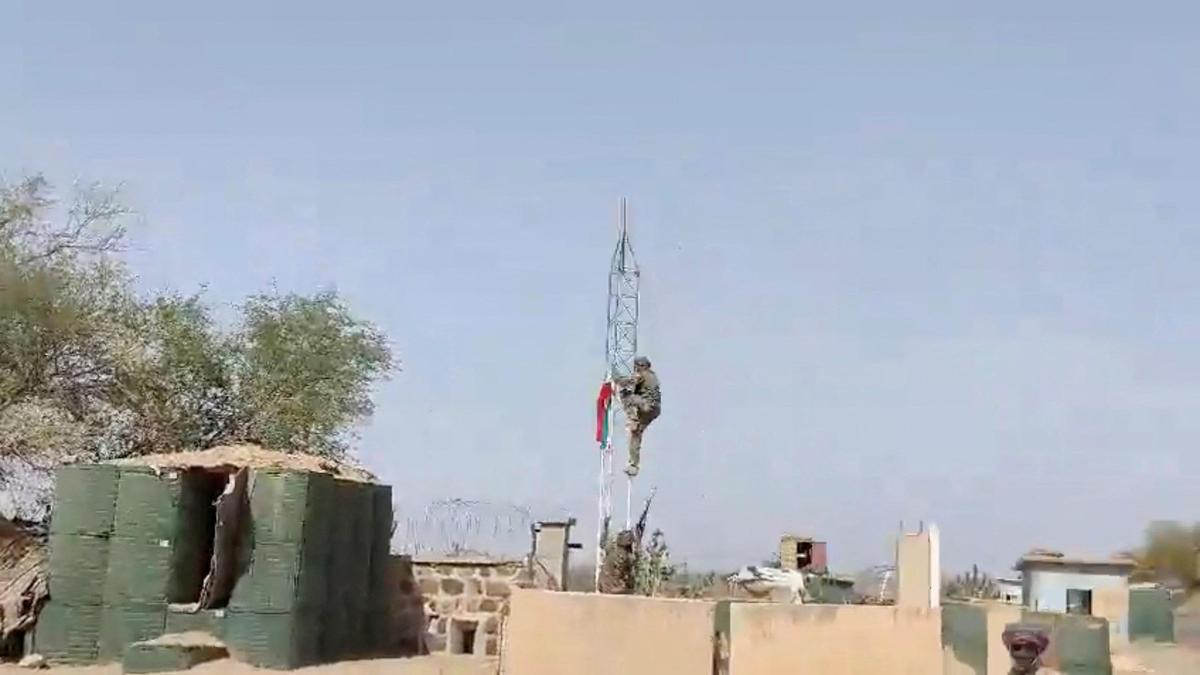
The media is obsessed with flags. When a rebel group in northern Mali tears down a government banner and replaces it with their own over a cluster of concrete barracks, the international press core treats it like a tectonic shift in the Sahel. They call it a "major blow" or a "key strategic loss" for the ruling junta.
They are looking at the wrong map.
Capturing a military camp in the desert isn't a victory; it is an administrative burden. In the vast, unforgiving geography of northern Mali, holding a fixed point is the fastest way to bleed out. While the headlines scream about the fall of another outpost, the reality is that the rebels just inherited a target, and the state just offloaded a liability.
The Myth of Territorial Control
Western military analysts love to map "areas of influence" with colored shading, as if the Sahara were a game of Risk. It’s a comforting lie. In asymmetric warfare across the Azawad region, static positions are deathtraps.
When rebels seize a base, they fall into the same trap that crippled the Malian Armed Forces (FAMa) and their previous international partners. They shift from a mobile, fluid insurgency to a stationary target. They now have to defend walls, manage logistics, and—most importantly—provide for a local population that expects services.
I’ve watched various factions in this region burn through their "victory" momentum in weeks. They capture a base, take a few selfies with abandoned armored vehicles, and then realize they have no way to keep the lights on or stop a drone from turning that base into a graveyard.
The "loss" of a base is often a forced evolution for the state. By being pushed out of indefensible rural outposts, the central government is inadvertently being forced to consolidate. They are losing the "tapestry" of useless checkpoints and hardening their core. It’s not a retreat; it’s a shedding of dead weight.
Logistics are the Real Commander
The competitor reports focus on the "bravery" of the assault or the "sophistication" of the rebel tactics. Let’s talk about the fuel.
To hold a base in the north, you need a supply line that stretches hundreds of miles through hostile territory. The FAMa couldn't do it. The UN couldn't do it. To think a disparate coalition of rebel groups can do it without becoming sitting ducks is a failure of basic arithmetic.
The Math of a Failed Occupation:
- Water: Most northern bases rely on deep wells that require constant maintenance and fuel for pumps.
- Food: Local markets in the north are already stressed. Foraging turns the locals against you; importing makes your convoys easy targets.
- Ammo: Every bullet fired in defense of a stationary wall is a bullet that isn't being used for mobile strikes.
In this environment, the "captured" base becomes a vacuum. It sucks in resources and offers nothing in return but a symbolic victory that doesn't pay the bills. If you want to win in Mali, you don't take the base—you burn it and move on. The fact that rebels are trying to hold these spots proves they are still thinking like a 20th-century army in a 21st-century meat grinder.
The Wagner Variable
The standard narrative says the arrival of Russian mercenaries was supposed to fix this, and their failure to hold these bases proves they are incompetent. That is a fundamental misunderstanding of the business model.
Mercenaries aren't in Mali to hold desert outposts for the glory of Bamako. They are there for resource extraction and regime security. Losing a remote camp in the north doesn't hurt the bottom line in the gold mines or the security of the palace. In many ways, the chaos in the north provides the perfect cover for the state to ignore its constitutional duties while focusing on the profitable sectors.
The international community asks, "How can the government allow this to happen?" The answer is simple: they don't care about the north. They care about the perception of trying. Every base lost is a new reason to ask for more hardware, more "private security" funding, and more central control. It is a profitable defeat.
Why the Rebels Are Losing by Winning
If you are a rebel leader, the worst thing you can do is win a conventional battle.
Once you take a city or a major camp, you become the status quo. You are no longer the "freedom fighter"; you are the guy who can't fix the generator. The local population's patience for ideological purity lasts exactly as long as the food supply.
We saw this in 2012. The rebels took the north, and within months, they were fractured, infighting, and eventually pushed out because they couldn't govern the "landscape" they had so "brilliantly" conquered. History is repeating itself, but the pundits are treating it like a brand-new development.
The Flawed "People Also Ask" Reality
People often ask: "Will the fall of northern bases lead to the collapse of the Malian government?"
The answer is a hard no. Mali’s government exists in the "Soudanian" south. The northern two-thirds of the country have always been a ghost territory for the central state. Losing these bases doesn't bring the rebels closer to Bamako; it just stretches their own lines until they snap.
Another common question: "Does this mean the rebels are getting stronger?"
They are getting more equipment, sure. But "strength" in the Sahel is measured by mobility. By tying themselves to fixed locations, they are actually becoming more vulnerable to air strikes and high-altitude surveillance. They are trading their greatest asset—invisibility—for a few piles of rubble.
Stop Watching the Map
Stop looking at who "owns" which town. It is a meaningless metric in a conflict where the front lines don't exist.
The real indicators of power in Mali are:
- Control of the transit corridors to the Gulf of Guinea.
- The price of grain in the central markets.
- The ability of the government to pay the army in the capital.
The fall of a northern camp affects none of these. It is a tactical event in a strategic vacuum. The rebels are celebrating a "victory" that actually ties a noose around their necks, while the government in Bamako uses the "tragedy" to tighten its grip on the regions that actually matter.
If you want to understand the Sahel, ignore the flags. Follow the fuel trucks. Watch the markets. The moment a rebel group captures a base and tries to stay there is the moment they begin their decline. The desert doesn't belong to whoever has the biggest base; it belongs to whoever is fast enough to leave it behind.
Abandon the base. Save the movement. Anything else is just theater for the evening news.