Big nations love talking about the rules-based international order until those rules get in their way. Malaysia isn't buying it anymore.
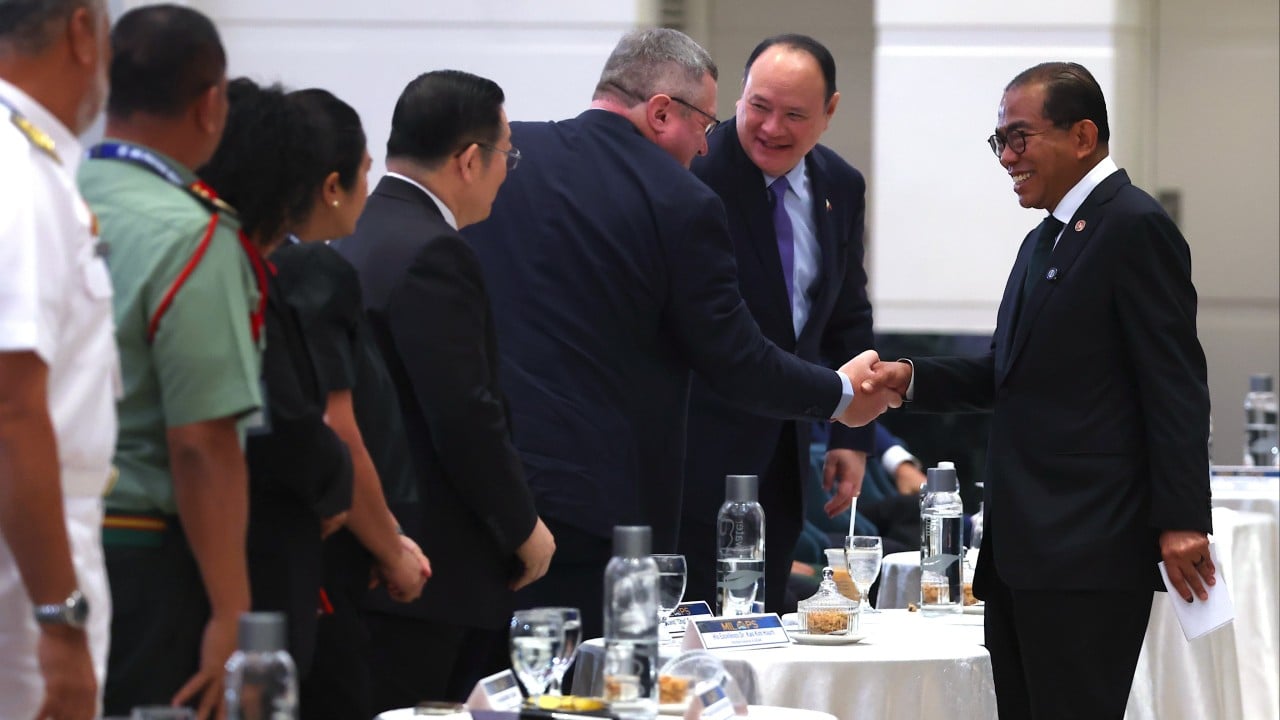
When Defence Minister Datuk Seri Mohamed Khaled Nordin took the stage at the 37th Annual International Military Law and Operations Conference in Kuala Lumpur, he didn't sugarcoat his words. He looked straight at the heavy hitters of global politics and dropped a hard truth. Major powers must apply international law consistently, not just when it suits their geopolitical playbook.
If you've been watching Southeast Asia lately, you know this stance isn't coming out of nowhere. It's a symptom of deep regional anxiety.
The Core Problem of Selective Rules
Global superpowers treat international law like an à la carte menu. They pick compliance when it hurts their rivals, and they look the other way when their allies break the protocol. Malaysia's leadership sees right through this hypocrisy.
Prime Minister Anwar Ibrahim has hammered on this exact point repeatedly. When laws apply to some nations but not others, the entire global architecture loses its credibility. You can't expect smaller countries to respect a system built on double standards.
This isn't just academic philosophy. It has real-world consequences for trade, security, and peace across the Indo-Pacific.
Why Southeast Asia Refuses to Pick a Side
Washington and Beijing want absolute loyalty. They expect smaller nations in ASEAN to fall in line with their respective spheres of influence.
Malaysia pushes back hard against that pressure. The official foreign policy stance remains clear: peace doesn't require anyone to choose sides. Instead, it requires engaging everyone while sticking firmly to local principles.
Think about the Zone of Peace, Freedom, and Neutrality concept, known as ZOPFAN. Conceived decades ago during the Cold War, this framework keeps Southeast Asia from turning into a proxy battleground. Malaysia insists that external powers respect the Treaty of Amity and Cooperation in Southeast Asia.
When military forces operate in the region, their job is supposed to be deterrence and stability, not intimidation.
What This Means for Global Stability
When regional leaders call out superpowers for selective justice, they are defending the rules of the road for everyone else. Smaller nations rely on international law because they don't have aircraft carriers to settle disputes. If powerful capitals hollow out those laws, chaos follows.
You're watching a broader shift in the Global South. Countries are refusing to stay quiet while the rules keep shifting underneath them.
Keep an eye on diplomatic talks across ASEAN over the next few months. If major powers keep testing boundaries, expect Kuala Lumpur and its neighbors to ramp up the pressure. Real security won't come from military build-ups or coercion. It will come from accountability.