Major League Baseball wants you to believe its latest uniform controversy is just a routine matter of administrative paperwork. It isn't. When multiple San Francisco Giants pitchers defaced their team-issued Pride Night caps, they didn't just break a wardrobe rule. They exposed the league's massive, underlying culture clash.
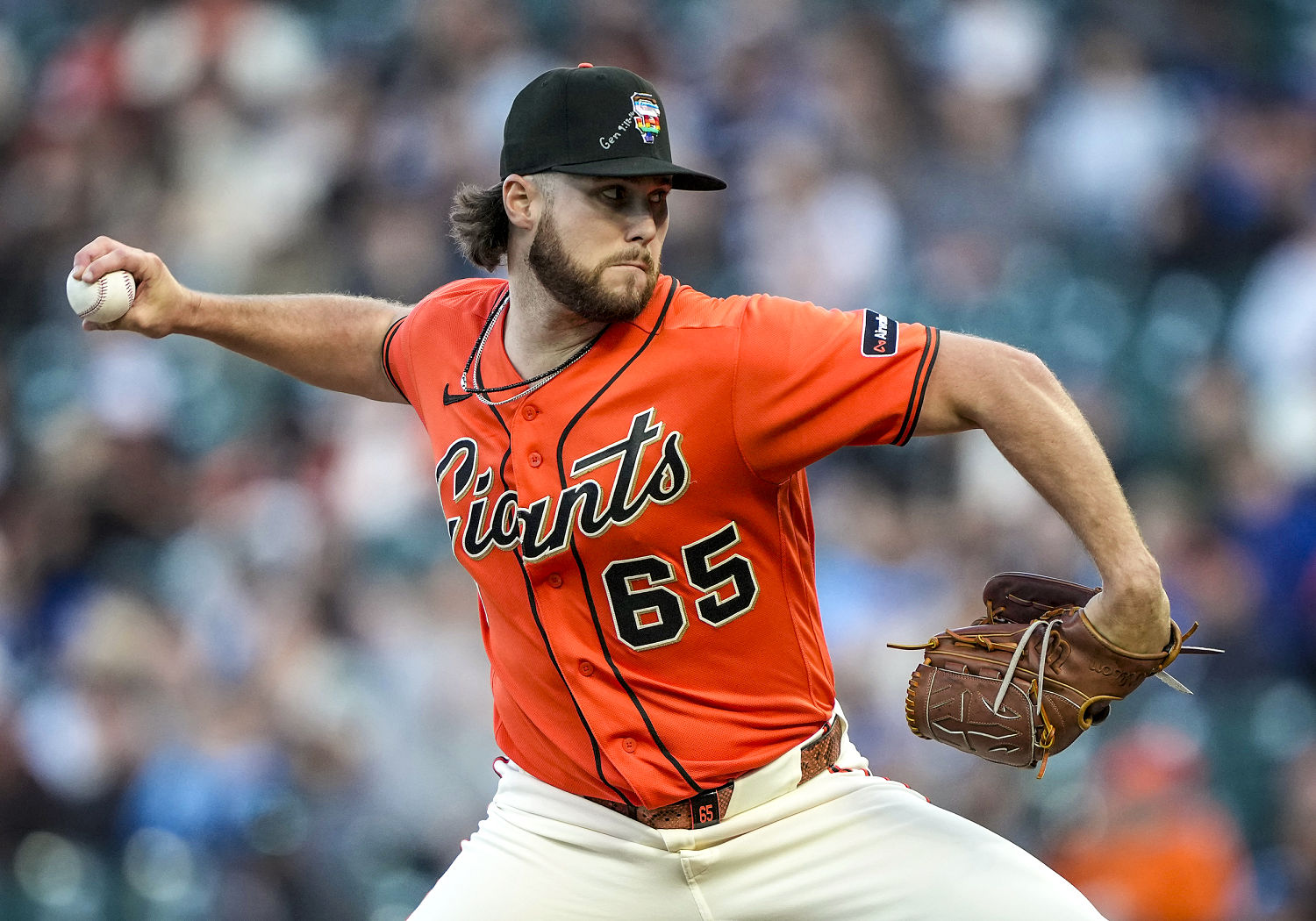
During a Friday night home game against the Chicago Cubs at Oracle Park, four out of five pitchers used by the Giants staging a silent, coordinated protest. Starter Landen Roupp and relievers JT Brubaker and Ryan Walker used white ink to write "Gen 9:12-16" or "Genesis 9:13-15" directly onto their caps. Roupp’s lettering directly overlapped the special rainbow-colored "SF" logo designed to celebrate the LGBTQ+ community. Meanwhile, left-handed reliever Sam Hentges bypassed the modification entirely by refusing to wear the Pride cap at all, taking the mound in the team's standard orange-and-black headwear.
The league office reacted by issuing standard verbal warnings. MLB’s chief communications officer, Pat Courtney, stated that writing on apparel violates Uniform Regulations. A follow-up statement from the league emphasized that the warning was completely non-disciplinary and had nothing to do with the actual content of the message. The league noted it hands out the exact same warnings when players write "Dad" or "I Love Mom" on their gear.
That explanation is incredibly tone-deaf. Equating a coordinated religious protest on a specific theme night with a player writing a Mother's Day message is absurd. The choice of the biblical passage was highly deliberate. Genesis 9 discusses God’s covenant with Noah, framing the rainbow as a divine sign. Within conservative Christian circles, citing this verse during Pride events is a well-known tactic to reclaim the symbol. By treating this as a simple dress code infraction, MLB is trying to hide from a social conflict that it helped create.
The Illusion of Corporate Inclusivity
Major League Baseball has pushed corporate inclusivity initiatives heavily because its regular season directly overlaps with June's Pride Month. Teams across the country see these themed nights as a great way to sell tickets, engage local communities, and project modern values. But baseball teams aren't monolithic organizations. The front offices designing these marketing campaigns are completely disconnected from the actual clubhouses executing them.
Professional baseball rosters are built from a diverse mix of backgrounds, including heavily conservative regions of the American South and deeply religious communities across Latin America. When a corporate front office mandates that every player wear a social cause symbol, friction is inevitable.
We've seen this movie before. In 2022, five pitchers for the Tampa Bay Rays refused to wear rainbow logos on their jerseys and caps, citing their religious beliefs. In hockey, the NHL faced so much internal pushback from players refusing to wear Pride-themed warmup jerseys that the league scrapped specialized themed warmups entirely.
By forcing mandatory uniform participation, leagues put players in a corner. Pitcher Sam Hentges admitted to reporters that he felt forced to support something he morally opposes. Landen Roupp insisted his actions carried no hatred and were just a statement of his personal faith. But context matters. Choosing that specific night to overwrite a community symbol sends a distinct, divisive message to the fans in the stands.
The San Francisco Backlash and the Splintered Clubhouse
The fallout in San Francisco is particularly severe because of the city's rich history as a sanctuary for LGBTQ+ culture. For an organization like the Giants—who have worn Pride patches and caps since 2021—to watch four of its pitchers visibly reject a home-field community celebration is a massive public relations disaster.
Fans are furious. Season ticket holders are threatening to walk away, and local activists are already organizing protests for upcoming home games. State Senator Scott Wiener publicly criticized the players, pointing out that they could have cited scripture on any other day of the year, but specifically chose to target a night meant to make a marginalized community feel welcome.
The response from Giants management shows just how messy things are behind closed doors. Manager Tony Vitello claimed there was no pre-game discussion about the hats, suggesting it was just general knowledge that players have the freedom to do what they think is best. The Giants organization later issued a formal apology to the LGBTQ+ community, acknowledging the pain and anger the players' actions caused while simultaneously defending the rights of individuals to opt out of team activations.
You can't have it both ways. A team cannot authentically market itself as a safe, inclusive space for a community while simultaneously hosting an internal, collective decision by its athletes to protest that very inclusion on the field.
Moving Beyond Mandatory Symbols
Major League Baseball's strict uniform policy exists to protect corporate branding and maintain a professional on-field appearance. Section (a) of the Uniform Regulations explicitly states that players cannot write, attach, or display nicknames or messages on playing equipment.
Historically, this rule keeps the game clean. It stops players from turning their bodies into billboards for personal sponsors or political campaigns. But using a bureaucratic rule to referee a culture war is a losing strategy. It pleases absolutely nobody. Conservative fans believe the league is suppressing religious freedom, while progressive fans feel the league is shielding players from the consequences of exclusionary behavior.
If MLB wants to fix this recurring disaster, it needs to stop forcing mandatory symbolic participation. True inclusion isn't achieved by forcing an athlete to wear a patch they fundamentally disagree with. That just creates resentment and leads to public defiance on the mound.
Teams should continue hosting community nights, donating to local charities, and inviting diverse groups to the ballpark. But the on-field uniform should remain neutral. Let the front office run the stadium promotions, and let the players wear the standard team colors. Otherwise, baseball will continue to find its game coverage eclipsed by arguments over white ink, altered caps, and a divided clubhouse.
Drop the mandatory patches. Keep the community celebrations. Stop using the rulebook as a shield for corporate cowardice.