Smoke does not care about borders.
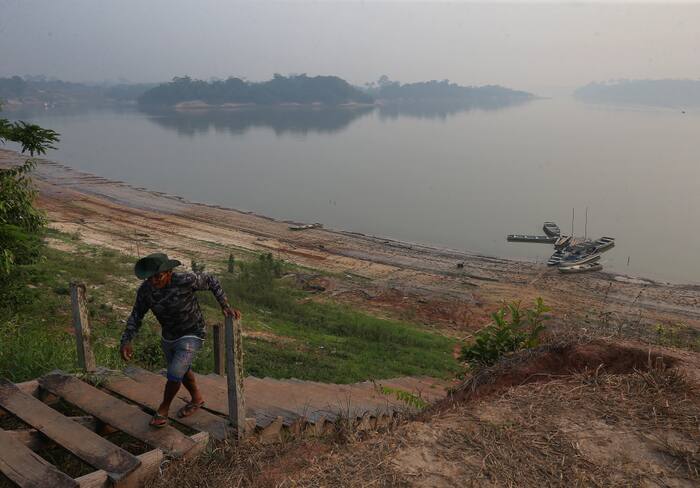
If you have ever stood on the edge of a clearing in the Brazilian state of Pará during the dry season, you know that the air does not merely smell like campfire; it tastes like copper, ash, and the slow, suffocating death of something ancient. Your eyes water before you even see the flames. The horizon turns a bruised, apocalyptic orange by three in the afternoon, blotting out the sun until the midday heat feels trapped beneath a wool blanket.
For four years, that smoke was the defining sensory reality of the Amazon basin.
When the electoral tallies finally ticked past fifty percent in Brazil’s presidential runoff, giving Luiz Inácio Lula da Silva a razor-thin victory over Jair Bolsonaro—50.9 percent to 49.1 percent—the reaction across the globe was immediate. Environmentalists wept. Climate diplomats exhaled. Headlines declared that the Amazon could finally breathe a sigh of relief.
Yet if we reduce this moment to a simple political scoreboard, we miss the real story. Beneath the diplomatic handshakes and the jubilant crowds waving red flags on Avenida Paulista lies a much quieter, far more fragile reality. A presidential election does not instantly extinguish a fire, nor does a ballot box magically replant 13,000 square kilometers of felled rainforest. What changed in Brazil is not the physical forest overnight, but the invisible architecture of survival that keeps the world’s largest tropical rainforest from collapsing into a dry savanna.
To understand why a single election in South America dictates the rainfall in the American Midwest and the carbon budget of the entire planet, we have to leave the podiums in Brasília and step into the mud.
The Invisible River Above Your Head
Imagine, for a moment, a hypothetical hydrologist named Elena working at a monitoring station near Manaus, where the dark, tea-colored waters of the Rio Negro meet the sandy, rushing current of the Solimões. Let us use Elena to trace an invisible phenomenon that most people outside South America never think about.
Every single day, Elena watches the sky, not the river.
A single large Amazonian tree can pump up to 1,000 liters of water from the soil and release it into the atmosphere through its leaves every twenty-four hours. Multiply that by roughly 390 billion trees, and you get what scientists call "flying rivers"—massive, invisible currents of water vapor moving westward from the Atlantic Ocean, picking up moisture from the forest canopy, hitting the wall of the Andes mountains, and turning south to water the agricultural heartlands of Brazil, Argentina, and Paraguay.
Without the trees, the flying rivers dry up.
Between 2019 and 2022, under the Bolsonaro administration, deforestation in the Brazilian Amazon surged by roughly 60 percent compared to the previous four years. In 2021 alone, satellite data from Brazil’s National Institute for Space Research (INPE) recorded the loss of 13,235 square kilometers of forest—an area nearly the size of Connecticut erased in twelve months.
Think of the Amazon not as a static park, but as a living heart. Every time a patch of forest is cleared and burned to make way for illegal cattle pasture or wildcat gold mining, a piece of that pump stops beating. Climate scientists Carlos Nobre and Thomas Lovejoy famously warned that the Amazon is dangerously close to a "tipping point." If deforestation reaches between 20 and 25 percent of the original forest cover—and we are currently hovering around 17 to 18 percent—the hydrological cycle breaks. The rainforest loses its ability to generate its own rain, triggering a catastrophic, self-reinforcing dieback that would turn lush jungle into degraded scrubland, releasing up to 90 billion tons of carbon dioxide into the atmosphere.
That is the invisible stake behind the celebration of Lula’s return. Environmentalists were not merely cheering for a left-wing politician; they were cheering because the person holding the chainsaw's off-switch had finally been replaced.
How You Dismantle a Forest Without Firing a Shot
When people hear that deforestation spiked, they often picture armies of loggers marching into the woods with government permits. The reality is far more insidious, and it reveals how fragile environmental protection truly is.
During his previous two terms from 2003 to 2010, Lula achieved what many thought impossible. Working alongside his legendary environment minister, Marina Silva, his government slashed Amazon deforestation by more than 80 percent. They did it not through magic, but through boring, relentless institutional muscle: real-time satellite monitoring, coordinated raids by federal police, strict credit blacklists for farmers operating on illegally cleared land, and the demarcation of millions of hectares of Indigenous territories.
Then came the dismantling.
Between 2019 and 2022, the Brazilian government did not need to pass a law making deforestation legal; it simply starved the agencies meant to stop it. Budgets for IBAMA—Brazil’s environmental enforcement agency—and ICMBio, which manages conservation units, were gutted. Fines for environmental crimes dropped to their lowest levels in two decades. Experienced field inspectors were sidelined or replaced with military appointees who had zero background in ecology.
Consider what happens next when the sheriff announces he is going on vacation.
Illegal land grabbers—known locally as grileiros—began invading public lands with brazen confidence. Armed wildcat gold miners, or garimpeiros, pushed deep into the Yanomami Indigenous territory, poisoning rivers with mercury and bringing waves of malaria and malnutrition to communities that had protected the forest for centuries. In August 2019, ranchers and land speculators even organized a coordinated "Day of Fire," setting blazes simultaneously along highway BR-163 to demonstrate their loyalty to a president who openly mocked environmental regulations and promised not to demarcate "one more centimeter" of Indigenous land.
I remember speaking with an activist from the state of Acre who described the psychological shift on the ground during those years. Before 2019, illegal loggers worked at night, terrified of the sound of an IBAMA helicopter. By 2021, they were clearing land in broad daylight, waving at passing trucks, convinced that the state was now on their side.
The Promise and the Trap of Victory
So, when Lula stepped up to the microphone on election night and declared, "Brazil is ready to resume its leading role in the fight against the climate crisis," the relief was visceral. Within days, Norway and Germany announced they would unfreeze more than $1 billion in contributions to the Amazon Fund—a critical financial mechanism that had been paralyzed since 2019 after Bolsonaro dissolved its steering committee.
At the COP27 climate summit in Egypt shortly after the vote, Lula received a rock-star welcome. Crowds chanted his name as he promised zero deforestation by 2030, the creation of a dedicated Ministry of Indigenous Peoples, and the immediate revival of satellite-guided enforcement raids.
It is an intoxicating vision. Yet if we are being honest with ourselves, celebrating a political victory is the easy part. Governing a fractured nation where the destroyers of the forest have spent four years building political power, wealth, and ammunition is something else entirely.
Let us be candid about the obstacles standing in Lula’s way, because pretending this will be easy does a disservice to the people risking their lives on the front lines.
First, Lula won by less than two percentage points in a deeply polarized country. Congress remains heavily dominated by the bancada ruralista—a powerful agribusiness caucus that fiercely resists environmental restrictions and views strict forest codes as an obstacle to economic growth. Every major legislative reform Lula attempts will have to survive a gauntlet of hostile lawmakers who owe their seats to industrial agriculture and extractive industries.
Second, the criminal networks operating in the Amazon today are vastly more sophisticated than they were during Lula’s first presidency twenty years ago. Illegal logging, wildcat mining, and land grabbing have merged with transnational drug trafficking syndicates. Deforestation is no longer just a rogue rancher expanding a pasture; it is a multi-billion-dollar money-laundering operation. Sending unarmed or under-resourced environmental inspectors into towns where local mayors are funded by illegal gold will require a massive, sustained security commitment—and it carries the grim certainty of violent backlash.
Third, there is the contradiction within Lula’s own economic ambitions. He was elected largely on a promise to eradicate hunger, revive Brazil’s sluggish economy, and lift millions back into the middle class. Historically, Lula has also championed massive infrastructure projects in the Amazon—hydroelectric dams like Belo Monte, highway paving projects, and oil exploration near the mouth of the Amazon River. Balancing the urgent need for economic development against the ecological survival of the basin will test every ounce of his political dexterity.
Why the Forest Still Needs Defenders Who Never Sleep
Step back for a moment and look at a map of the Amazon basin overlaid with satellite data showing intact forest cover. One pattern jumps off the screen immediately.
The sharpest, clearest lines separating lush, unbroken emerald canopy from scarred, brown pastureland are not national parks. They are Indigenous territories.
Studies by the World Resources Institute and the United Nations consistently show that deforestation rates inside demarcated Indigenous lands are a fraction of what they are outside them. For generations, Indigenous communities have acted as the forest's immune system. They know every creek, every medicinal root, every seasonal shift in bird migration. They do not protect the forest because of carbon credits or international treaties; they protect it because the forest is their pharmacy, their grocery store, their cemetery, and their identity.
During the four years of institutional abandonment, Indigenous leaders like Raoni Metuktire, Sônia Guajajara, and Alessandra Korap Munduruku became the last line of defense. When the federal police stopped showing up, Indigenous forest guardians formed their own patrols, confiscating chainsaws and burning illegal logging camps at immense personal risk. Many paid for that courage with their lives, alongside allies like British journalist Dom Phillips and Brazilian Indigenous expert Bruno Pereira, whose murders in the Javari Valley shocked the conscience of the world.
This is why Lula’s pledge to create a Ministry of Indigenous Peoples and resume land demarcations matters far more than any speech at a climate conference. You cannot police an area larger than Western Europe solely from satellites in Brasília. You need the people who live beneath the canopy to have the legal authority, funding, and protection of the state behind them.
What Happens When the Smoke Clears
Consider what a true turnaround looks like on the ground—not in ten years, but in the months immediately following a shift in political will.
It begins with something unglamorous: data transparency. Under the new administration, INPE’s satellite alerts are no longer treated as political enemies to be suppressed or questioned. When a clearing appears on a screen in Brasília, coordinates are sent to IBAMA field teams within hours.
Next comes the disruption of the supply chain. Illegal timber and gold only have value if they can enter legitimate markets. By reinstating strict traceability rules for cattle raised near deforested zones, tightening oversight on gold dealers who currently rely on "good faith" paper receipts to launder illegally mined bullion, and cutting off subsidized agricultural loans to offenders, the government can make environmental crime financially toxic again.
Then comes the hardest, slowest work: building a bioeconomy.
If a poor family in a remote river town in Amazonas has only two ways to feed their children—working for an illegal logger or harvesting açaí berries, Brazil nuts, and rubber for pennies—enforcement alone will eventually fail. Real, lasting conservation requires investing in science, local processing plants, and global market access so that a standing tree is demonstrably worth more alive than cut down.
The Breath Before the Climb
It is tempting to view Lula’s victory as the end of a dark chapter—a neat cinematic resolution where the villains exit stage left and the forest heals itself.
Nature does not work on four-year election cycles.
The scars left by four years of rampant burning will remain visible from space for decades. Carbon already released into the sky cannot be wished back into wood. And the political forces that profited from the destruction of the Amazon have not vanished; they are simply waiting for the global spotlight to move on to the next crisis.
Yet anyone who understands how close the Amazon came to irreversible collapse knows why environmentalists allowed themselves a moment of pure, unfiltered joy when the election results came in. For four years, watching the daily satellite fire maps felt like watching someone deliberately set fire to the library of Alexandria while the fire department had its hoses cut.
Now, the water is back on. The doors to the world's largest climate laboratory are open again, the scientists are back at their desks, and the guardians of the forest finally have a government that recognizes their right to exist.
Walk out to the edge of that clearing in Pará at dawn after the first heavy rains of the wet season. The ash has been washed from the leaves. Mist rises off the canopy in thick, white ribbons, climbing toward the clouds to form the flying rivers that will carry life across an entire continent.
The Amazon is not saved. Not yet.
For the first time in four years, though, it has a fighting chance to live.