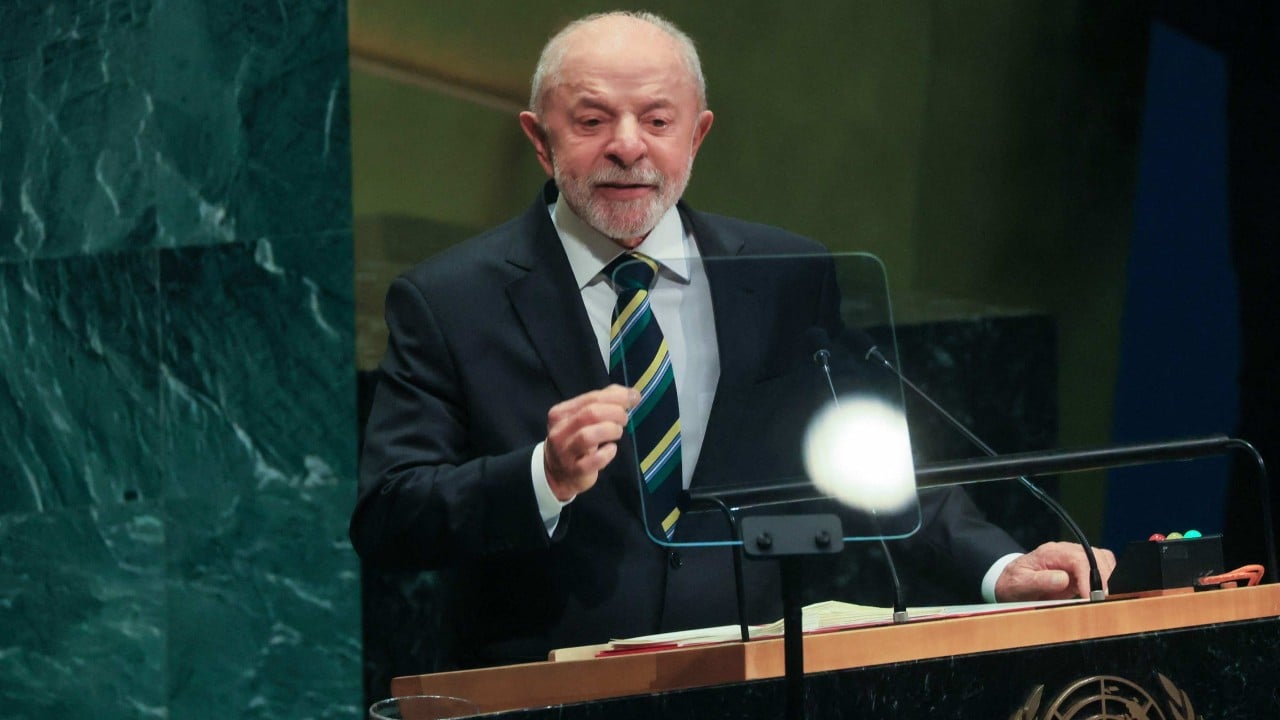
Brazilian President Luiz Inácio Lula da Silva has made it clear that Brasilia will not act as a client state to Washington, using international diplomatic platforms to endorse the China-led peace initiative for the war in Ukraine and declaring that his nation belongs to no one's backyard.
This diplomatic friction exposes a widening fault line between emerging economies and traditional Western hegemony. Latin America’s largest nation is charting an independent course that prioritizes trade pragmatism over ideological alignment. For decades, United States foreign policy treated the Western Hemisphere as a geopolitical zone of exclusive influence under the Monroe Doctrine. Lula’s recent posture challenges that assumption directly, exploiting a global multipolar shift where middle powers increasingly leverage competition between Washington and Beijing to secure their own strategic autonomy.
The immediate catalyst for this confrontation is the ongoing conflict in Europe and the diplomatic vacuum surrounding peace negotiations. While Western capitals pressed for total isolation of Moscow and unconditional military backing for Kyiv, Brasilia and Beijing forwarded a six-point consensus advocating for immediate ceasefires and direct talks involving both belligerents. Washington dismissed the framework as unhelpful or implicitly favorable to Russian territorial gains. Lula countered by accusing Western powers of prolonging the bloodshed through their relentless arms shipments, arguing that true diplomacy requires engagement with all major global players, regardless of ideological disagreements.
Understanding this stance requires looking past the rhetoric of sovereignty into the cold calculus of trade. China remains Brazil's largest export market, absorbing tens of millions of tons of soybeans, iron ore, and beef annually. Beijing is also the primary financier of infrastructure projects across South America through its Belt and Road Initiative, though Brasilia has navigated these overtures carefully to avoid a formal accession that would trigger immediate economic retaliation or diplomatic friction with Washington.
At the same time, Brazil depends heavily on American capital markets, technology transfers, and historical institutional ties. Lula's foreign policy is not an outright pivot toward Beijing, but a masterclass in transactional non-alignment. By keeping one foot in the Western financial architecture and the other firmly planted in BRICS-led development frameworks, Brasilia maximizes its bargaining power.
The Monroe Doctrine is dead, even if Washington refuses to issue a formal obituary. For much of the twentieth century, Latin American leaders who defied American hegemony faced CIA-backed coups, severe economic blockades, or immediate diplomatic isolation. Today, the global landscape looks fundamentally different. The rise of alternative financial networks, digital payment systems, and robust non-Western consumer markets means that developing nations can absorb Western displeasure without facing total economic collapse.
When Lula tells Washington that Brazil is no one's backyard, he is speaking to a domestic constituency that has long resented American paternalism, while simultaneously signaling to global investors that South America is open for business on its own terms. This posture complicates American foreign policy objectives in the Global South, where countries increasingly view great power competition as an opportunity to extract concessions rather than a binary choice between democracy and autocracy.
The practical consequences of this independent streak extend deep into regional security and climate negotiations. Washington hoped to secure unified hemispheric condemnation of Russia and China's expanding footprint in Latin America. Instead, it faces a fractured continent where regional heavyweights like Brazil and Mexico refuse to participate in economic sanctions regimes.
The strategy carries inherent risks for Brasilia. Overplaying the balancing act could alienate American lawmakers, who control vital trade exemptions and military cooperation agreements. Financial markets can also be fickle; currency volatility and capital flight remain persistent threats for developing nations that anger major reserve currency issuers. Lula's administration is betting that the sheer size of the Brazilian economy and its indispensability to global agricultural and mineral supply chains provide sufficient insulation against punitive measures.
The era of unquestioned American primacy in the Western Hemisphere has drawn to a close. Lula da Silva’s refusal to toe the Washington line on Ukraine and his embrace of multipolar diplomacy are not anomalies, but the opening salvo of a new geopolitical reality where middle powers refuse to be sidelined in the architecture of global governance.