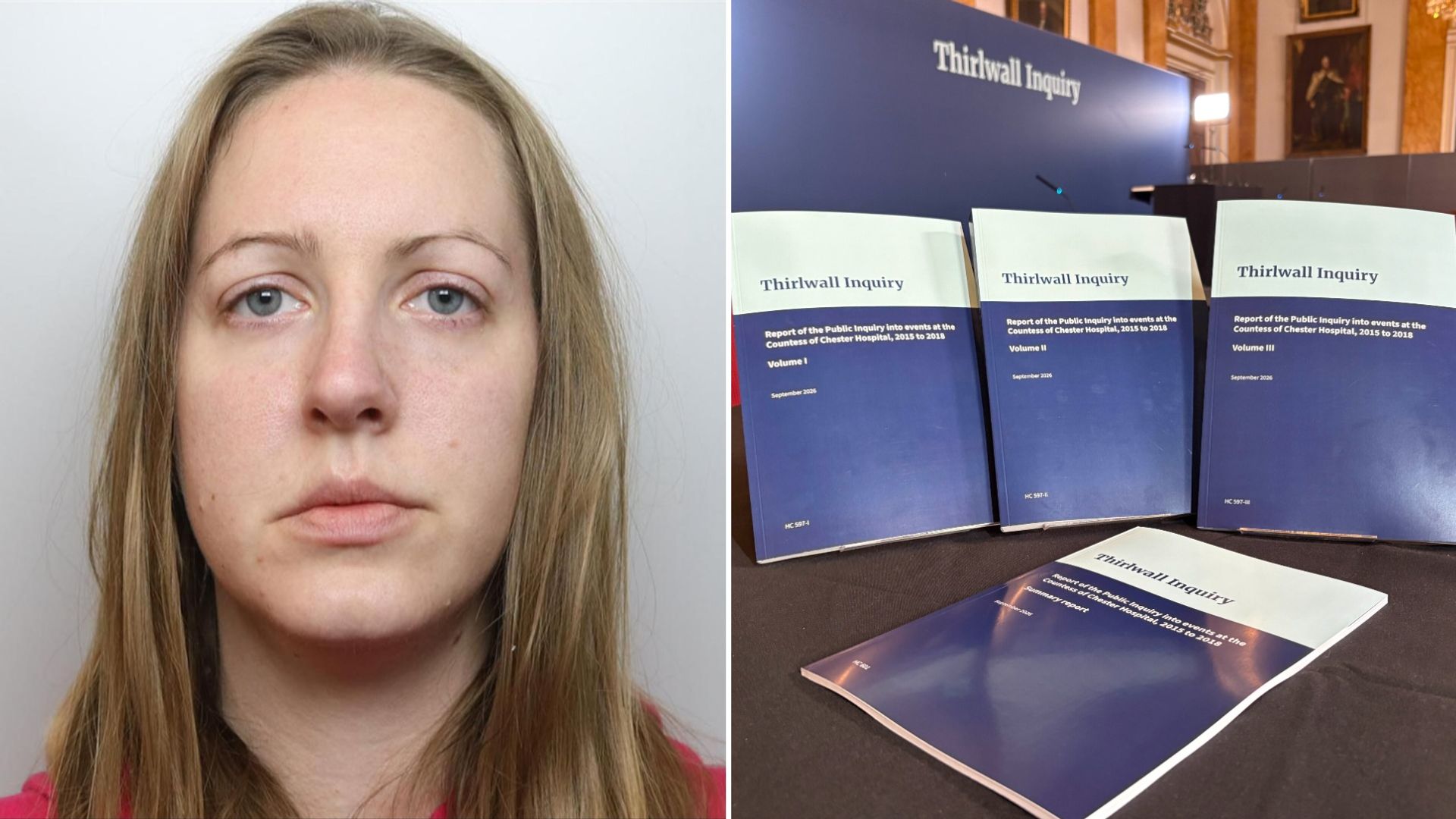
Three innocent babies might be alive today if hospital executives had listened to doctors instead of protecting their own institutional reputation. That is the devastating, unvarnished truth at the heart of the Thirlwall Inquiry report. For years, the horrifying crimes committed by nurse Lucy Letby at the Countess of Chester Hospital were treated as an unthinkable aberration by people who simply refused to look the truth in the eye. When clinicians raised alarms about a sudden, unexplained spike in infant mortality, they were sidelined, ignored, and forced to apologize to the very person murdering children in their care.
Now, the fallout has forced a radical reckoning across the entire National Health Service. Lady Justice Thirlwall’s exhaustive 822-page final report has laid bare a culture of corporate self-preservation that allowed a serial killer to operate unchecked. Among the sweeping reforms demanded by the inquiry is a proposal that has sparked intense debate across medical circles: fitting every single neonatal cot and incubator across England with live-streaming cameras.
If you think this is just another bureaucratic knee-jerk reaction, you are missing the bigger picture. This inquiry isn't just about one rogue nurse. It is a damning indictment of a healthcare system that prioritized public relations over patient safety, and fixing it requires tearing up old playbooks completely.
The Anatomy of Institutional Denial
What happened at the Countess of Chester Hospital between June 2015 and June 2016 wasn't just a failure of individual oversight. It was an institutional collapse. When senior consultants tried to sound the alarm, hospital executives responded with defensiveness and denial. They worried about sensational press coverage. They worried about regulatory ratings. They worried about everything except the infants dying in incubators.
The inquiry made it explicitly clear that three babies could have survived if management had involved the police weeks or months earlier. Instead, leaders engaged in institutional gaslighting. They forced doctors to apologize to Letby. They allowed her to stay on administrative duties or move to clerical roles where she could still access vulnerable areas, treating the clinicians raising safety concerns as the actual problem.
This toxic dynamic reveals a darker truth about large bureaucratic organizations. When reputations become more important than human lives, cover-ups happen naturally. Managers who fail to protect patients cannot simply be allowed to quietly resign and drift into another NHS trust. The revolving door of failing leadership has protected incompetent executives for decades, leaving patients to bear the lethal consequences.
Inside the Cot Camera Proposal
To prevent future atrocities, Lady Justice Thirlwall recommended a straightforward technological intervention: installing video baby monitors in every neonatal cot and incubator nationwide. Critics immediately jumped on privacy concerns and questioned whether cameras actually save lives. But looking at the proposal purely through the lens of clinical intervention misses the point.
The primary purpose of these monitors isn't to diagnose complex medical emergencies from afar. It is twofold: providing profound reassurance to parents who cannot be at the bedside twenty-four hours a day, and acting as a stark, unblinking deterrent. Attacks by healthcare professionals on infants are vanishingly rare, but when they do happen, they thrive in the shadows of secrecy and unmonitored blind spots.
Implementing this across roughly 3,500 neonatal cots in England is entirely feasible. Parents use similar technology at home every single day. The cost is negligible in the context of broader NHS spending. Yet, the pushback from various medical bodies highlights a fierce resistance to change. Some clinicians worry about surveillance culture creeping into intensive care wards, arguing that doctors and nurses save lives through expert hands and constant physical rounds, not digital feeds.
Both things can be true at once. Cameras will never replace a trained neonatal nurse or a consultant neonatologist. But they eliminate the dark corners where bad actors operate. When transparency becomes the default setting, institutional secrecy dies.
Fixing the Management Rot
You cannot solve a crisis of culture with hardware alone. Cameras will not fix broken management structures. For generations, hospital managers have operated outside the strict professional regulatory frameworks that govern doctors and nurses. A negligent nurse can be struck off the medical register permanently. Until now, a catastrophic hospital chief executive could oversee a disaster, collect a generous payoff, and walk into a new leadership role sixty miles away.
The inquiry has rightly called for a statutory regulation system for NHS managers, complete with a formal barring scheme. If leaders fail to investigate credible allegations of patient harm, they should lose the right to ever manage public funds again. Accountability must stretch from the ward floor all the way to the Department of Health.
This requires a cultural shift in how hospitals handle whistleblowers. When a clinician steps forward with concerns about unusual mortality rates or suspicious behavior, treating them as a nuisance must become a career-ending offense for administrators. The instinct to circle the wagons and protect the brand must be replaced by an institutional duty of candor that treats bad news as an urgent call to action rather than a PR problem to be managed.
Navigating the Practical Roadblocks
Moving from an inquiry recommendation to actual implementation on hospital wards is messy. Setting up thousands of live-streaming cameras involves navigating a minefield of data protection laws, cyber security risks, and privacy hurdles.
Under data protection regulations, patient footage is hyper-sensitive information. Hospitals cannot simply plug off-the-shelf consumer baby monitors into hospital networks and hope for the best. Procurement teams face a massive challenge in setting up centralized national frameworks to ensure every trust uses secure, encrypted, UK-hosted infrastructure. Who owns the data streams? How long is footage stored? Who has access rights? These questions demand rigorous legal and technical answers before a single camera is mounted above an incubator.
Furthermore, hospitals must handle parental consent and staff anxieties with nuance. Staff working high-pressure night shifts in intensive care units already face immense psychological strain. Introducing continuous monitoring must be done in a way that builds trust between clinical teams and families rather than creating an atmosphere of suspicion.
Beyond the Headlines
The public obsession with individual serial killers often obscures the systemic conditions that enabled them. Focusing entirely on Lucy Letby as a singular, incomprehensible monster lets the system off the hook. Monsters exist in every society, but they only thrive when institutional guardrails are dismantled by negligence, arrogance, and cowardice.
The British healthcare system stands at a critical crossroads. The government has signaled urgency, with health officials promising to develop rollout plans for neonatal monitoring and tougher oversight. But promises made in the immediate aftermath of a public inquiry tend to fade as political cycles shift and new headlines take over.
Protecting vulnerable infants requires relentless, unglamorous administrative reform. It means tracking mortality data more aggressively, reviewing unexpected collapses with radical skepticism, and empowering nurses and doctors to bypass corrupt or cowardly middle management.
If you work in healthcare, or if you simply care about the safety of public institutions, you need to pay attention to how these recommendations are implemented. Demand transparency from your local trusts. Support whistleblowers when they speak uncomfortable truths. Make sure that the lives lost at the Countess of Chester Hospital serve as a permanent, unbreakable warning of what happens when good people stay silent while institutions protect themselves.


