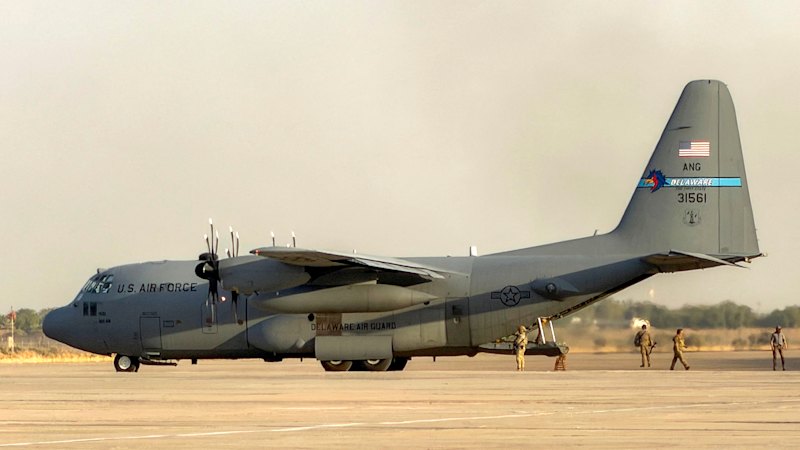
Dust settles differently when you know you are leaving. It hangs in the air of a desert morning, catching the pale, harsh light, refusing to drop until the engines roar to life and scatter it across the tarmac. For years, that dust was just part of the weather. It got into the teeth, the eyes, the seams of heavy canvas tents, and the mechanisms of armored vehicles. It became a permanent roommate.
Then came the order.
We are going home.
Four words. They sound simple enough to anyone who has never packed a duffel bag under the hum of fluorescent hangar lights while wondering if the latch will hold. But going home after a war of decades is not a motion; it is an unweaving. It is the slow, agonizing dismantling of a presence that grew roots into foreign soil whether anyone wanted it to or there or not.
To understand what it feels like when an administration announces the drawdown of American forces in Iraq, you have to look past the podiums in Washington and the press briefings filled with acronyms. You have to look at the tarmac.
Consider a logistics sergeant who spent three tours counting containers. Every crate coming in represented a piece of a puzzle—supplies, armor, spare parts, communications gear. Every crate going out now represents a countdown. He runs his hand over the corrugated metal of a shipping container, feeling the heat radiate off the steel long after the sun has dipped below the horizon.
"We brought all of this," he mutters to nobody in particular. "Now we have to figure out how to put it back in the box."
The drawdown is not an event that happens on a Tuesday afternoon. It is a process measured in miles of convoy wire, thousands of tons of retrograde equipment, and the quiet conversations between commanders who remember the surge and soldiers who were in middle school when the conflict began.
History does not move in straight lines. It loops back on itself, tangling the threads of past decisions with the reality of the present. When American forces first crossed the berms in 2003, the horizon looked limitless. Decades later, the horizon looks complicated.
The political calculus of withdrawal is often debated in terms of posture, deterrence, and regional stability. Think of it as a massive, intricate game of pickup sticks, where removing one piece threatens to shift the entire pile. Analysts in think tanks argue over force caps, training missions, and counter-terrorism partnerships. They draw arrows on maps, pointing to borders and bases, calculating risk ratios like actuaries assessing a storm.
Yet, on the ground, the reality is entirely sensory.
It smells like jet fuel and burning trash. It sounds like the rhythmic thrum of rotors beating against the dry air, a sound that gets under your skin until you stop hearing it, and then panic when it suddenly stops. It looks like concrete blast walls wrapped in concertina wire, slowly being peeled away, section by heavy section, revealing a landscape that must now find its own footing.
When President Trump declared the shift, marking the reduction of troops and the transition toward an advisory role, it signaled a fundamental pivot in how America engages with the region. The era of massive troop concentrations was winding down. The footprint was shrinking.
Yet shrinking a footprint does not erase the steps that were taken.
In local markets miles away from the secure perimeters of the bases, shopkeepers watch the news on small television sets mounted high in the corners of crowded rooms. They speak in measured tones, weighing the news against their own memories. They have seen surges come and go. They have seen banners hung and flags lowered. For them, geopolitics is not an abstract theory; it is the fluctuating price of flour, the security of a neighborhood street at midnight, and the constant, underlying question of what happens when the external anchor lets go.
A young Iraqi university student, studying English literature by the light of a flickering generator, puts down her pen. She was eight years old when the war started. Her entire life has been framed by checkpoints, curfews, and the heavy presence of foreign military hardware.
"Everyone talks about the troops leaving," she says, her voice quiet. "Nobody talks about what stays behind."
She is right. What stays behind is an infrastructure of relationships, a generation of scarred architecture, and a complex legacy of intervention that defies simple labels of success or failure. It is neither a complete triumph nor a total catastrophe. It is simply history, written in dust and steel.
As the final transport planes taxi down the runway, their cargo holds packed with gear and personnel, the weight of the past twenty years lifts fractionally, only to settle somewhere else. The ramp closes. The engines scream. And the dust rises one last time, blurring the horizon until nothing is left except the empty space where an army used to stand.