Neon lights hum above linoleum that has been scrubbed a thousand times, each pass wearing away a fraction of the wax. Down this corridor, the air smells of old paper, cold coffee, and the metallic tang of high-end security.
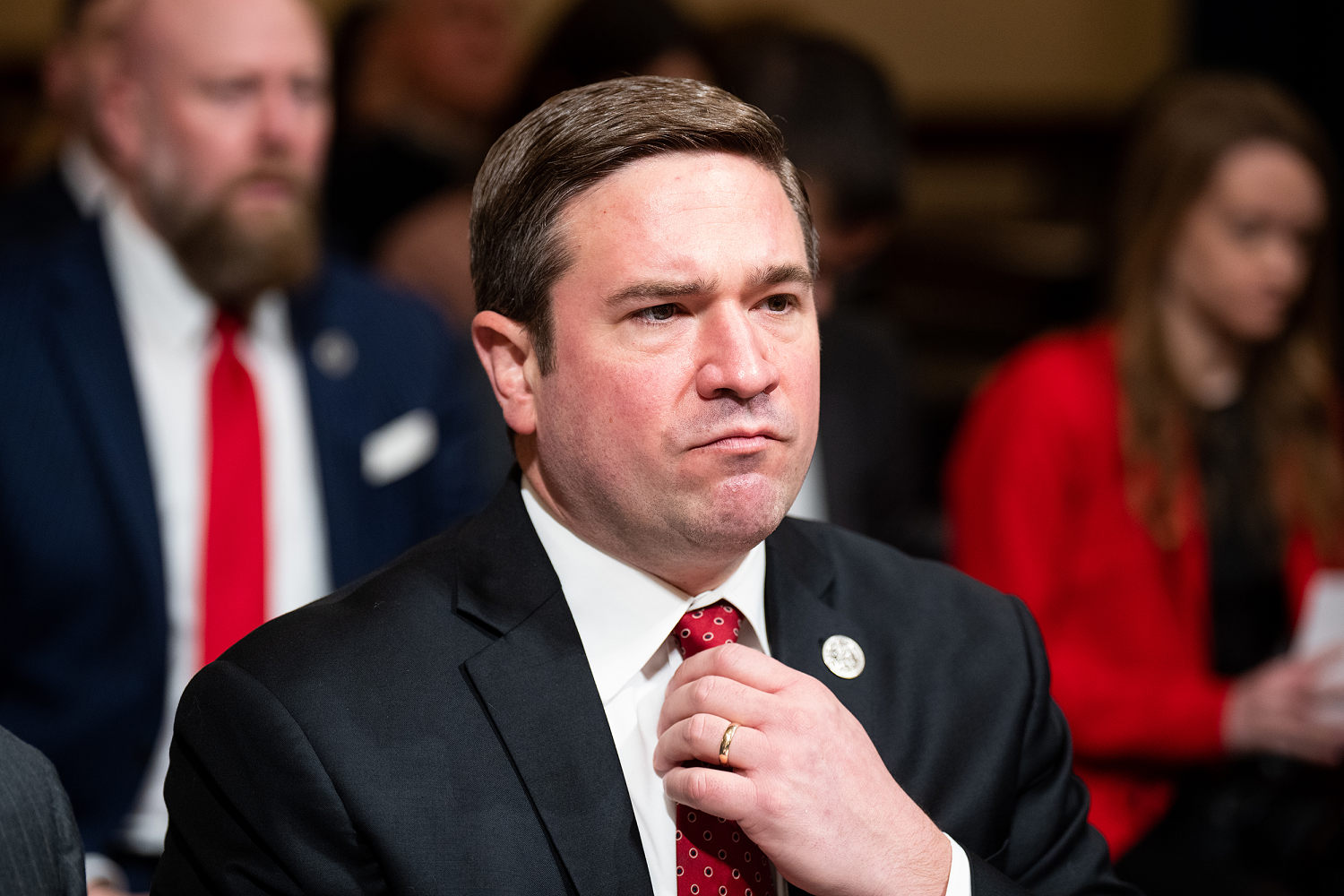
Andrew Bailey walked this path with his head down. Not out of shame, but out of habit. When you carry the weight of an institution that listens to the heartbeat of a nation, you learn to watch your footing. Every tile is an archive. Every shadow holds a memorandum.
Then came the day the boxes appeared.
Cardboard, flat-packed and smelling of a warehouse in Virginia, sitting squarely on a mahogany desk. It is a peculiar ritual, the administrative exit of a high-ranking federal official. There is no brass band. There is no firing squad. There is only the quiet click of a secure badge sliding into a plastic bin, followed by the heavy silence of a door closing for the last time.
Bailey’s departure as FBI co-deputy director did not happen in a vacuum. It was the latest tremor in an agency-wide shake-up that has sent shockwaves through the seventh floor of the J. Edgar Hoover Building. To understand why a career official packs his office into brown boxes, we have to look past the press releases. We have to look at the pressure cooker of modern governance, where the friction between political expectation and institutional permanence creates an unbearable heat.
The Anatomy of an Institutional Earthquake
Power inside the beltway is rarely a sudden explosion. It is tectonic. Plates grind against each other for years, silent and invisible to the public, until the ground finally gives way.
Consider how an agency like the Federal Bureau of Investigation operates on a daily Tuesday. Field offices hum with wiretaps, counterintelligence analysts stare at glowing monitors tracking digital ghosts from foreign adversaries, and violent crime task forces kick down doors in rain-slicked alleyways. Thousands of agents treat the Constitution like a manual and the chain of command like gravity.
Yet, miles away, in marble-columned hearing rooms and executive suites, the gravity is different.
When leadership shifts at the top, the ripple effect reaches the operational core with terrifying speed. A co-deputy director sits at the absolute center of this storm. They are the translators between the political appointees who answer to the administration and the career special agents who answer to the statute. They translate political urgency into investigative reality, and they protect the integrity of the badge from the winds of partisan weather.
When that translation fails, or when the pressure to change the culture becomes a battering ram, people leave.
Sometimes they are pushed. Sometimes they step aside because they realize the room left for nuance has vanished.
The Cost of the Uniform
I remember sitting across from a retired investigator years ago, a man who had spent three decades chasing domestic terror cells and economic fraudsters. He tapped a calloused finger against a coffee mug and said something that has stayed with me ever since.
"The public thinks the Bureau is a monolith," he murmured, watching the steam curl off his black coffee. "They think it’s a machine with a single brain. It’s not. It’s an ecosystem of exhausted people trying to hold a very heavy roof up with broom handles. When the people at the top start trading blows, the broom handles snap."
Andrew Bailey’s exit fits a familiar, troubled pattern. In recent years, the top tier of federal law enforcement has turned into a revolving door. Directors come and go with shifting administrations. Deputies are shuffled like chess pieces to appease congressional committees or appease internal factions.
Every time a senior leader steps down amid a shake-up, institutional memory bleeds out of the building. You cannot download thirty years of counterintelligence instinct onto a flash drive. You cannot institutionalize the gut feeling an investigator gets when a source is lying. When veterans walk out those heavy glass doors, the agency gets younger, faster, and dangerously more fragile.
The public sees a headline. A name leaves. A new name arrives.
The rank-and-file agent sees something entirely different. They see instability at the helm while the waters get rougher.
Navigating the Unknown
What happens next inside the Bureau will dictate the safety of millions who will never set foot in Washington.
The shake-up is not just about personnel charts or organizational flowcharts. It is a battle for the soul of an agency designed for a 20th-century world of mobsters and spies, now forced to fight a 21st-century war of algorithmic subversion, domestic radicalization, and state-sponsored cyber warfare.
When leadership is fractured, hesitation creeps in. An agent hesitates before opening a sensitive inquiry. A supervisor delays signing off on a warrant because they are looking over their shoulder to see which way the political wind is blowing. Hesitation in law enforcement is not neutrality. It is a vacuum. And vacuums are always filled by those who wish the republic harm.
Bailey’s cardboard boxes are already in the trunk of a car somewhere on the highway heading out of the District. The office is empty. The nameplate has been unscrewed.
Back on the seventh floor, the neon lights still hum. The linoleum is still scrubbed. Another morning arrives, carrying the same old paper, the same cold coffee, and a nation that desperately hopes the people left behind are strong enough to hold the roof up just a little longer.