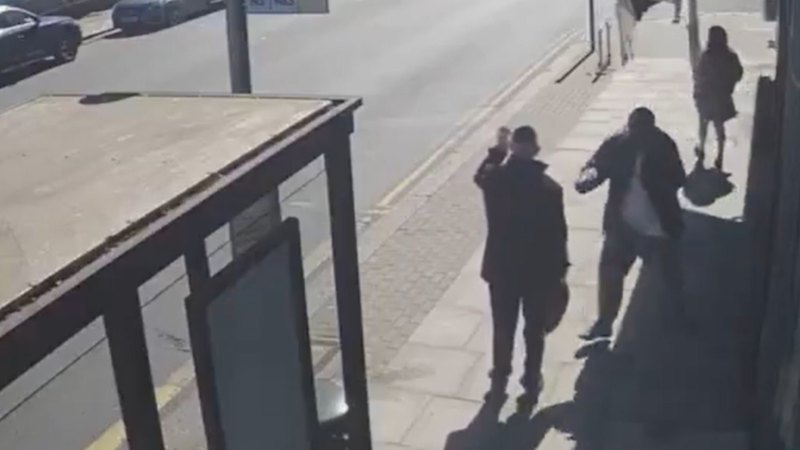
Two Jewish men, aged 76 and 34, were stabbed in broad daylight on Golders Green Road today in what the Metropolitan Police have now formally declared a terrorist incident. The assailant, a 45-year-old male with a documented history of violence and mental health struggles, was seen "hunting" for visibly Jewish targets before being subdued by a combination of Shomrim volunteers and police tasers. This is not an isolated outburst of a troubled mind. It is the bloody punctuation mark at the end of a two-month campaign of arson, firebombing, and intimidation that has turned North London into a low-intensity conflict zone.
The "why" is becoming increasingly uncomfortable for Whitehall. While the suspect’s mental health is being scrutinized, British counter-terrorism officials are simultaneously investigating a claim of responsibility from Harakat Ashab al-Yamin al-Islamia (HAYI). This group, inextricably linked to Iranian interests, has been systematically testing the fences of British security since March.
The Geography of Targeting
Golders Green is not a random choice. It is the heart of the UK’s Orthodox community, a place where the visible markers of faith—kippahs, tzitzit, and long coats—are part of the daily landscape. By striking here, the attacker isn't just wounding two individuals; he is attempting to sever the psychological sense of safety that allows a minority community to exist in public.
The timeline leading up to this morning’s violence reveals a clear escalatory ladder:
- March 23: Four Hatzola ambulances were incinerated in an arson attack at the Machzike Hadath synagogue.
- April 15: Firebombing attempt at Finchley Reform Synagogue.
- April 19: Arson at the Kenton United Synagogue and a Jewish-owned shop in Watford.
- April 28: A memorial wall for October 7 victims was set alight.
Moving from property damage to the hunting of human beings represents a shift in tactics that suggests either a loss of command-and-control by the orchestrators or a deliberate move into "Phase Two" of an intimidation campaign. The use of criminal proxies—individuals with existing criminal records or mental health issues—is a classic signature of state-sponsored disruption. It provides a layer of plausible deniability while ensuring the terror is felt just as keenly.
The Proxy War on British Soil
We have to stop viewing these incidents as a series of disconnected hate crimes. The arrest of 28 people since the start of the regional conflict in the Middle East on February 28 points to a deeper infrastructure of radicalization. This is a logistical failure of the UK’s domestic security apparatus.
Intelligence suggests that HAYI and its affiliates are utilizing the "lone actor" model not because they lack organization, but because it is the most effective way to drain police resources. When the Met Commissioner, Sir Mark Rowley, attempted to address the public near the scene today, he was met with chants of "shame on you." The anger is palpable. The community feels that the warnings—specifically the destruction of life-saving ambulances in March—were treated as vandalism rather than the precursor to attempted murder.
The Limits of Community Policing
The role of Shomrim and Hatzola in today’s response cannot be overstated. It was Shomrim volunteers who first identified the suspect and maintained a visual until the Met could engage. However, the fact that a civilian volunteer group is now the primary line of defense in a London borough is a damning indictment of the current threat level.
The 45-year-old suspect reportedly lunged at officers with the same blade used on the elderly victim. This level of brazenness suggests that the traditional deterrent of a police presence is eroding. If the state cannot guarantee the safety of its citizens in a high-street shopping district at 11:00 AM, the social contract isn't just frayed; it’s non-existent.
What follows will likely be a flurry of COBRA meetings and "increased patrols," but those are reactive measures. The investigative focus must now turn toward the financial and digital trails connecting North London suspects to foreign interests. If this was a state-backed proxy hit, the response needs to move beyond the streets of Golders Green and into the diplomatic and intelligence spheres where these operations are green-lit.
London is currently witnessing the consequences of allowing foreign grievances to be litigated through the bodies of its own citizens. The two men in the hospital are the immediate victims, but the target was the very concept of the open city.
The investigation continues, but for the residents of Golders Green, the "terrorist incident" didn't start this morning. It has been their reality for weeks.