The speculative anticipation surrounding potential public market debuts for SpaceX, OpenAI, and Anthropic misinterprets the structural mechanics of late-stage private capital markets. While retail enthusiasm treats these entities as a homogenous cohort of "tech IPOs" destined to ignite a Wall Street trading frenzy, an institutional analysis reveals three distinct corporate architectures. Each possesses completely different capital requirements, regulatory hurdles, and liquidity constraints. Evaluating these companies through a unified speculative lens obscures the structural realities governing their capitalization tables and operational runways.
The primary friction in transitioning these mega-cap private firms to public markets is not investor appetite, but rather the fundamental mismatch between traditional public equity valuation frameworks and the unprecedented capital expenditure models of frontier technology.
The Tri-Phasic Capital Consumption Model
To understand the liquidity trajectories of SpaceX, OpenAI, and Anthropic, one must categorize them by their asset-density and revenue-generation mechanics. They do not operate on the historical software-as-a-service (SaaS) playbook of high gross margins and low capital intensity. Instead, they sit across a spectrum of capital consumption.
1. Asset-Heavy Infrastructure Replication: SpaceX
SpaceX operates as a capital-intensive aerospace and telecommunications conglomerate. Its valuation is anchored in physical infrastructure, orbital real estate, and launch dominance. The financial engine relies on a dual-component model:
- The Launch Services Cash Engine: High fixed costs with declining marginal costs per launch due to first-stage and fairing reusability. This subsidizes internal capital expenditure.
- The Starlink Constellation Capital Sink: A recurring revenue model requiring massive upfront deployment costs, continuous constellation replenishment due to low Earth orbit (LEO) atmospheric drag, and heavy user-terminal subsidization.
SpaceX does not require an IPO for survival. Its internal liquidity is maintained via regular, highly structured secondary tender offers that allow early employees and investors to exit without public market volatility or disclosure requirements.
2. High-Variable-Cost Compute Dependency: OpenAI
OpenAI operates under a unique hybrid structure, bridging a non-profit parental entity with a capped-profit commercial arm. The core economic constraint is the compute cost function. Unlike traditional software where the cost of goods sold (COGS) scales sub-linearly with user growth, frontier AI model training and inference costs scale linearly—and occasionally exponentially—with model complexity and query volume.
$$\text{Total Compute Cost} = f(\text{Training Parameters}, \text{Dataset Size}) + g(\text{Inference Volume}, \text{Compute per Query})$$
The capital requirement is driven by the continuous necessity to train next-generation foundational models before the utility of the current generation depreciates. This creates a structural dependence on large-scale cloud providers, fundamentally altering the nature of equity value.
3. The Enterprise-Alignment Alternative: Anthropic
Anthropic mirrors the compute-heavy architecture of OpenAI but differentiates via structural governance (Public Benefit Corporation status) and cloud provider diversification. Its capital strategy relies on deep integration with secondary cloud infrastructure providers. The operational goal is to achieve enterprise-grade reliability and data privacy compliance to capture business-to-business workflows, which feature lower churn and more predictable inference demands than consumer applications.
Private Secondary Markets vs Public Liquidity Friction
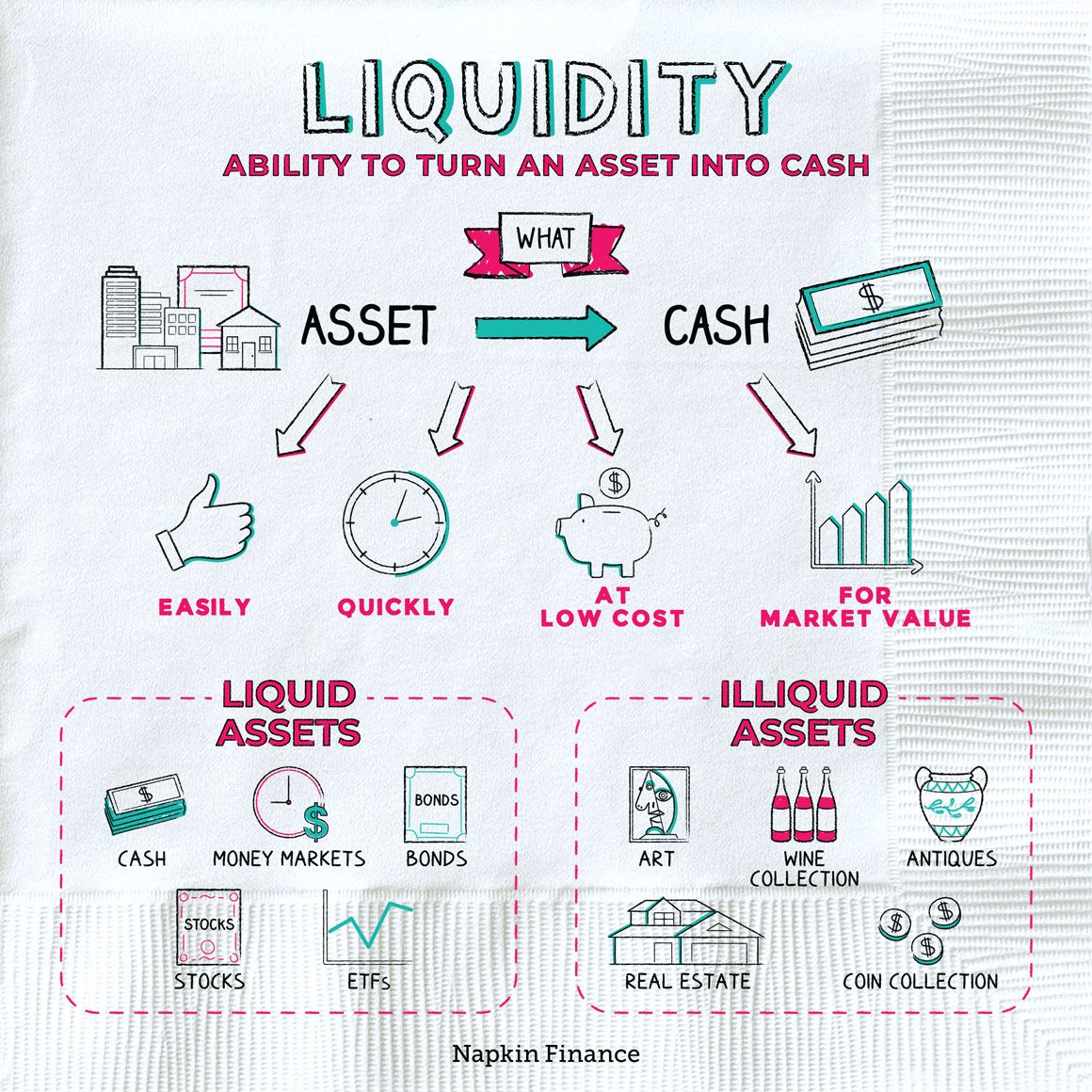
The thesis that an IPO is the inevitable destination for these firms ignores the efficiency of modern private secondary markets. Historically, companies went public to raise growth capital and provide employee liquidity. Today, institutional private placements and tender offers achieve these goals without the burdens of the Securities Act of 1933 or the Sarbanes-Oxley Act.
+------------------------------------------------------------------------+
|                      The Growth Capital Dilemma                        |
+------------------------------------------------------------------------+
|                                                                        |
|  [ Private Structural Advantages ]                                     |
|  - Controlled secondary tender offers shield internal valuations       |
|  - Absence of quarterly earnings pressure protects long-term R&D      |
|  - Strategic corporate partnerships substitute for public float       |
|                                                                        |
|                                  vs                                    |
|                                                                        |
|  [ Public Market Friction Points ]                                     |
|  - Mark-to-market volatility driven by macroeconomic macro shifts     |
|  - Disclosure of proprietary unit economics and compute expenditures    |
|  - Short-seller scrutiny of unproven monetization timelines           |
|                                                                        |
+------------------------------------------------------------------------+
The friction points of a public transition for these specific entities break down into clear operational bottlenecks.
Structural Valuation Dislocations
Public markets value equities using standardized metrics: discounted cash flow (DCF) models, Enterprise Value-to-Revenue (EV/Rev) multiples, or Price-to-Earnings (P/E) ratios.
SpaceX can defend its valuation using infrastructure asset metrics and orbital market share. However, OpenAI and Anthropic present public markets with a fundamental paradox: massive top-line revenue growth coupled with negative gross margins when accounting for compute and data acquisition costs. Public equity analysts lack a standardized framework to value a company whose primary asset—the foundational model—depreciates in value the moment a competitor releases a model with higher benchmark performance.
Corporate Governance Disconnects
The governance structures of OpenAI (a capped-profit subsidiary controlled by a non-profit board) and Anthropic (a Public Benefit Corporation with a Long-Term Benefit Trust) conflict with the traditional fiduciary duties expected by public market asset managers. Public institutional investors expect maximization of shareholder value. A board structure that explicitly reserves the right to prioritize existential safety or societal benefit over quarterly net income will face immediate structural discounts in the public market.
Disclosure Risks as a Competitive Disadvantage
An S-1 filing requires explicit disclosure of concentration risks, material contracts, and unit economics. For OpenAI and Anthropic, this means exposing the exact nature of their cloud compute pricing, utilization rates, and revenue concentration among enterprise clients. For SpaceX, it would require revealing the true profitability of Starlink and the precise capital expenditure run-rate of the Starship program. The strategic cost of these disclosures outweighs the liquidity premium offered by public markets.
Institutional Capital Allocation and the Crowding-Out Effect
Should any of these entities execute an IPO, the impact on Wall Street trading dynamics will be structural rather than merely "frenzied." The sheer scale of these listings would trigger an institutional reallocation of capital across the technology sector.
Index Weighting and Passive Capital Rebalancing
A listing of SpaceX or OpenAI at current private valuations would immediately place them among the largest components of non-megacap indices, forcing passive index funds, exchange-traded funds (ETFs), and mutual funds to liquidate existing positions in legacy technology firms to purchase these new entrants. This mechanics-driven selling pressure would create downward valuation performance across mid-cap SaaS and hardware companies, independent of their operational fundamentals.
The Specialized Liquidity Drain
Active institutional growth portfolios maintain fixed allocations for high-growth, high-risk technology exposure. The introduction of highly liquid, secular-trend defining assets like SpaceX or OpenAI would drain capital away from secondary AI plays, legacy enterprise software companies, and speculative biotech firms. Investors will consolidate capital into the market leaders, exacerbating the concentration of returns at the top of the equity market.
Strategic Playbook for Private Equity and Institutional Asset Managers
Navigating this late-stage private landscape requires discarding traditional public-market entry strategies. Institutional asset managers must execute along a strict analytical framework.
- Prioritize Secondary Market Liquidity Programs: Instead of allocating capital to pre-IPO vehicles with the expectation of a 12-month public exit, treat these companies as permanent private assets. Participate in structured tender offers where entry valuations are negotiated based on internal financial metrics rather than public sentiment.
- Deconstruct Compute-to-Revenue Efficiency: When assessing AI investments, look past top-line annualized revenue run rates. Demand granular transparency on the ratio of training compute expenditure to recurring enterprise revenue. High growth achieved through heavily subsidized inference costs is unsustainable in a public market environment.
- Evaluate Cross-Dependency Risk: Analyze the structural dependencies between these private entities and their corporate backers. A private firm whose operational viability is tied to a specific cloud provider's compute credits possesses a capped valuation ceiling, as the cloud provider captures a significant portion of the economic rent.
The optimal institutional play is not to wait for a speculative public market debut to deploy capital, but to build proprietary access to the private secondary markets, exploiting the valuation discounts that occur when early insiders seek liquidity ahead of the broader market.


:max_bytes(150000):strip_icc()/GettyImages-700832601-5bb602c0c9e77c002609fe08.jpg)
