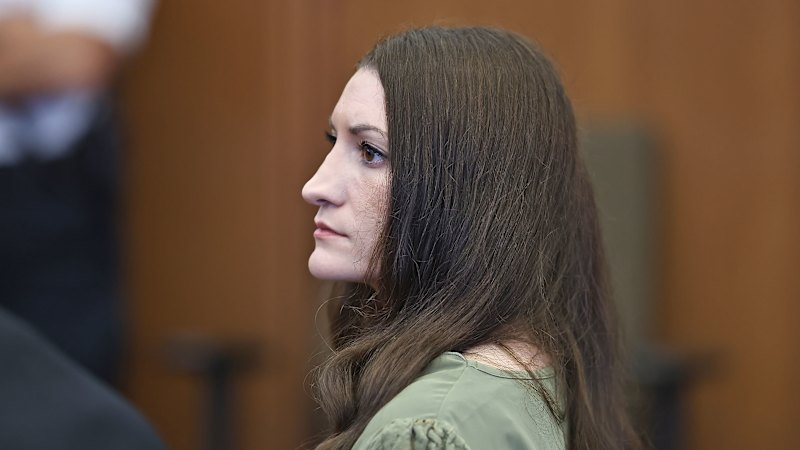
The jury couldn't agree. After nearly seven days of grueling deliberations and over thirty hours spent behind closed doors in a Plymouth, Massachusetts courtroom, a 12-person panel hit an unmovable wall. Judge William Sullivan officially declared a mistrial in the murder case against Lindsay Clancy, a former labor and delivery nurse who strangled her three young children in January 2023.
Nobody disputed the physical facts. Clancy killed Cora, 5, Dawson, 7, and 8-month-old Callan before attempting to take her own life by jumping from a second-story window, a tragedy that left her paralyzed from the waist down. The entire legal battle hinged on a single, heavy question: Was she legally insane and suffering from a severe psychiatric break at the exact moment it happened?
The court couldn't answer it. Now, everyone is left picking up the pieces of a deeply fractured public debate.
The Breaking Point in the Jury Room
The path to a mistrial was messy. Tensions boiled over when the jury foreperson sent a note to Judge Sullivan stating that a single holdout was refusing to follow the court's instructions regarding reasonable doubt. Defense attorney Kevin Reddington scrambled to save the trial, arguing that the holdout juror harbored a clear bias against mental illness. He requested an emergency intervention from the Massachusetts Supreme Judicial Court, but the appeal was denied.
Judge Sullivan felt he had no choice left. The jury was split 11 to one, completely deadlocked, and exhausted.
When a jury hangs on a high-profile case like this, it forces a hard look at how everyday people perceive invisible illnesses. Postpartum psychosis isn't just severe postpartum depression. It is a terrifying medical emergency that distorts reality, triggers severe hallucinations, and compels mothers to act in ways that defy all human logic. Yet, putting that condition on trial means asking a jury of laypeople to untangle complex neurological trauma while weighing it against the horrifying reality of dead children.
The Medical Reality Versus the Legal Standard
The defense brought in forensic experts who laid out a harrowing timeline of medical failure. In the weeks leading up to the tragedy, Clancy had been prescribed a staggering cocktail of psychiatric medications. Her symptoms escalated rapidly—insomnia, severe anxiety, and terrifying intrusive thoughts. Her family begged the medical system for help, but the safety net completely failed.
Prosecutors argued a different angle. They pointed to purposeful actions, claiming she intentionally sent her husband out for takeout and medicine to clear the house. They argued she knew right from wrong.
That is where the legal system clashes violently with modern psychiatry. The M'Naghten rule—the archaic legal standard for insanity used in many states—asks whether a defendant understood the nature of their actions or knew they were wrong. But a brain hijacked by postpartum psychosis doesn't operate under normal logic. Patients experience commands from hallucinations that feel entirely external and real.
When you ask twelve ordinary citizens to evaluate a broken mind using black-and-letter legal definitions, division is almost guaranteed.
What Happens Next
The legal process doesn't just vanish because a judge declares a mistrial. Prosecutors face a tough choice. They can roll the dice on a complete retrial, which means months of preparation, massive financial costs, and forcing the community to relive the trauma. They can also explore lesser charges or negotiate a plea deal. Meanwhile, Clancy remains confined to a state hospital facility where she has spent the last three years receiving psychiatric care.
A separate civil suit looms on the horizon. Both Lindsay and her estranged husband, Patrick Clancy, have indicated plans to sue the medical and mental healthcare providers who treated her prior to the tragedy. They argue that doctors missed flashing warning signs and mishandled her medication changes.
The courtroom drama is paused, but the broader cultural reckoning is just getting louder. This case strips away the polite veneer of how society treats maternal mental health. We expect mothers to endure immense pressure without cracking. When the system ignores them, and the brain breaks under the weight, the fallout lands squarely in a criminal courtroom where answers remain elusive.
A status conference is set for September 29. Until then, the questions raised by the mistrial stay wide open, with no easy resolution in sight.