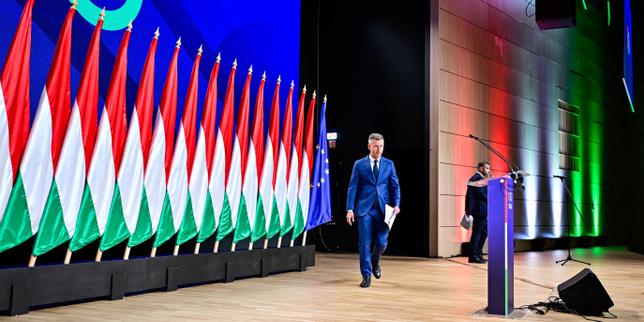
Western media is currently intoxicated by the scent of a "new era" in Budapest. The narrative is as predictable as it is shallow: Viktor Orban loses an election, the "dark ages" of illiberalism vanish, and Hungary magically snaps back into the warm embrace of Brussels-style technocracy. It is a comforting fairy tale for people who view geopolitics through the lens of a Disney movie. It is also dangerously wrong.
If you think a single election defeat marks the end of Orbanism, you don't understand how power actually works in Central Europe. You are looking at the scoreboard while ignoring the fact that Orban spent twelve years rewriting the rules of the sport, rebuilding the stadium, and hand-picking the referees.
The "defeat" being celebrated isn't a funeral; it’s a tactical retreat into a deep-state infrastructure that would make any Western bureaucrat blush with envy.
The Deep State is Already Built
The lazy consensus suggests that winning the Prime Ministry is winning the country. In a standard democracy, perhaps. In Hungary, the office of the Prime Minister is just the tip of an iceberg that extends deep into the permafrost of the national economy and judiciary.
Over the last decade, the Fidesz government didn't just govern; it privatized the state. Through the creation of "public interest trusts," Orban transferred billions of euros in state assets—universities, land, energy stakes, and cultural institutions—into the hands of boards filled with loyalists. These boards are legally protected. They cannot be dismissed by a new government.
A new administration arrives and finds that it has the keys to the building, but Orban's inner circle owns the foundation, the plumbing, and the air conditioning. This isn't a "new era." It is a hostage situation.
The Opposition's Fatal Flaw
The coalition currently being hailed as the "saviors of democracy" is a Frankenstein’s monster of political ideologies. You have Greens, Socialists, and former far-right Jobbik members sharing a stage. Their only unifying principle is "Not Orban."
History shows us exactly what happens to "Not [Strongman]" coalitions once they actually have to govern. They shatter. The moment they have to decide on a tax hike or a social policy, the internal contradictions will tear them apart. Orban knows this. He is waiting for the inevitable infighting so he can return as the "only adult in the room" who can provide stability.
The opposition isn't offering a new vision; they are offering a return to the 2000s—a period of economic stagnation and political corruption that paved the way for Orban in the first place. Voters don't want a "return to normalcy" if normalcy felt like a slow death.
The Myth of Brussels' Influence
Brussels thinks it won. The European Commission believes that by withholding funds and cheering for the opposition, they have "restored values." This is a fundamental misunderstanding of the Hungarian psyche.
Orban’s brilliance was in framing every EU intervention as an attack on Hungarian sovereignty. Even in defeat, his narrative remains the dominant cultural force. If the new government follows Brussels' directives to the letter, they will be branded as puppets of a foreign power. In a country with Hungary's history—partitioned at Trianon and crushed by Soviet tanks—that label is a political death sentence.
The EU doesn't realize that its "victory" is actually a trap. By forcing a specific brand of liberalism on Budapest, they are feeding the exact grievance culture that Orban feeds on.
The Economic Fortress
Let’s talk about the money. Orban didn't just reward his friends; he created a new class of national capitalists. These aren't just "cronies" who will disappear when the political winds change. They own the banks. They own the construction companies. They own the media.
I’ve seen investors assume that a change in government leads to a change in the business climate. It doesn't. If the new government tries to dismantle these monopolies, they face capital flight and economic sabotage. If they leave them alone, the Orbanist elite continues to fund the opposition (now the Fidesz opposition) from within.
The Cultural Hegemony
Politics is downstream from culture. While the liberals were busy arguing about "checks and balances," Orban was busy redefining what it means to be Hungarian. He captured the education system, the theaters, and the rural heartbeat of the country.
You cannot undo twelve years of relentless cultural engineering with one election cycle. The "new era" proponents assume the Hungarian public is a blank slate waiting to be written on by progressive ideals. They aren't. There is a massive, silent demographic in the countryside that views the Budapest elite with the same suspicion that rural Americans view Manhattan. Orban hasn't lost them. He has just given them a reason to feel like martyrs.
The Trap of Institutional Reform
The new government will try to "restore the rule of law." On paper, this sounds noble. In practice, it looks like a purge.
When you fire Orban-appointed judges or prosecutors, you are accused of doing exactly what you criticized him for: politicizing the judiciary. If you don't fire them, your reforms are blocked at every turn. It is a Catch-22 designed by a master of constitutional law. Orban didn't break the law; he tailored it. Fighting a tailor with a sledgehammer only makes you look like the barbarian.
Stop Asking if Orban is Gone
The question isn't whether Orban lost. The question is whether anyone can actually govern the Hungary he built.
The current celebration is premature and dangerously naive. We aren't seeing the birth of a new democracy; we are seeing the beginning of a prolonged, ugly, and likely failed experiment in trying to run a state while the previous architect still holds the remote control.
The "victory" of the opposition is the most dangerous thing that could have happened to them. They have inherited a bankrupt treasury, a hostile deep state, and a polarized populace, all while the most skilled political operator in modern European history watches from the sidelines, waiting for them to trip over the wires he laid.
Orban hasn't left the building. He just moved to the basement to wait for the fire he started to burn the new tenants out.
Stop looking for a "new era." Start looking for the exit.