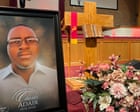
The initiation of a federal civil rights lawsuit following a fatal police encounter is not merely a request for compensation; it is a structural audit of municipal liability and the breakdown of operational protocols. In the case of the estate of a man who died after a prone restraint maneuver—specifically a knee applied to the upper back—the litigation must navigate the "objective reasonableness" standard established under the Fourth Amendment. This legal framework focuses on the calculus of risk versus necessity, where the primary friction point lies between the tactical intent of the officer and the physiological reality of positional asphyxia.
The Triad of Liability in Law Enforcement Custody Deaths
To understand why a family sues a police department under these specific circumstances, one must deconstruct the case into three distinct pillars of liability. These pillars dictate the trajectory of the litigation and determine the financial and systemic exposure of the municipality. For a deeper dive into similar topics, we suggest: this related article.
1. The Fourth Amendment Standard: Objective Reasonableness
The Supreme Court’s ruling in Graham v. Connor dictates that an officer’s actions must be judged from the perspective of a reasonable officer on the scene, rather than with 20/20 hindsight. In the context of a "knee-to-back" incident, the court evaluates:
- The severity of the crime at issue.
- Whether the suspect posed an immediate threat to the safety of the officers or others.
- Whether the suspect was actively resisting arrest or attempting to evade arrest by flight.
When a suspect is already prone and handcuffed, the "immediate threat" variable approaches zero. Litigation focuses on the precise moment when "active resistance" ceased and "excessive force" began. If an officer maintains pressure after the suspect is neutralized, the legal protection of qualified immunity begins to erode. To get more context on this development, extensive coverage is available on NBC News.
2. The Physiological Failure: Positional Asphyxia and Compression
The mechanism of death in these cases is rarely a single strike or blow. It is a failure of the respiratory system caused by external weight. The litigation strategy targets the "Cost Function of Restraint." The cost of ensuring absolute compliance through heavy physical pressure often exceeds the benefit of the arrest when it results in the death of the subject.
Positional asphyxia occurs when the position of the body interferes with inhalation. When an officer places a knee on the back of a prone individual, they introduce a mechanical burden on the chest cavity and diaphragm. Forensic pathology reports in these lawsuits serve as the data backbone, linking the duration of the pressure to the physiological outcome (e.g., cardiac arrest or brain hypoxia).
3. Monell Liability and Systemic Negligence
Under Monell v. Department of Social Services, a municipality can only be held liable if the constitutional violation was the result of an official policy, a widespread practice, or a failure to train. The lawsuit against the police department likely argues that the officer’s actions were not a "rogue" incident but a symptom of a systemic training deficit. This moves the focus from the individual officer to the internal training manuals and previous disciplinary records of the entire department.
The Mechanics of Positional Restraint and Tactical Errors
Tactical protocols in modern policing generally mandate "recovery positions" immediately after a suspect is handcuffed. The failure to transition a suspect from a prone position (lying face down) to a seated or side-lying position is a critical failure point in the chain of custody.
The Transition Gap
The danger increases exponentially during the "Transition Gap"—the seconds or minutes between the initial takedown and the arrival of medical transport. In high-stress encounters, officers often experience "tachypsychia" (the distortion of time perception). A minute spent with a knee on a suspect's back may feel like seconds to an officer but is sufficient to cause irreversible oxygen deprivation in a struggling or intoxicated subject.
The Comorbidity Factor
Lawsuits often address the "Exited Delirium" or "Acute Medical Emergency" defense frequently used by departments. This defense argues that the subject's own physiological state (due to drug use or mental health crisis) caused the death, not the officer’s weight. Plaintiff strategies counter this by citing the "Thin Skull Rule": a defendant is liable for the full extent of the injuries they cause, even if the victim had a pre-existing vulnerability. If the officer's force was the "proximate cause" that pushed a vulnerable system into failure, the liability remains.
Quantifying the Municipal Risk Profile
Municipalities view these lawsuits through a lens of risk management and actuarial impact. The financial burden of a use-of-force settlement is calculated through:
- Direct Settlement Costs: Often ranging from $1 million to $30+ million depending on the clarity of video evidence.
- Insurance Premiums: Repeat incidents lead to the loss of "Excess Liability" insurance, forcing cities to become self-insured.
- Operational Churn: The administrative cost of Internal Affairs investigations, civil service commission hearings, and potential DOJ consent decrees.
The Evidentiary Hierarchy
In the absence of a "smoking gun" admission, the litigation relies on a hierarchy of evidence that outclasses the subjective testimony of the parties involved.
- Body-Worn Camera (BWC) Metadata: Digital logs prove exactly when the camera was activated and if any footage was deleted or obscured.
- Dispatch Audio and CAD Logs: These provide a chronological baseline of the encounter, showing how much time elapsed between the "suspect in custody" call and the "request for EMS" call.
- Biomechanical Reconstructions: Experts use the weight of the officer and the angle of the knee to calculate the exact pounds per square inch (PSI) exerted on the victim's lungs.
The Breakdown of De-escalation Theory
The core of the legal argument often rests on the abandonment of de-escalation. Modern policing standards require "proportionality." If a man is suspected of a non-violent offense or is experiencing a medical crisis, the application of lethal-level force (which positional restraint becomes after a certain duration) is disproportionate.
The lawsuit likely highlights a "Tactical Breakdown":
- Failure to Recognize Medical Distress: Ignoring pleas of "I can't breathe" as "functional resistance."
- Over-reliance on Pain Compliance: Using weight to induce pain so a suspect will comply, while the suspect is physically unable to comply because they are fighting for air.
- Bystander Officer Liability: The failure of other officers on the scene to intervene—a duty that is increasingly being codified in state laws and department policies.
Strategic Forecast for Municipal Oversight
The filing of this lawsuit signals an impending shift in the local jurisdiction's "Risk Architecture." If the evidence shows a prolonged application of pressure to the back of a prone, handcuffed individual, the municipality faces a high probability of a pre-trial settlement. Historically, departments that lose these cases are forced to implement "Duty to Intervene" policies and mandatory "Prone-to-Recovery" training.
The final strategic pivot for the legal teams involved will be the battle over the "Summary Judgment" phase. If the judge determines that the officer's actions violated "clearly established law," the case moves to a jury. In the current socio-legal climate, a jury trial for a prone-restraint death carries an unpredictable and potentially catastrophic financial ceiling for the city. The primary objective for the city's defense will be to decouple the officer's specific actions from the city's general training policies to avoid the broader Monell liability, while the plaintiff will strive to prove that the department's culture of silence or inadequate oversight made this death an inevitable outcome of their operational status quo.