The spreadsheet on the laptop screen looks like any other corporate budget. Rows of black text, columns of percentages, and a bottom line highlighted in aggressive red. But if you lean closer, you can smell the dust. If you look past the cold geometry of the cells, you can hear the wind tearing at the canvas of a tent in eastern Chad.
Behind every decimal point lies a human calculus.
When a global humanitarian agency faces a deficit, it does not mean a delay in shipping a new smartphone line. It does not mean shareholders take a minor haircut on their quarterly dividends. It means a mother in a displacement camp receives half of the flour she needs to keep her children alive this month. It means the blue-helmeted logistics officer has to choose which road to leave unguarded, which water purification unit to turn off, and whose contract to terminate.
We are witnessing the slow, quiet asphyxiation of the international safety net. As conflicts multiply from the borders of Europe to the heart of Sub-Saharan Africa, the money is running out. The United Nations High Commissioner for Refugees (UNHCR) is quietly sharpening the scalpel, preparing to cut deeper into its own flesh.
They are firing the very people who keep the desperate alive.
The Human Geometry of a Budget Cut
Imagine a woman named Amina. She is not a statistic, though she occupies a row in a database somewhere in Geneva. Two years ago, she fled her burning village with nothing but her eldest daughter’s hand in her right fist and her infant son cradled in her left arm. Today, she lives in a sprawling labyrinth of white plastic sheeting.
To Amina, the UN is not a bureaucratic monolith. The UN is a young man named David.
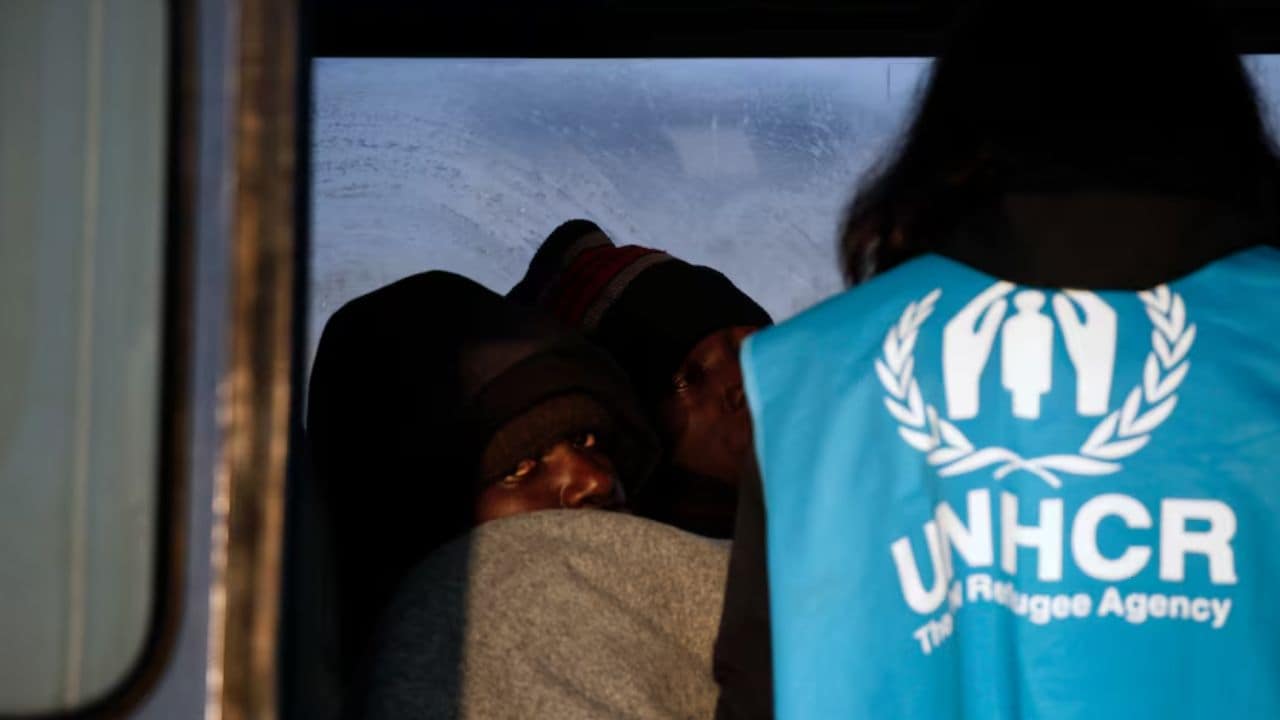
David wears a blue vest. He speaks her language with a clumsy, endearing accent. He is the one who remembers that her son has an allergy to certain soy supplements. He is the one who negotiated with the local truckers when the water deliveries stopped for three days in the blistering heat of July. David is the friction between Amina and total erasure.
Now, look back at the spreadsheet.
A directive comes down. The budget must contracted by fifteen percent. The local office in Chad must reduce its footprint. David’s position is eliminated. He is given a polite letter of appreciation, a plane ticket home, and a handshake.
When David leaves, nobody replaces him. His caseload is absorbed by Sarah, who already manages four other sectors of the camp. Sarah is exhausted. Her eyes are perpetually bloodshot. She no longer has time to remember names, let alone soy allergies. She becomes a ghost moving through a sea of hands.
This is how an agency loses its soul. Not through malice. Through arithmetic.
The dry wire reports will tell you that the agency is facing a funding shortfall of hundreds of millions of dollars. They will tell you that major donor nations, wrestling with their own domestic inflation and political fatigue, have frozen or slashed their contributions. They will use words like "reallocation" and "organizational restructuring."
Let us speak plainly. It means the line is breaking.
The Illusion of the Endless Well
For decades, the wealthy nations of the world operated under a comfortable assumption: the misery of the global south could be managed by writing checks. It was a transaction. We send money; they keep the crisis over there, away from our borders, away from our evening news broadcasts.
It was an imperfect system, but it functioned. It kept the peace, barely.
But the architecture of global stability was built for a different era. It was designed for a world where crises happened one at a time. A drought here. A localized civil war there. The machinery could pivot, moving resources from an easing emergency to a rising one.
Today, the world is on fire in every room simultaneously.
The war in Ukraine continues to drain billions in European assistance. The Middle East is a powder keg that has already detonated several times over, scattering millions of displaced souls across fractured landscapes. Climate change is no longer a looming threat for the year 2050; it is a current driver of migration, turning fertile valleys into cracked riverbeds from Guatemala to Somalia.
There is no more "over there." Everything is everywhere, all at once.
Yet, the collective wallet is snapping shut. Taxpayers in Western democracies are tired. They look at their own grocery bills, their own skyrocketing rent, and they tell their politicians to focus on the home front. It is an understandable impulse. It is human nature to protect your own house first when a storm hits.
But the global neighborhood is connected by a single foundation. If your neighbor’s house burns to the ground, the embers will eventually land on your roof.
The Cost of the Invisible Work
The tragedy of humanitarian aid is that its greatest successes are entirely invisible.
When an agency works perfectly, nothing happens. A cholera outbreak does not occur because the water lines were chlorinated in time. A riot does not erupt in a camp of eighty thousand frustrated men because the food distribution was orderly and fair. A generation of children does not grow up illiterate and radicalized because a makeshift schoolhouse kept them occupied five mornings a week.
How do you sell "nothing" to a skeptical parliament or a cynical electorate?
You cannot photograph a disease that didn’t happen. You cannot film the despair that was successfully averted. As a result, the work is taken for granted. It is treated as a permanent fixture of the international landscape, like the oceans or the mountains. People assume the UN will always be there, a perpetual safety valve for human misery.
It won't.
When you cut staff at a refugee agency, you are not cutting corporate fat. You are cutting the nervous system. You are removing the cultural knowledge, the trust built over years with local tribal elders, the logistics experts who know exactly which backroads become impassable mud during the rainy season.
When those people leave, the system grows brittle.
Consider what happens next: a minor dispute over a water borehole, previously settled by an experienced field officer over a cup of tea, escalates into violence. A shipment of medical supplies sits rotting on a wharf because there is no customs liaison left to bribe or beg the local port authority. The camp becomes unsafe. The NGOs pull out. The inhabitants, left with zero options, look at the horizon and realize their only chance for survival is to move.
They pack their remaining belongings into a nylon bag. They look north toward the sea.
The Broken Equation of Self-Preservation
There is a profound irony in the way wealthy nations are attempting to save money by cutting aid. It is the economic equivalent of a homeowner refusing to spend fifty dollars to fix a leaky pipe, only to face a fifty-thousand-dollar bill when the entire foundation rots away.
It costs far less to feed a family in a camp near their home country than it does to manage a geopolitical migration crisis at a national border.
Yet, we watch the funding dry up. The UNHCR is forced to prioritize the dying over the starving. They must look at two groups of vulnerable people and decide who is in more immediate danger of extinction. It is a moral burden that no human being should be asked to carry, yet it is performed daily by middle managers in grey offices who are trying to balance the unbalanceable.
We have treated empathy as a luxury item. Something to be purchased when times are good and discarded when the economic climate turns chilly.
But empathy is not an ornament. It is infrastructure.
The data points to a grim trajectory. More jobs will be eliminated. More field offices will close their doors. The white trucks with the blue logos will become rarer sights in the forgotten corners of the earth. The world will become a colder, more volatile place, not because we lack the resources to fix it, but because we lacked the imagination to see the value in saving it.
The spreadsheet will eventually balance. The red ink will turn to black. The administrators will congratulate themselves on a successful cost-cutting measure that met the targets of a lean fiscal year.
And somewhere in the Sahel, a woman will look into an empty pot, listening to the silence where a helper’s voice used to be.