The phone lights up at two in the morning. That is how geopolitical dread usually arrives—not with sirens, not with a formal communiqué stamped by a foreign ministry, but with a glowing rectangle resting on a nightstand while a city sleeps.
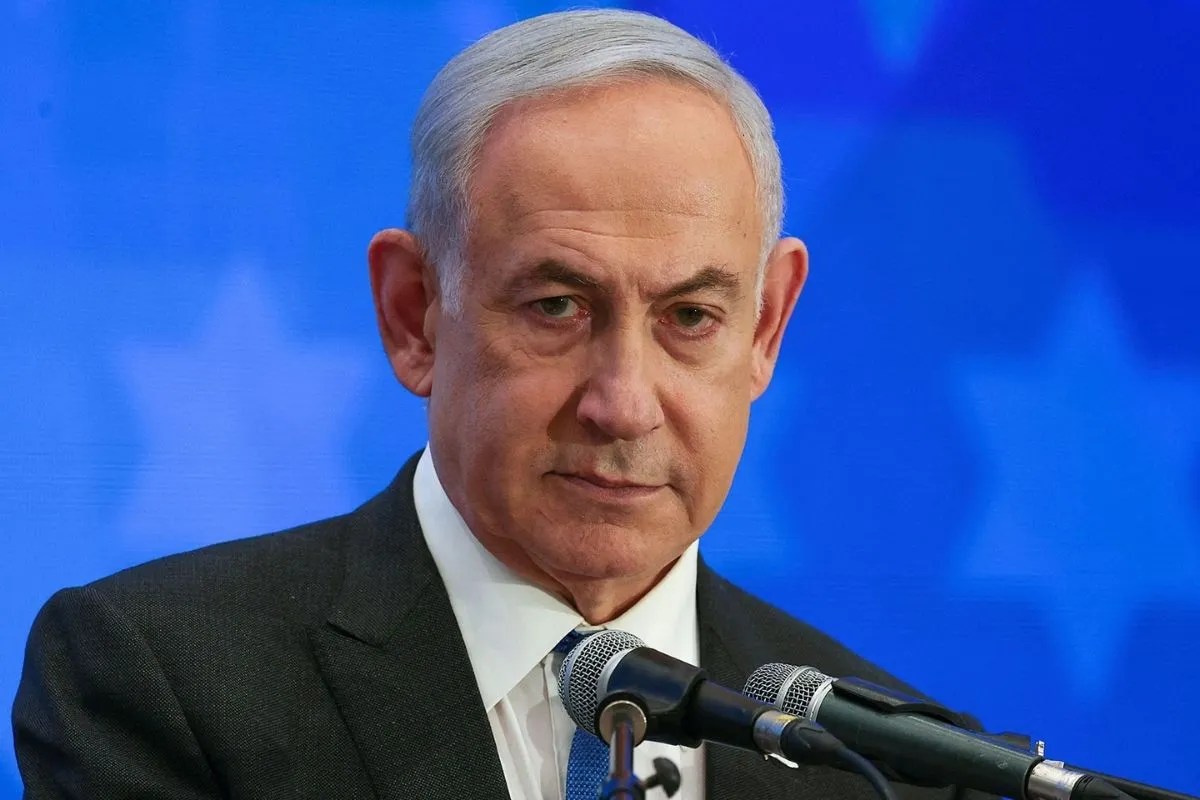
In the headline before us, Israeli Prime Minister Benjamin Netanyahu delivers an unmistakable ultimatum: he will not rest until the Iranian regime falls, while dismissing reports involving Donald Trump as false. Read quickly, it looks like another dispatch from a region already exhausted by headlines. Read slowly, it feels like glass being swept across a wooden floor in the dark. Every step carries risk. For another look, consider: this related article.
Truth is the first casualty when pressure mounts. Rumors travel faster than diplomatic cables, faster than artillery shells, faster than verification. A single unconfirmed claim about a major political figure can move markets, stir panic in living rooms thousands of miles away, and force ordinary people to ask a question no headline answers directly: What does this mean for the people just trying to live their lives?
The Weight of an Unyielding Vow
Words spoken from podiums do not stay in microphones. They travel into kitchens, classrooms, barracks, and airport departure lounges. Related coverage regarding this has been published by Al Jazeera.
When a leader declares that nothing short of toppling a government will satisfy the mission, the rhetoric crosses a threshold. It stops sounding like a tactical strike or a temporary deterrent. It sounds existential. Whether you view such a vow as resolute defiance or dangerous escalation, its weight is immediate. It tells allies to brace for a prolonged campaign. It tells adversaries that compromise is being pushed off the table. It tells citizens on every side that calm is fragile.
Let us use a metaphor here to make the dynamic clear. Think of two heavy trains barreling down parallel tracks toward a shared junction, each conductor convinced that braking means defeat. Once the whistle blows at full speed, the distance required to stop becomes terrifyingly long. Even when no collision has occurred yet, the vibration alone rattles every window along the line.
I have stood in rooms where people watched news tickers with hollow eyes, listening to politicians speak in absolutes while families worried about rent, school runs, and whether a relative's flight would be canceled. In those moments, grand strategy shrinks to something painfully small and immediate. Can I get medicine? Will the power stay on? Is the person I love safe tonight?
Consider what happens next when certainty meets uncertainty. A hardline pledge creates a rigid frame. Everything around it—every leak, every social media post, every whispered diplomatic backchannel—gets pulled into that frame and interpreted through fear or hope.
Rumors, Denials, and the Fog of Information
Whenever high-stakes conflict dominates the airwaves, fabricated or distorted stories sprout like weeds after rain. Reports linking Donald Trump to dramatic moves or hidden understandings in such crises spread effortlessly because people already have strong priors about him. Some readers want to believe a rumor confirms their worst fears. Others want to believe it signals a sudden twist or a decisive intervention.
When Netanyahu calls a report about Trump false, that denial is more than a routine correction. It is an effort to control the narrative at a moment when misinterpretation itself can be incendiary.
Why do false reports gain traction so easily in tense geopolitics? Because speed rewards sensationalism, and ambiguity invites projection. A snippet taken out of context, a misread source, or an outright fabrication can circle the globe before a sober rebuttal reaches the same eyes. Once a false claim is planted in millions of minds, pulling it out leaves roots behind. Even after a denial is issued, skeptics wonder what is being hidden, and believers cling to what feels plausible to them.
Let us construct a hypothetical scenario—clearly labeled as one—to see how this distortion works on the ground. Imagine a young woman named Nadia living in a quiet apartment far from the capitals making the decisions. Her brother works abroad, and her parents are older and easily rattled. One evening, a viral post claims a dramatic shift involving Trump and an imminent escalation has just occurred. Nadia knows better than to trust every screen she sees, yet her stomach tightens anyway. She refreshes her feed ten times in twenty minutes. She calls her brother just to hear his voice. Nothing physical has changed on her street, yet her evening is already hijacked by a story that may not even be true.
That is the hidden toll of information warfare and rumor cycles. You do not need a missile to disrupt a Tuesday night. A convincing lie—or a half-truth blown out of proportion—can do the job quietly.
What Ordinary People Actually Want to Know
Behind every headline about regime change and disputed claims sits a cluster of practical questions that real people ask in hushed tones.
They ask whether a vow to bring down a government means a widening regional war. History offers no neat comfort here, only a sobering pattern: grand declarations of total outcomes often collide with messy realities on the ground. Governments rarely collapse on cue because an outsider demands it, and attempts to force collapse frequently generate unpredictable backlash, economic shockwaves, and humanitarian strain.
They also ask how to separate real policy shifts from political theater and rumor. Strong statements serve multiple purposes at once. They project toughness to domestic supporters, signal resolve to rivals, and test the reactions of international partners. Separating theater from action requires patience—a scarce commodity when headlines scream urgency.
And they ask why denials sometimes feel confusing rather than settling. In politics, "false" can mean completely invented, or it can mean a distortion of a real conversation, or a framing rejected by one side while echoed by another. I will admit candidly: even seasoned observers sometimes find it hard to tell where spin ends and sheer invention begins in real time. Anyone who claims to have total clarity in the first hour of a breaking story is selling confidence they do not truly possess.
The Human Cost Behind Grand Strategy
Maps are clean. Real life is not.
On a map, capitals are dots, borders are lines, and strategic objectives look like chess moves. You can slide a piece across a board and talk calmly about pressure, leverage, and endgame.
Off the map, there are no chess pieces. There are bakeries, clinics, bus drivers, students studying for exams, and elderly neighbors who remember past conflicts and dread another. When leaders speak in terms of bringing down an entire regime, the stakes extend far beyond political elites. Sanctions tighten. Prices climb. Travel stalls. Families already stretched thin absorb the shock first.
Look at recognized behavioral patterns in moments like this. When threat levels appear to rise, people tend to split into two camps: those who doom-scroll endlessly, convinced that vigilance will protect them, and those who shut down completely out of sheer exhaustion. Neither extreme is easy. Doom-scrolling breeds anxiety without giving you a single lever to pull. Total withdrawal can leave you blindsided by practical changes—like flight disruptions, currency swings, or local advisories—that actually affect your plans.
There is a middle path, though it takes discipline. Stay informed from credible, corroborated sources. Wait for confirmation before repeating dramatic claims. Keep your focus anchored to what you can actually control in your own life.
Reading the Noise Without Losing Yourself
None of us has a seat in the war room or a private line to world leaders. That lack of control can feel maddening. We watch powerful figures trade warnings and denials, and we feel small.
Yet how we process these moments matters more than we give it credit for. Information is like weather: you cannot stop a storm from forming over the ocean, but you can choose whether to stand on the roof shouting at the clouds or close the shutters and check the forecast properly.
When you encounter a bold declaration about toppling a government, ask what is being promised, what obstacles stand in the way, and who bears the cost if things spiral. When you encounter a sensational claim involving figures like Trump, pause before sharing. Ask who benefits if you believe it, whether reliable outlets confirm it, and whether an official denial has emerged.
Skepticism is not cynicism. Skepticism is simply refusing to let someone else's agenda—or someone else's clickbait—steer your nervous system without evidence.
Night falls again. Somewhere, another speech is drafted, another rumor is typed into a phone, another denial is readied for the morning news. Out on the quiet street, a porch light flickers on, someone locks the front door, and the ordinary world tries to hold its ground against the noise.