Southern Europe is burning again, and the old playbook isn't working. Right now, hundreds of firefighters are battling a massive wildfire in Portugal while officials in Greece are screaming alarms about toxic smoke choking major cities. This isn't just a bad week of summer weather. It's a systemic failure to adapt to a rapidly changing climate that turns historic woodlands into tinderboxes.
If you think this is just a localized tragedy for rural communities, you're missing the bigger picture. The smoke doesn't care about borders. The economic fallout hits everyone. The current situation in Portugal and Greece shows that our approach to disaster management is reactive, slow, and dangerously outdated. You might also find this similar coverage insightful: The Sea of Echoes and the New Metal of the Indo Pacific.
The Grim Reality of the Current Wildfire in Portugal
Flames are ripping through the dry, mountainous terrain of central and northern Portugal. Over half a thousand firefighters, backed by dozens of water-dropping aircraft, are currently trying to contain blazes that are moving faster than anyone anticipated. Strong winds are driving the fire through eucalyptus and pine plantations. These trees burn hot and fast.
Local residents are fleeing with whatever they can grab. Smoke blocks out the sun, turning afternoon skies an eerie shade of orange. Fire crews face a brutal combination of high temperatures, low humidity, and shifting winds. It's a nightmare scenario. When the wind changes direction in a split second, a contained flank suddenly becomes a terrifying new front line. As discussed in latest coverage by TIME, the implications are notable.
The real problem in Portugal isn't a lack of bravery. It's land management. Decades of rural abandonment have left vast tracts of land untended. Brush builds up. Eucalyptus trees, which are highly flammable but profitable for the paper industry, dominate the area. It creates a perfect storm for an uncontrollable wildfire in Portugal every single summer. We see the same cycle repeat every year, yet the underlying vulnerability remains unchanged.
The Toxic Smoke Choking Greece
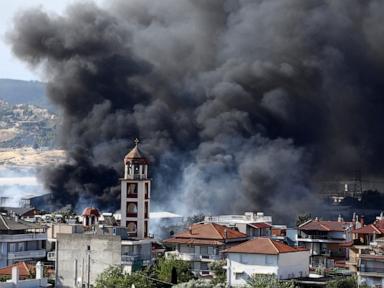
Thousands of miles to the east, Greece faces its own terrifying ordeal. While their own fire crews fight aggressive blazes near Athens and on various islands, the immediate danger for millions of citizens has become invisible. Greek authorities issued urgent health warnings as thick, toxic smoke blanketed heavily populated areas.
Air quality metrics have plummeted far past hazardous levels. This smoke contains fine particulate matter known as PM2.5. These tiny particles bypass your body's natural filters, entering deep into your lungs and even crossing into your bloodstream. It's a public health emergency happening in real-time.
Health officials are telling people to lock their windows and stay indoors. If you must go outside, an N95 mask is no longer optional. The heavy shroud of smoke trapped over urban centers shows that wildfires are no longer just a threat to trees and remote villages. They are a direct assault on urban public health.
Why Fire Suppression is a Losing Battle
We love to celebrate the heroism of firefighters, and they deserve every bit of praise. But relying on suppression alone is a losing strategy. The fires we see today burn with an intensity that renders water drops almost useless. When a fire reaches a certain temperature, water evaporated before it even hits the ground.
The real work needs to happen months before the first match is struck. We need aggressive controlled burns to clear out dry undergrowth. We need to completely rethink commercial forestry. Planting endless rows of non-native eucalyptus is a recipe for disaster. It's profit-driven land policy that pays its dividends in ash.
Governments spend millions on shiny new helicopters and fire trucks every election cycle. It looks great on the evening news. But they spend pennies on hiring year-round forestry workers who can manage the land during the winter. Until that dynamic changes, the fires will only get bigger, hotter, and more destructive.
Immediate Action Steps for Protecting Yourself from Wildfire Smoke
If you live in or travel through regions affected by these seasonal blazes, you can't rely solely on official warnings. You need to take personal responsibility for your health and safety immediately.
Pack an emergency go-bag right now. Don't wait until you see smoke on the horizon. Include copies of essential documents, a week's supply of critical medications, water, and high-quality masks. If authorities tell you to evacuate, leave immediately. Too many people lose their lives trying to defend properties that can be rebuilt.
Track air quality index data through independent tracking apps rather than waiting for slow government updates. If the PM2.5 levels spike, shut your home down. Run your air conditioning on interior recirculation mode. If you can afford one, buy a dedicated HEPA air purifier for your main living space. It makes a massive difference in keeping your indoor air breathable.
The crises unfolding in Portugal and Greece are clear warnings. The Mediterranean summer has transformed into a dangerous season of smoke and flame. Staying safe requires recognizing that the environment has changed, and our old habits must change with it.