The rain in Southampton has a way of blurring the edges of everything, turning streetlamps into bleeding halos and tarmac into slick, black mirrors. On a cold December night on Belmont Road, that familiar drizzle was the backdrop for a sequence of events so violently distorted that its repercussions are still rippling across the national psyche.
Henry Nowak was eighteen. He was an accountancy and finance student, a brother, a teammate, and a young man who, by all accounts, lit up whatever room he stepped into. He had spent the evening doing what thousands of university students do every week—laughing, sharing pints, and celebrating a night out with his football team. He was walking home alone, unarmed, his mind likely filled with the mundane, bright debris of a freshman’s future.
Then he crossed paths with Vickrum Digwa.
Digwa, twenty-three, was a man living in a vastly different reality. Beneath his clothes, he wore a small kirpan, the ceremonial dagger that initiated Sikhs carry as a sacred article of faith—a symbol meant to remind the wearer of their duty to defend the vulnerable. But Digwa’s relationship with blades did not stop at spiritual devotion. He was a man consumed by a dark, private fixation. His digital footprint was a catalog of weapon searches; his bedroom was an arsenal. He slept near a collection of steel, trained with it, and had even suggested a knife as an appropriate wedding gift for his brother. That night, swinging from his belt for anyone to see, was a massive, twenty-one-centimeter Persian dagger.
It was a weapon designed for offense, not orthodoxy.
When the two passed each other on the pavement, something fractured. Henry, perhaps startled or curious about the weapon visible on the older man's hip, asked Digwa a simple question: "Are you a bad man?"
We know this because Henry recorded it on his phone. It was a brief, confusing confrontation between a drunk teenager trying to read a stranger, and a man with a hair-trigger obsession. Within moments, the dialogue dissolved. Digwa unleashed a sustained, brutal assault, plunging the heavy blade into the teenager five times. Two of the wounds pierced the back of Henry’s legs as he tried to run. The fatal blow tore directly into his chest.
Bleeding catastrophically, Henry tried to escape, dragging himself over a nearby fence before collapsing onto the wet ground.
But the horror of that night did not end when the blade was sheathed. The true tragedy—the part that leaves a hollow ache in the chest of anyone who reads the transcript—was just beginning.
The Weaponization of Biases
When the blue lights of the Hampshire and Isle of Wight Constabulary finally cut through the Southampton drizzle, the scene was chaotic. Digwa stood there, entirely uninjured, and began spinning a calculated web of deceit. He looked the arriving officers in the eye and claimed he was the victim. He told them that Henry had hurled racial slurs at him, punched him, and ripped his turban from his head.
It was a lie designed to exploit the deepest, most sensitive anxieties of modern Britain. And it worked perfectly.
Trusting the frantic narrative of the man standing before them, the officers bypassed the boy bleeding out on the pavement. They did not see the five stab wounds. They did not see a dying victim. They saw an alleged perpetrator.
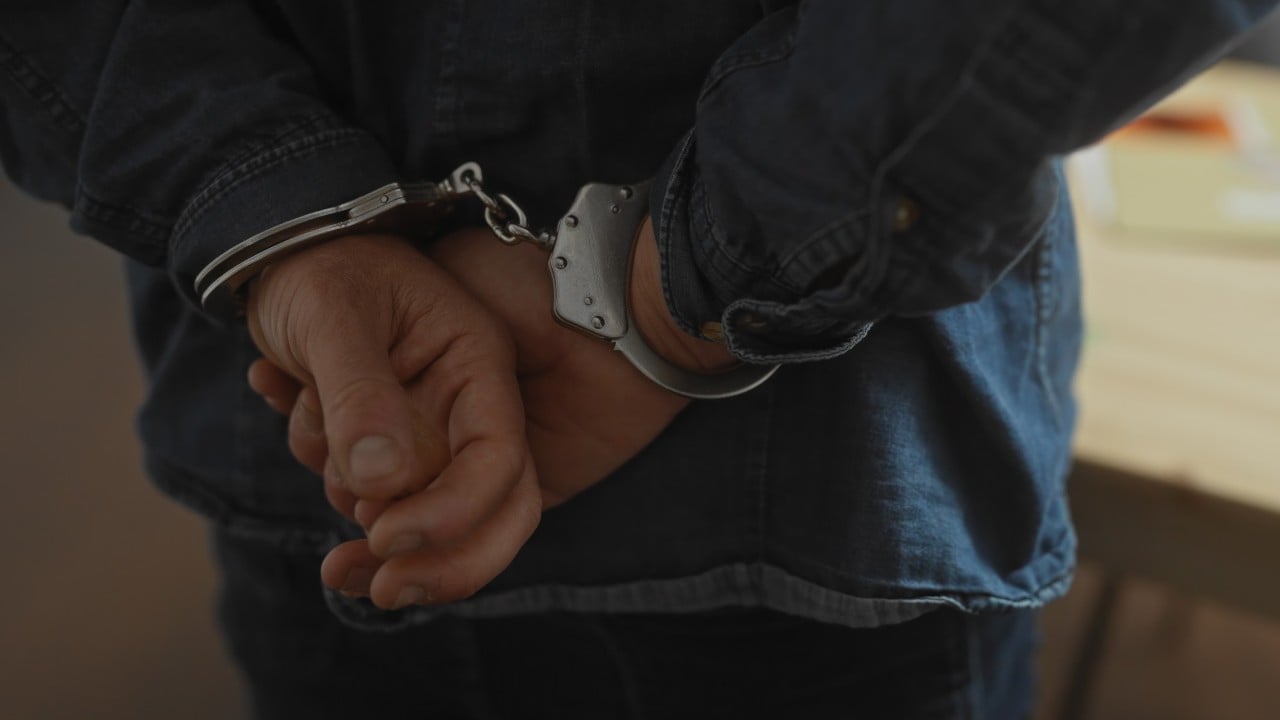
They walked over to Henry Nowak, pulled his arms behind his back, and locked the cold steel of handcuffs around his wrists. They formally arrested him for assault. They read him his rights.
Consider what it means to die like that. You are eighteen years old. Your lungs are failing, your heart is giving out, and the people who have arrived to save your life are instead treating you as a violent criminal. You are pinned to the freezing concrete, humiliated, isolated, and entirely misunderstood.
Outside the court, Henry’s father, Mark Nowak, stood before a wall of microphones, his voice heavy with a grief no parent should ever have to carry. He spoke of the day he moved Henry into his university dorm just weeks prior, setting up his room, looking forward to a lifetime of milestones. Then he spoke of the end.
"Henry did not die with dignity," his father said. "Instead of being treated as a dying victim, police formally arrested Henry for assault and read him his rights. That was the last thing he heard."
The Ripples in the Fabric
A single stone thrown into a still pond creates a thousand ripples, and Digwa’s lie did more than deny an innocent boy his dignity in his final moments. It set off a cultural firestorm.
Within hours of the details leaking, the internet did what the internet does. Far-right agitators and high-profile tech billionaires seized on the initial reports, weaponizing the tragedy to stoke the fires of racial division and allege systemic police bias. On the other side, the British Sikh community found itself under siege. A beautiful, centuries-old religious tradition was suddenly being dragged through the mud because a single, deeply disturbed individual had used a weapon of war under the guise of an article of faith.
Organizations like the Sikh Federation UK and the City Sikhs Foundation were forced to go on the defensive, pleading with the public to understand the distinction between a holy symbol and a murderer's hidden arsenal. The judge himself, William Mousley KC, noted the profound collateral damage during sentencing. Digwa had not only brought a lifetime of misery to the Nowak family; he had stirred up a wave of racial tension that left innocent British Sikhs looking over their shoulders, terrified for their own safety.
Justice, cold and absolute, arrived at Southampton Crown Court. The jury saw through the deception, rejecting the claim of self-defense. Digwa was sentenced to life in prison, ordered to serve a minimum of twenty-one years before he can even utter the word parole. His mother faces her own reckoning in July, convicted of assisting an offender by trying to scrub the murder weapon from the story.
But a life sentence doesn't fix a broken system, nor does it quiet the questions echoing through the Home Office. The police force has issued a formal apology, and the Independent Office for Police Conduct is mounting a full-scale investigation into how an innocent, dying teenager ended up in handcuffs.
Laws can dictate prison terms. Guidelines can rewrite police protocols. But nothing can rewrite those final, agonizing minutes on Belmont Road.
Somewhere in Essex, a family tradition of going to the winter pantomime has been permanently shattered. A bedroom full of university books sits empty. And a father is left to live with the haunting knowledge that as the world faded to black for his eldest son, the comforting words of a savior never came. There was only the click of iron, the cold rain, and the sterile recital of a warning.