The dew on the grass in a suburban Sydney park doesn’t feel like a postcard when it’s soaking through a thin polyester sleeping bag. It feels like a slow, rhythmic theft of body heat. By 4:00 AM, the air isn't just cold; it’s heavy. It settles into the lungs of a man we’ll call David—a name to stand in for the fourteen souls who lost their lives last year in the vast, indifferent stretches of the Australian outdoors.
David didn't die in a hospital bed surrounded by the sterile hum of monitors. He didn't pass away in a sheltered hostel with a social worker checking his pulse. He died on a wooden bench, wrapped in a threadbare coat, while the rest of the city slept behind brick walls and double-glazed windows.
His death is part of what researchers are calling a "sobering indictment" of the current housing crisis. A recent analysis has revealed a grim rhythm to life—and death—on the margins: every month, at least one person in Australia takes their final breath in a public park, a patch of bushland, or the side of a country road.
These aren't just statistics. They are failures of a system that has begun to treat housing as a luxury rather than a human right.
The Myth of the Great Outdoors
We have a romanticized relationship with the Australian landscape. We talk about the "sunburnt country" and the rugged beauty of our national parks. But for those with nowhere else to go, the landscape is a predator.
When you live outside, the environment is a constant negotiation. You seek out parks because they offer a semblance of peace, a break from the concrete glare of the city. You seek out the countryside because it feels safer than the volatile, high-traffic alleys where violence is a constant threat. But the peace of the park is an illusion.
The human body is resilient, but it has limits.
Exposure doesn't always look like a dramatic freeze. It is a quiet, cumulative erosion. It is the way a damp night exacerbates a lingering chest infection. It is the way the heart, strained by years of malnutrition and the chronic stress of hyper-vigilance, simply decides it has beaten enough. When the analysis points to fourteen deaths a year in these specific settings, it is highlighting the most extreme form of social exclusion. These people were so far outside the safety net that they became part of the geography.
The Invisible Geography of Poverty
Consider the logistics of a night in a public reserve. You have to find a spot that is hidden enough to avoid being moved on by police or council rangers, but close enough to a public tap or toilet to maintain a shred of dignity.
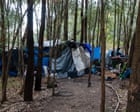
This "hidden" population is growing. While the stereotypical image of homelessness is a person huddled in a city doorway, the reality is shifting. As rents in the inner cities skyrocket, the displaced are being pushed further out. They are moving into the fringes—into the "scrub" at the edge of regional towns or the sprawling parks of the outer suburbs.
The distance creates a lethal paradox.
In the city, there is a chance someone might see you stop moving. A passerby might call an ambulance. In the bush or a quiet park, you are alone. If you slip into a diabetic coma or your breathing slows due to a respiratory attack, there is no one to hear the struggle. You become a quiet headline three days later when a dog walker or a council gardener makes a horrific discovery.
The Cost of a Closed Door
The data suggests that the average age of those dying in these circumstances is far lower than the national life expectancy. We are losing people in their fifties and sixties—ages that should represent the prime of a reflective life—to conditions that are entirely preventable.
Why aren't they in shelters?
Ask anyone who has navigated the system, and they will tell you the same thing: the doors are often locked, or the conditions inside are worse than the cold air. Many shelters are at capacity by mid-afternoon. Others have strict rules that separate couples or forbid pets—the only sources of love and companionship a person might have left. For some, the trauma of past experiences in congregate care makes a lonely park bench feel like the only "safe" choice.
But "choice" is a hollow word when the alternative is non-existent.
We are currently witnessing a collapse in the "continuum of care." When social housing waitlists stretch into decades, the temporary fixes become permanent. Caravans break down. Tents rip. The bush becomes the bedroom.
The Weight of Silence
There is a specific kind of grief that accompanies these deaths. It is a heavy, silent shame that belongs to all of us.
When a person dies in a public park, it is a signal that our social contract has been shredded. We have agreed, through our policy choices and our collective indifference, that some lives are worth less than the market value of a studio apartment.
The fourteen deaths identified in the analysis are likely an undercount. They represent only those whose bodies were found in the most public of "private" spaces. They don't account for those who died in the back of a rusted-out Holden in a rest stop, or those who disappeared into the deep bush, never to be recorded in an official tally.
We often talk about "solving" homelessness as if it were a complex mathematical puzzle. It isn't. It is a matter of masonry and will.
The "Housing First" model, used with success in various parts of the world, posits that you cannot fix a person’s health, addiction, or mental state until they have a door that locks. You cannot heal in a park. You cannot recover from a lung infection while sleeping on damp earth.
The logic is simple: give people a home, then provide the support. Yet, we continue to prioritize the "staircase" model, demanding that people prove they are "ready" for housing while they are literally dying of exposure. It is like asking a drowning man to learn how to breathe underwater before you throw him a rope.
The Morning After
The sun eventually rises over the park. The joggers arrive, their breath blooming in the cold air, their high-tech sneakers crunching on the frost. They pass the bench. Sometimes, the person on the bench gets up, packs their world into a backpack, and moves on to the next library or day center.
But fourteen times a year, the person doesn't get up.
The birds continue to sing in the eucalyptus trees. The city wakes up and starts its commute. The "sobering indictment" remains written in the grass, a temporary indentation where a human being tried to find rest and found an end instead.
We walk past these sites every day. We see the flattened patches of weeds, the abandoned grocery trolley, the discarded thermal blanket. These are the footprints of a ghost population.
The tragedy isn't just that they died. The tragedy is that we have built a world where dying in the dirt is an expected, analyzed, and ultimately accepted outcome of the economy. Until we decide that the warmth of a roof is more important than the growth of a portfolio, the parks will continue to hold their breath at night, waiting for the next person who has nowhere else to go.
The grass is still wet. The sun is high. And somewhere, another David is looking for a place to sit down before the light fades.