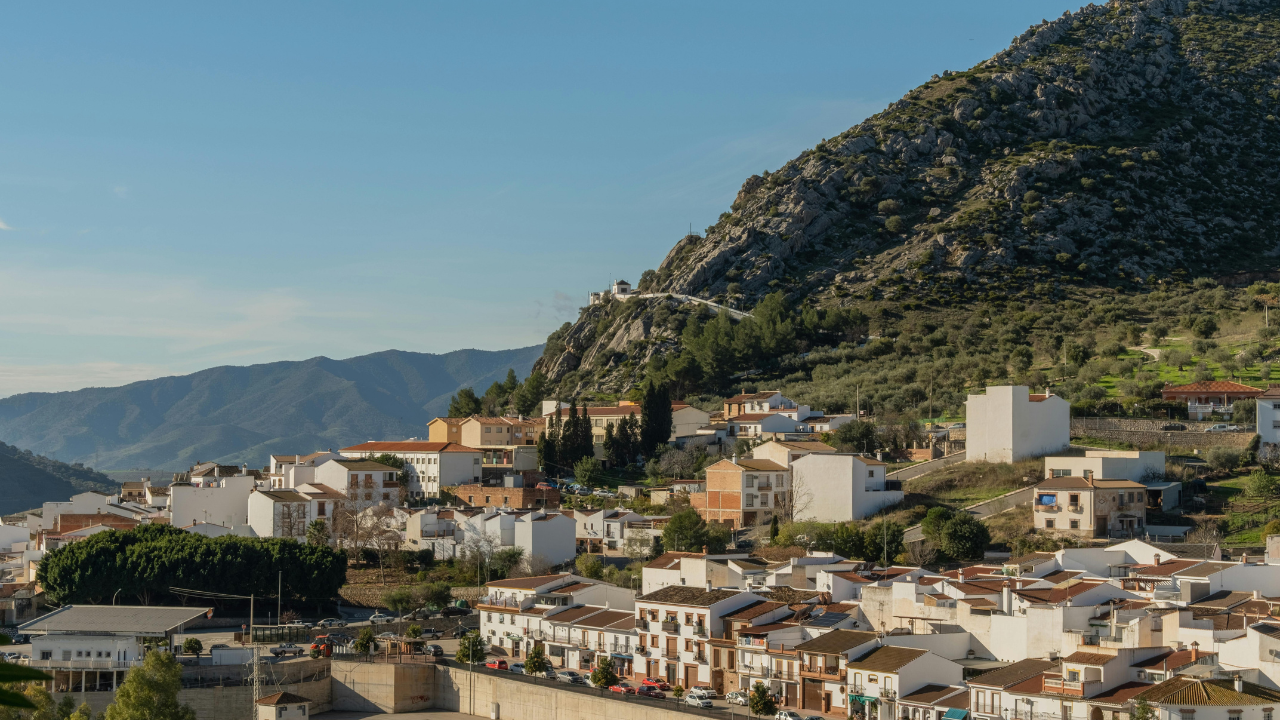
The silence in the hills of northwest Spain does not merely exist. It echoes. It has a weight, a heavy, velvet presence that settles into the valleys of Castile and León, filling the spaces where children used to laugh, where blacksmiths used to hammer, and where hundreds of footsteps once trod the cobblestones.
Today, if you stand in the center of A जबर—a tiny, sun-drenched hamlet tucked away in the rugged terrain of Galicia’s borders—you will hear the wind sweeping through abandoned stone courtyards. You will hear the rustle of overgrown ivy climbing up walls built generations ago. If you wait long enough, you might hear the slow, methodical footsteps of one of the village's last remaining residents.
There are only thirty of them left.
Thirty people holding the line against total erasure. Thirty souls keeping a millennium of history from crumbling into the earth. It is a reality facing hundreds of villages across the Spanish interior, a phenomenon known grimly as España Vaciada—Emptied Spain. But A जबर is refusing to vanish quietly. In a desperate, beautiful bid for survival, this tiny community is offering cheap land, incredibly affordable housing, and something far rarer: a chance to hit the cosmic reset button on a fractured modern life.
The Geography of Solitude
To understand how a paradise becomes a ghost town, you have to understand the pull of the neon lights. For the last seventy years, the story of rural Europe has been a story of flight. Young people left the grueling, beautiful labor of the fields for the predictable paychecks of Madrid, Barcelona, and Valencia. They traded the horizon for high-rises.
Consider a hypothetical woman named Elena. If Elena stayed in A जबर, her life would be bound to the seasons. She would know the exact moment the chestnuts were ready for harvest. She would understand the language of the clouds moving over the peaks. But she would also be miles from a major hospital, hours from a movie theater, and isolated from the global economy. So, Elena packs a suitcase. Her parents wave goodbye. Multiply Elena by millions, across decades, and the blood drains out of the countryside.
What remains is a landscape of spectacular loneliness.
Yet, the thirty people who stayed behind in A जबर possess something the modern urbanite spends thousands of dollars in therapy trying to achieve: presence. They know the names of every dog in the village. They share communal wood ovens. They live with a profound, unhurried dignity. But dignity does not pay for infrastructure. It does not fix a leaking roof on a medieval church. Without new blood, A जबर will become nothing more than a beautiful graveyard.
The €100 Lifeline
The local council looked at the ledger of their survival and realized they needed a radical strategy. They didn't need tourists; they needed neighbors.
The village launched an initiative that sounds, to the ears of anyone renting a shoebox apartment in London or New York, like a typing error. They began offering parcels of land for pennies. Abandoned stone houses, ripe for restoration, were put on the market for less than the price of a used hatchback. In some neighboring towns facing similar crises, rent has been subsidized to as little as €100 a month, with the added incentive of free community land for agriculture.
The catch? You have to actually live there. You have to commit to the silence.
It is a trade-off that forces a deep, uncomfortable self-examination. We complain endlessly about the digital treadmill. We check our notifications hundreds of times a day, trapped in a loop of outrage and anxiety. We look at pictures of rustic cabins and sigh. But when presented with the actual reality of a €100-a-month life in the Spanish hills, panic sets in.
What about the Wi-Fi? Surprisingly, Spain’s rural digital push means many of these isolated villages now boast fiber-optic internet connection speeds that outpace major Western cities. The infrastructure is there. The cheap land is there. The only missing variable is human courage.
The Invisible Friction of Remote Paradise
Let us disabuse ourselves of the romantic myth. Moving to a village of thirty people is not a seamless transition into a pastoral painting. It is hard, gritty work.
If you buy a ruined stone barn in A जबर, you are entering into a marriage with history. Those stones were shaped by hand. They do not have straight lines. Restoring them requires local materials, traditional techniques, and an immense amount of patience. You will not find a major home improvement mega-store within an hour's drive. If your plumbing bursts at midnight, you are the plumber.
Then there is the social architecture. In a community of thirty, you cannot hide. Your absence at the morning cafe is noticed. Your mood is written on your face for everyone to read. For a modern person accustomed to the sweet, anonymous isolation of the city—where you can live next to someone for five years and never learn their last name—this radical visibility can feel claustrophobic.
But the reward lies on the other side of that friction.
When you move to a dying village, you are not just a resident; you are a savior. Every loaf of bread you buy from the traveling baker who visits twice a week keeps his van running. Every child brought into the local school district—if there are enough to keep one open—is a victory celebrated by the entire valley. You matter. Your existence has a measurable, positive impact on the survival of a culture.
The Shift in What We Value
Something fundamental changed over the last few years. The office cubicle lost its sacred status. The realization that millions of jobs could be done from anywhere collided with a growing exhaustion over skyrocketing urban living costs.
People are beginning to look at the math of modern success and find it wanting. Why work eighty hours a week to afford a mortgage on a property you only sleep in, when you could own a home outright in the mountains of Spain for the cost of a down payment on a car?
The real barrier isn't economic. It's psychological. We have been conditioned to believe that status is linked to density—that the more crowded, expensive, and chaotic a place is, the more important the life being lived there must be. A जबर shatters that illusion. It offers a counter-narrative: that a life of scale, where you have space to breathe, time to think, and a direct relationship with the land beneath your feet, is the ultimate luxury.
Change is already arriving, in small, deliberate drops. A remote software engineer from Germany has bought a property. A young artisanal cheesemaker from Madrid is looking at pastures. The thirty original residents watch these newcomers with a mixture of hope and protective caution. They do not want their village turned into a theme park for digital nomads. They want a living, breathing community.
The Window Is Closing
Communities like A जबर are a finite resource. Once a village drops below a certain human threshold, the gravity of abandonment takes over permanently. The post office closes. The electricity grid degrades. The forest reclaims the roads.
Right now, there is a fragile, fleeting window of opportunity. The cheap land is available because the need is urgent. The village is extending a hand to the outside world, offering an antidote to the modern malaise in exchange for the simple gift of presence.
Tomorrow morning, the sun will rise over the hills of northwest Spain. It will illuminate the ancient stone walls of A जबर, warming the slate roofs and casting long shadows across empty pathways. An old man will step out of his door, breathe in the crisp mountain air, and look down the road to see if anyone is coming.
The hills are waiting. The land is cheap. The silence is profound. The only question left is who will be brave enough to fill it.



