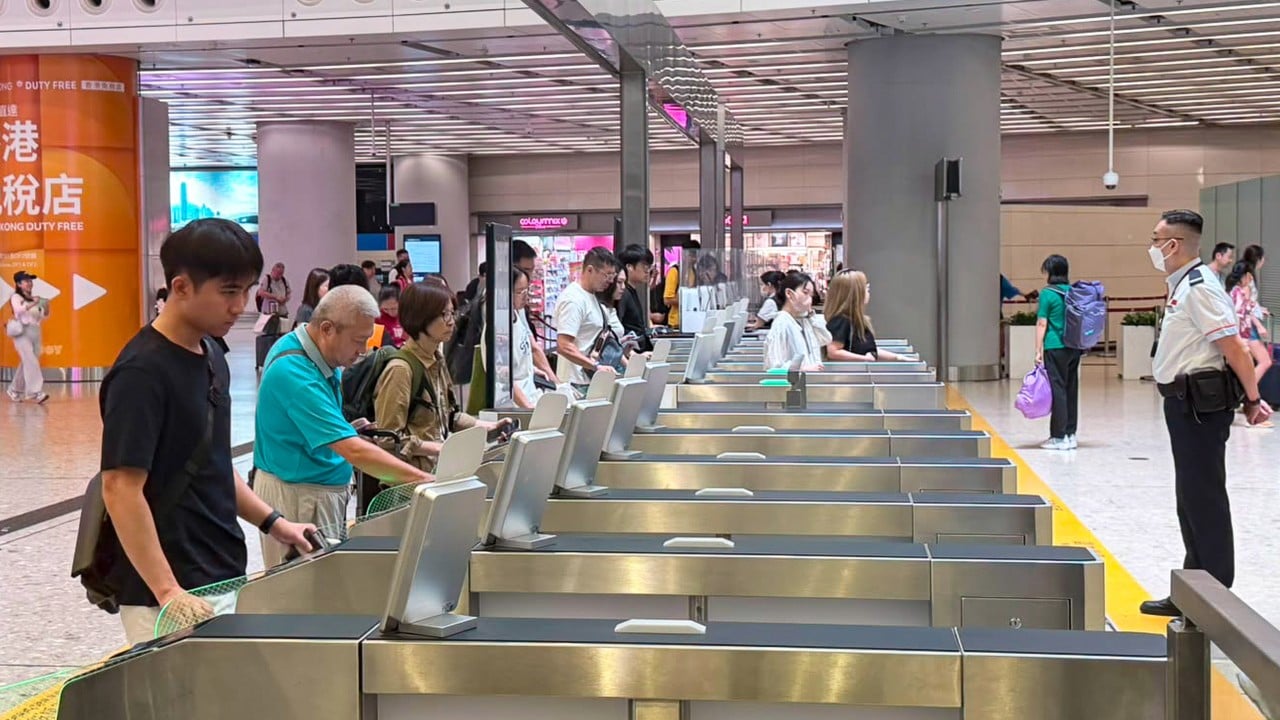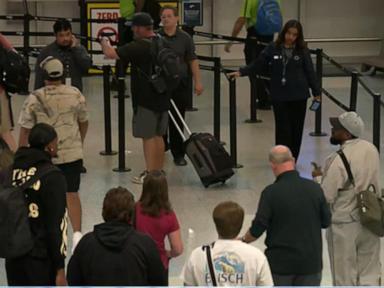
Labor Day weekend marks the official expiration date of summer, and millions of Americans respond to this seasonal shift by attempting to move across the country simultaneously. The results are predictable. Highways turn into parking lots, airport security lines stretch past baggage carousels, and airline pricing algorithms punish anyone who did not book their seats three months in advance.
Most holiday travel guides offer the same tired advice. Leave early. Pack light. Download the airline app. This conventional wisdom fails because it treats systemic gridlock as an individual logistics problem. Missing a flight or sitting on the interstate for six hours does not happen because you packed too many shoes. It happens because airport infrastructure, air traffic control staffing shortages, and interstate capacity limits reach a breaking point every single September.
Surviving the holiday crush requires a complete operational shift. You need to abandon peak travel windows entirely, understand the mechanics of airline recovery networks, and treat your itinerary like a military deployment.
The Anatomy of the Holiday Bottleneck
Transportation networks operate on thin margins during normal weeks. When holiday volume spikes by thirty percent, the system breaks down at predictable friction points.
Air travel vulnerability centers on hub airports. When thunderstorms roll over Chicago O'Hare or Atlanta Hartsfield-Jackson on a Friday afternoon, the delay ripples across the entire national airspace. Airlines cannot teleport crews or aircraft out of stranded positions. A single canceled morning flight cascades into a dozen canceled afternoon rotations because planes are scheduled to fly point-to-point with minimal turnaround buffers.
Road travel follows a different mathematical cruelty. Highway congestion is not caused by too many cars; it is caused by braking waves. One driver taps their brakes to look at a disabled vehicle, the driver behind them hits their brakes harder, and within two miles, traffic comes to a complete standstill. On holiday weekends, volume pushes highways past their theoretical maximum flow rate, turning every merge lane into a choke point.
Redefining the Departure Window
The single most effective strategy for avoiding holiday chaos is temporal displacement. Do not travel on Thursday evening or Friday morning. Do not return on Monday afternoon.
Airlines and highway planners track these peaks obsessively. Pricing reflects this demand curve. If you fly out on Thursday at five in the afternoon, you are paying a premium for the privilege of standing in a security line that snakes out the terminal door.
Shifting your departure to Wednesday evening or Thursday before dawn changes the equation entirely. Airports are quieter, TSA pre-check lines actually function, and regional air traffic control is less congested. For drivers, leaving between three and five in the morning on Friday lets you clear major metropolitan bottlenecks before commuter traffic and holiday departures merge into a single stalled mass of metal.
Return trips demand the same ruthlessness. Monday is a trap. Returning on Tuesday morning—even if it means burning a day of PTO—saves you from airport gate stampedes and six-hour highway crawls. If a Tuesday return is impossible, book the absolute earliest flight out on Monday. Morning flights depart on time because the aircraft overnighted at the gate. By the time the afternoon rolling delays begin to stack up, your plane is already on the ground at your destination.
Air Travel Tactics for Hostile Environments
Assuming you must fly, you cannot rely on the airline to protect your schedule. You have to manage the risk yourself.
Book direct flights exclusively. Every connection you add multiplies your risk of disruption by a factor of three. If your first leg is delayed by forty minutes, you miss your connection, and on a holiday weekend, the next available seat to your destination might not exist for forty-eight hours.
Carry everything on board. Checked bags are liability vectors during holiday surges. Baggage handling systems fail, regional baggage sorters get overwhelmed, and gate agents routinely run out of space in the overhead bins on regional jets. If your bag stays with you, you maintain tactical mobility. You can pivot to a different airline or rent a car if your flight cancels.
Monitor the air traffic control system directly before leaving for the airport. Ignore the airline app for the first thirty minutes of your morning routine. Instead, check the Federal Aviation Administration operations dashboard. It lists ground stops, de-icing delays, and arrival congestion across every major facility in real time. If Atlanta or New York is reporting ground delays due to volume or weather, your flight is already compromised, regardless of what the departure board claims.
Highway Maneuvers When the Asphalt Fails
Driving gives you control, but it also traps you inside your vehicle when things go wrong. Choosing the road less traveled requires more than turning on a mapping application.
Navigation apps like Waze or Google Maps are useful, but they have a fatal flaw during massive holiday rushes. When an interstate jams up, the algorithm dumps thousands of cars onto the exact same two-lane country roads, turning rural shortcuts into secondary parking lots.
To beat this, study your route on a physical or digital map before you turn the ignition. Identify parallel state routes that run fifty miles off the interstate corridor. These roads may add distance, but constant movement beats zero movement every time.
Pack an emergency kit that accounts for twenty-four hours stranded in your vehicle. This is not about wilderness survival; it is about basic human comfort during a major interstate shutdown caused by a multi-car pileup. Bring three gallons of water, non-perishable food, phone power banks charged to maximum capacity, and physical cash. Digital payment systems fail when cell towers get overloaded by thousands of stranded motorists trying to stream videos out of boredom.
The Real Cost of Convenience
Choosing when and how to move during Labor Day weekend is an exercise in risk mitigation. Total frictionless travel does not exist during peak holiday windows.
You can pay more for direct morning flights, you can wake up at three in the morning to beat the highway traffic, or you can accept that you will spend four hours staring at a digital departure board or a tail light. The system is designed to extract maximum revenue for minimum service during these four days. Understanding that dynamic is your only defense against becoming another casualty of the terminal gridlock. Set your alarm early, keep your bags packed, and refuse to participate in the mass stampede.