It was just a few ounces of acrylic yarn.
On a brisk morning at the zoo, someone leaned over a glass barrier—maybe a parent trying to catch a toddler's slipping beanie, maybe a teenager leaning in too far for a better selfie—and watched a knitted hat flutter downward into the water. A tiny splash. A mild inconvenience. You walk away, annoyed that you have to buy a new hat on the drive home, never realizing you just dropped a ticking time bomb into the belly of an animal that survived the impossible.
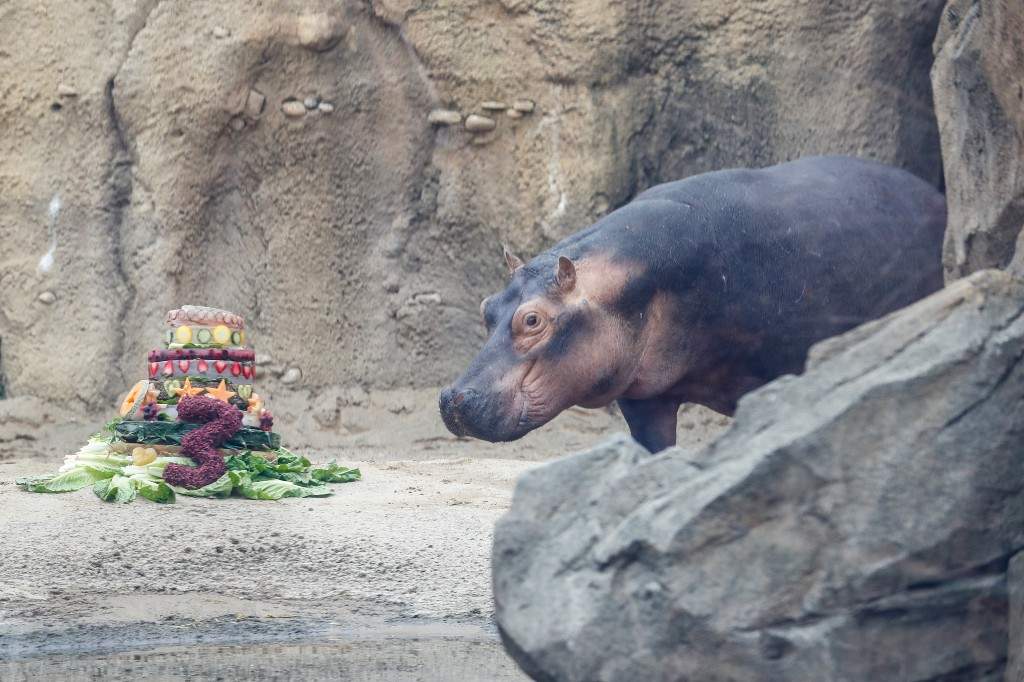
When news broke that Fiona the hippo had died days after ingesting a knitted hat, the headlines arrived like cold telegraphs. A cause. An effect. A tragedy reduced to a single, clinical sentence.
We love our animal celebrities until the exact second our carelessness kills them.
If you ever watched a tiny, prematurely born Nile hippopotamus fight for every ragged breath inside an incubator, you know why this hurts so deeply. Born six weeks early at just twenty-nine pounds—a fraction of the normal fifty-five to one hundred and twenty pounds—she wasn't supposed to live past her first night. Yet, through round-the-clock bottle feedings, custom-made IV catheters, and the sheer, stubborn refusal of her keepers to give up, she grew into a two-thousand-pound juggernaut of pure joy. She became a global symbol of resilience. People bought Fiona ice cream, read Fiona children's books, and watched her do belly flops on their phone screens during miserable commutes.
Then came the hat.
The Architecture of a Silent Emergency
To understand how something as soft and harmless-looking as winter knitwear can bring down a two-ton mammal, you have to picture what happens beneath the waterline. A hippo's mouth is an evolutionary marvel of crushing force, designed to shear tough river grasses and pulverize watermelons in a single chomp. What it is not designed for is delicate sorting. When an unfamiliar object drifts into their enclosure, hippos investigate the only way they know how. They taste it. They swallow it.
Think of a hippo’s digestive tract like a massive, meandering river system winding through narrow canyons. Unlike cattle, which have four-chambered stomachs built to regurgitate and re-chew stubborn material, hippos are pseudo-ruminants with a three-chambered foregut. It is a slow, heavy-duty fermentation tank meant to break down fibrous plants over days.
Now, drop a tightly woven synthetic hat into that system.
Unlike grass, acrylic and wool fibers do not dissolve in stomach acid. Instead, as the muscular walls of the stomach churn and contract, the knitted fabric unravels, tangles, and absorbs heavy fluids, swelling into a dense, fibrous plug. Veterinary surgeons call this a foreign body obstruction, or a trichobezoar when it mats with other debris. In plain terms, it is a cork in a high-pressure pipe.
For the first twenty-four hours, nothing looks wrong. The animal still surfaces to blow spray from her nostrils. She still greets her keepers at the gate. That is the cruelest part of foreign body ingestion in megafauna: the delay. Because a hippo’s sheer mass masks early discomfort, by the time an animal refuses her morning lettuce or shows signs of lethargy, the blockage has already stalled the entire digestive highway. Gas builds up behind the plug. Blood supply to the intestinal wall begins to choke off. Toxins leak into the bloodstream.
Consider what happens next inside the veterinary hospital. Imagine standing beside a tranquilized animal the size of a compact car, knowing that standard endoscopes are too short to reach the blockage, and that performing abdominal surgery on a hippopotamus carries a mortality rate that keeps the best zoological surgeons awake at night. Thick hide, massive muscle walls, and the sheer weight of the animal pressing down on its own lungs under anesthesia turn a routine human procedure into a high-wire act without a net.
A History Written in Lost Things
I remember standing outside a sea lion exhibit years ago, watching a keeper use a long metal grabber to fish a bright pink silicone pacifier out of the filter intake. The keeper didn't look angry; he just looked exhausted. He told me that every Monday morning, after the weekend crowds cleared out, his team performed a sweep of the pools. Their haul routinely included sunglasses, plastic bottle caps, coins, hair ties, and baby socks.
We have a terrible habit of viewing zoo glass and viewing decks as invisible force fields. When we stand on the concrete walkway, holding a cup of overpriced lemonade or adjusting a scarf, we feel safely separated from the wild. We forget that gravity doesn't care about admission tickets.
This is not an isolated failure of one distracted visitor, nor is it a new phenomenon in zoological history. Look back through the records of major wildlife parks over the last three decades, and you will find a quiet, heartbreaking ledger of human clutter:
- The Coins of Wishful Thinking: For decades, visitors tossed pennies and quarters into alligator and turtle pools for good luck, forcing veterinarians to surgically extract pounds of corroding zinc and copper from reptiles suffering from heavy metal poisoning.
- The Plastic Bag Illusion: To an aquatic mammal or a large bird, a translucent shopping bag floating on the breeze looks identical to a jellyfish or a surface fish, leading to fatal esophageal wraps.
- The Fleece and Fabric Trap: Gloves, scarves, and hats are uniquely lethal because their woven fibers act like fishing nets inside the gut, snagging onto natural roughage until they form a concrete-like mass.
Every single one of these incidents begins with an accident. Nobody goes to the zoo intending to harm the animals they paid to see. That is precisely what makes the problem so maddening. Malice is easy to spot and easy to prosecute; carelessness is invisible until it is irreversible.
The Weight of the Glass
Let’s pause and admit something uncomfortable. Most of us have dropped something in public without thinking twice about it. A receipt slips out of a pocket. A hair clip snaps and falls into the bushes. In a city street, a street sweeper cleans it up, or the wind blows it into a storm drain. Nothing dies because you lost your grip on a beanie.
Zoos trick our brains because they look like parks. They have manicured flowerbeds, stroller parking, and snack stands. Our nervous systems relax into leisure mode. We lean over railings to point out a ripple in the water, holding a toddler with one arm and gripping a phone with the other, while a loose knitted hat sits precariously on a squirming head.
Have you ever tried to explain to a grieving veterinary team that it was just an accident?
Picture the keepers who raised Fiona from a fragile, wrinkled newborn who couldn't even stand on her own legs. They slept on cots near her tank. They celebrated every ounce she gained like a national holiday. They knew the exact pitch of her vocalizations when she was hungry versus when she just wanted her chin scratched. When an animal like that begins to crash—when her breathing turns shallow, her eyes dull, and the ultrasound finally reveals the matted shadow lodged deep inside her gut—the grief in that room isn't theoretical. It is suffocating.
Veterinary medicine has advanced remarkably over the last twenty years. Zoos now utilize portable digital radiography, high-frequency ultrasound, and custom-compounded medications tailored to giant herbivores. Yet, all the diagnostic brilliance in the world cannot undo the physical reality of a non-digestible object wedged inside a two-thousand-pound body. Sometimes, even with intravenous fluids, pain management, and round-the-clock monitoring, the body simply cannot pass what it was never meant to swallow.
Reclaiming the Margin of Safety
If there is any dignity to be salvaged from a loss this senseless, it has to come from changing how we behave the moment we walk through a zoo turnstile. Institutions can build higher glass barriers, install catch-nets below viewing platforms, and post bright yellow warning signs at every handrail. Many will, in the wake of this tragedy.
Still, architecture can only do so much against human distraction. Real protection requires a shift in how we treat proximity to living creatures.
Treat every viewing ledge like the edge of a boat in deep water. Anything that isn't secured to your body—hats, sunglasses, phones, pacifiers, loose wrappers—belongs zipped inside a bag before you step up to the glass. If something does fall into an enclosure, swallow the embarrassment and tell a staff member within thirty seconds. Keepers do not care about lecturing you; they care about getting a skimmer net into the water before an animal decides to investigate.
The next time you stand in front of an exhibit, watch the water closely. Look at the way the light refracts off the surface, and look at the massive, quiet grace of the animal gliding just beneath it. She doesn't know what acrylic yarn is. She doesn't know what a mistake is. She only trusts the world we built around her, right up until the moment a stray piece of winter floats down from above and stops her heart.