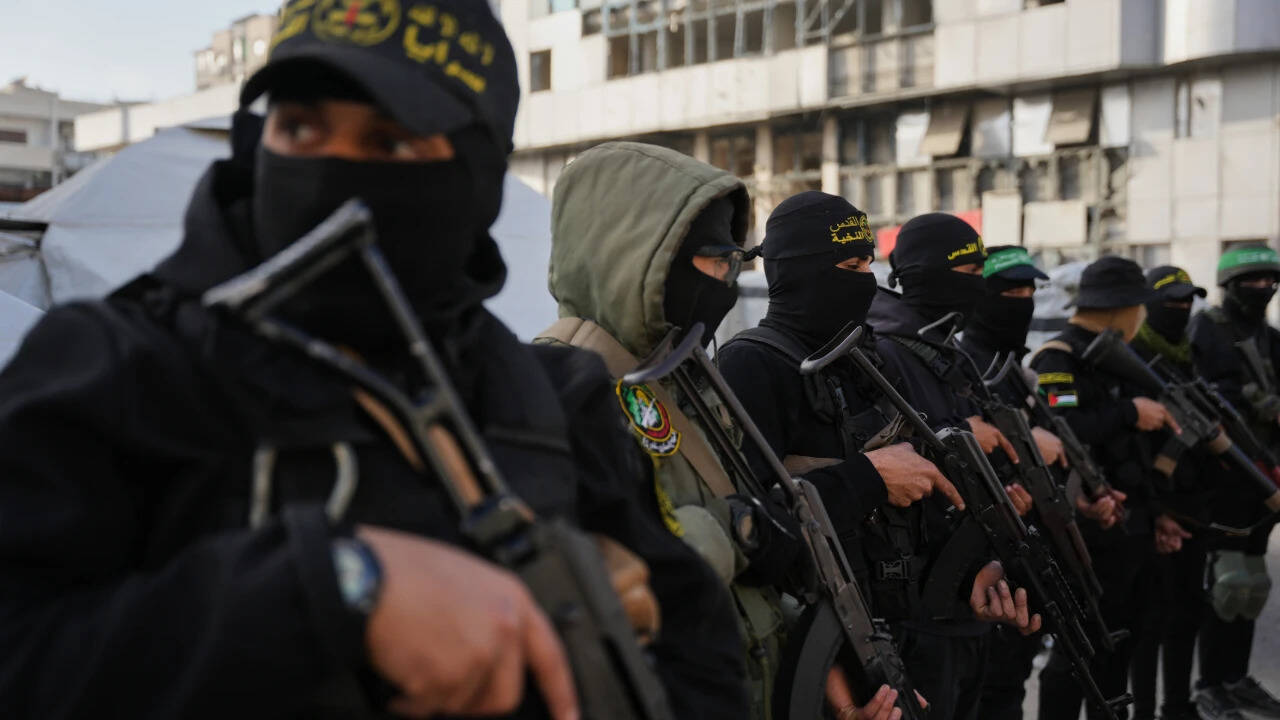
Every time an airstrike kills a senior figure like Hamas commander Samir Abu Younis, the immediate coverage follows a predictable script. Headlines frame the strike as a decisive blow, military analysts debate how long the group can survive without its leadership, and public commentary treats the event like a corporate reorganization where losing a chief executive stalls operations.
That framing misses how decentralized armed groups actually function. Treating a targeted assassination as an automatic strategic turning point ignores decades of counterinsurgency research and the structural reality of asymmetric organizations.
To understand what the death of a senior commander genuinely means—and what it does not—you have to separate tactical disruption from strategic collapse.
The Myth of the Irreplaceable Commander
Conventional military thinking relies on clear chains of command. In a state army, removing a division commander creates immediate confusion because authority, logistics, and intelligence flow downward from a central headquarters. When analysts apply that same mental model to non-state militant networks, they assume killing a high-ranking operative causes the whole apparatus to freeze.
In reality, organizations like Hamas are designed specifically to survive decapitation strikes. Their operational doctrine relies on cellular autonomy, distributed weapons caches, and pre-delegated authority. Local battalion and company commanders do not wait for top-down permission to lay ambushes, fire rockets, or manage tunnel networks. When a senior figure is killed, the immediate operational tempo on the ground often changes far less than outside observers expect.
Decades of empirical studies on leadership decapitation—most notably research by political scientists Jenna Jordan and Robert Pape—demonstrate that targeted killings rarely cause the collapse of entrenched, ideologically driven organizations with deep local roots. While removing a top leader can degrade complex, centralized operations in the short term, groups that rely on local recruitment and decentralized cells routinely absorb the loss and promote from within.
What Targeted Strikes Actually Accomplish
Dismissing the strategic impact of an airstrike does not mean the strike has zero value. Intelligence and military planners pursue senior commanders for specific, measurable operational reasons:
- Loss of Institutional Memory: Veteran commanders carry years of accumulated tactical knowledge, personal relationships with smugglers or financiers, and hard-won lessons on evading surveillance. A newly promoted deputy has the title, not the intuition.
- Operational Friction and Paranoia: High-profile eliminations force surviving leaders underground. When commanders have to abandon electronic communications, constantly rotate safe houses, and suspect informants within their own ranks, their ability to coordinate multi-front operations drops sharply.
- Deterrence and Attrition: Sustained pressure on mid- and upper-tier leadership forces a group to spend energy on internal security and succession rather than offensive planning. Over time, replacing experienced operators with younger, less disciplined recruits can lead to tactical mistakes.
These are real, tangible effects. However, they represent operational friction—not ideological defeat or organizational dissolution.
Where the Conventional Narrative Falls Short
Mainstream reporting on targeted killings frequently overlooks three dynamics that complicate the picture:
1. The Promotion Paradox
When a senior commander is eliminated, the vacancy does not remain empty. Militant groups maintain deep benches of deputy commanders who have spent years preparing for exactly this scenario. In many cases, the successor is younger, more aggressive, and eager to prove their legitimacy through immediate retaliation. Removing a known, predictable adversary sometimes elevates an unknown actor who takes greater risks.
2. Political Legitimacy Versus Military Capability
Airstrikes target military infrastructure and personnel, yet the durability of groups like Hamas rests heavily on political, social, and ideological legitimacy. If the broader political environment continues to generate grievances, displacement, and anger, the recruitment pipeline remains intact. Killing a commander removes an operator; it does not eliminate the conditions that produce the next generation of fighters.
3. The Illusion of Progress Metrics
In protracted conflicts, governments and militaries face intense public pressure to show quantifiable results. Naming a high-ranking target and announcing their death provides a clear, digestible metric of success. Counting eliminated leaders is far easier than measuring whether an adversary's long-term political influence or capacity to regenerate has actually diminished.
The Limits of Strategic Attrition
Even proponents of targeted killing strategies acknowledge significant trade-offs. Precision strikes in dense urban environments frequently carry severe civilian tolls and infrastructure destruction, which can deepen local hostility and strengthen the very narrative the militant group uses to recruit. Furthermore, relying heavily on aerial intelligence and precision munitions can create a false sense of security, leading policymakers to postpone the harder, slower work of diplomatic negotiation, governance reform, and addressing root political causes.
Military force can degrade an organization's capabilities, disrupt its command structure, and deny it safe haven. What it cannot do on its own is impose a durable political settlement.
Asking the Better Question
When news breaks that a senior figure like Samir Abu Younis has been killed, the standard question is whether the strike marks the beginning of the end for the organization. History suggests that is the wrong question.
A more accurate assessment looks beyond the individual name in the headline and examines the underlying structure: Can the group still recruit locally? Are its financial and supply lines severed or merely rerouted? Does a viable political alternative exist to fill the vacuum? Until those questions have clear answers, the elimination of a single commander—no matter how senior—remains a tactical event in a conflict that is ultimately decided elsewhere.