Two years is a lifetime in British politics. It’s also, apparently, the exact lifespan of Keir Starmer’s premiership.
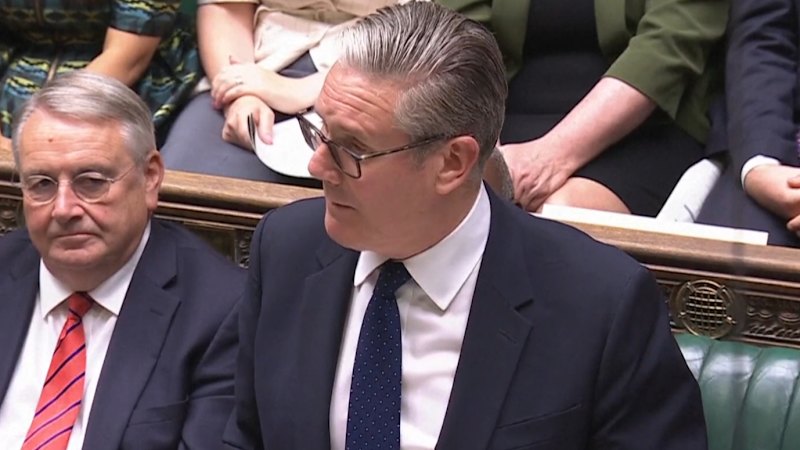
On July 15, 2026, Starmer stood at the dispatch box in the House of Commons for his final Prime Minister's Questions (PMQs). The scene was classic Westminster: a mix of performative jeering, sudden solemnity, and a final, rules-breaking standing ovation. For an alternative view, see: this related article.
But behind the polite parliamentary applause lies a brutal political reality. Starmer didn't walk away on a high. He was pushed out by his own party following a hammering in May’s local elections.
If you want to understand what just happened to the UK government—and where it's going next—you need to look past the carefully rehearsed goodbye speeches. Related coverage on this matter has been shared by The Washington Post.
What Starmer actually said when the curtain fell
Starmer's final speech in Parliament wasn't a policy pitch. It was an attempt to write his own history before his rivals did it for him.
He claimed he was leaving the UK "in better shape than I found it". He pointed to his administration's domestic policies: stronger protections for workers, a reduction in child poverty, and increased defense spending.
He also got highly personal. He thanked his wife, Victoria, and his two teenage children watching from the gallery, telling them "I love you" before uttering a simple, final "Goodbye".
"Every prime minister knows when they take up the torch that the day will come when they have to pass it on. This is the end of my political journey." — Keir Starmer
The House of Commons, usually a bear pit of shouting matches, fell silent. Even Conservative opponents joined in a standing ovation. It was a rare moment of unity, though technically against the rules. Speaker Lindsay Hoyle had to gently remind MPs that while cheering is perfectly fine, clapping in the chamber is strictly forbidden.
But the polite send-off couldn't mask the tension. Kemi Badenoch, the fourth leader of the opposition Conservative Party since 2022, didn't let Starmer off without a parting shot. She reminded Labour that changing leaders isn't a magical fix, noting that Starmer once predicted she wouldn't last a year in her own job.
"Life comes at you fast," Badenoch warned. She isn't wrong.
The brutal mechanics of the Westminster coup
How did we get here?
In July 2024, Starmer led Labour to a historic victory, ending 14 years of Conservative rule. Fast forward to mid-2026, and he is out the door.
The breaking point was the May 2026 local elections. Voters, exhausted by a stagnant economy and slow-moving public services, deserted Labour in droves. Backbenchers panicked. Fearing they would lose their seats at the next general election, they pressured Starmer to step aside.
In the UK's parliamentary democracy, the prime minister is not directly elected by the public. If a governing party changes its leader, the prime minister changes too. No general election is required. The next national vote isn't due until 2029.
So, Starmer did what British leaders do when the writing is on the wall: he agreed to go.
On Monday, Starmer will travel to Buckingham Palace to formally resign to King Charles III. Immediately after, the King will invite Andy Burnham to form a government. Burnham, the former Mayor of Greater Manchester, ran uncontested to replace Starmer and will be officially announced as the new Labour leader.
Why the Burnham era changes the game
For years, Andy Burnham positioned himself as the "King of the North," operating outside the Westminster bubble and occasionally taking swipes at Starmer’s cautious, centralized style. Now, he is taking over Downing Street.
This transition is more than a change of face. It's a shift in how the UK government will function.
- A shift away from technocracy: Starmer was a former Director of Public Prosecutions who loved spreadsheets, processes, and structured plans. Burnham is a populist communicator who knows how to tell a story that connects with working-class voters.
- Decentralization of power: Expect Burnham to push hard on regional devolution. Having spent years running Manchester, he knows firsthand how centralized Treasury control suffocates local economies.
- Rebuilding public services: Starmer struggled to make voters feel the improvements his government claimed to deliver. Burnham's immediate challenge is to make public services like the NHS feel functional again, rather than just talking about long-term reform.
If you're tracking British politics, don't watch Westminster next week. Watch how Burnham tries to rebuild Labour’s relationship with voters who felt abandoned by Starmer’s cautious approach. The transition of power on Monday isn't just a formality—it is a high-stakes pivot to save the Labour Party from an early exit in 2029.