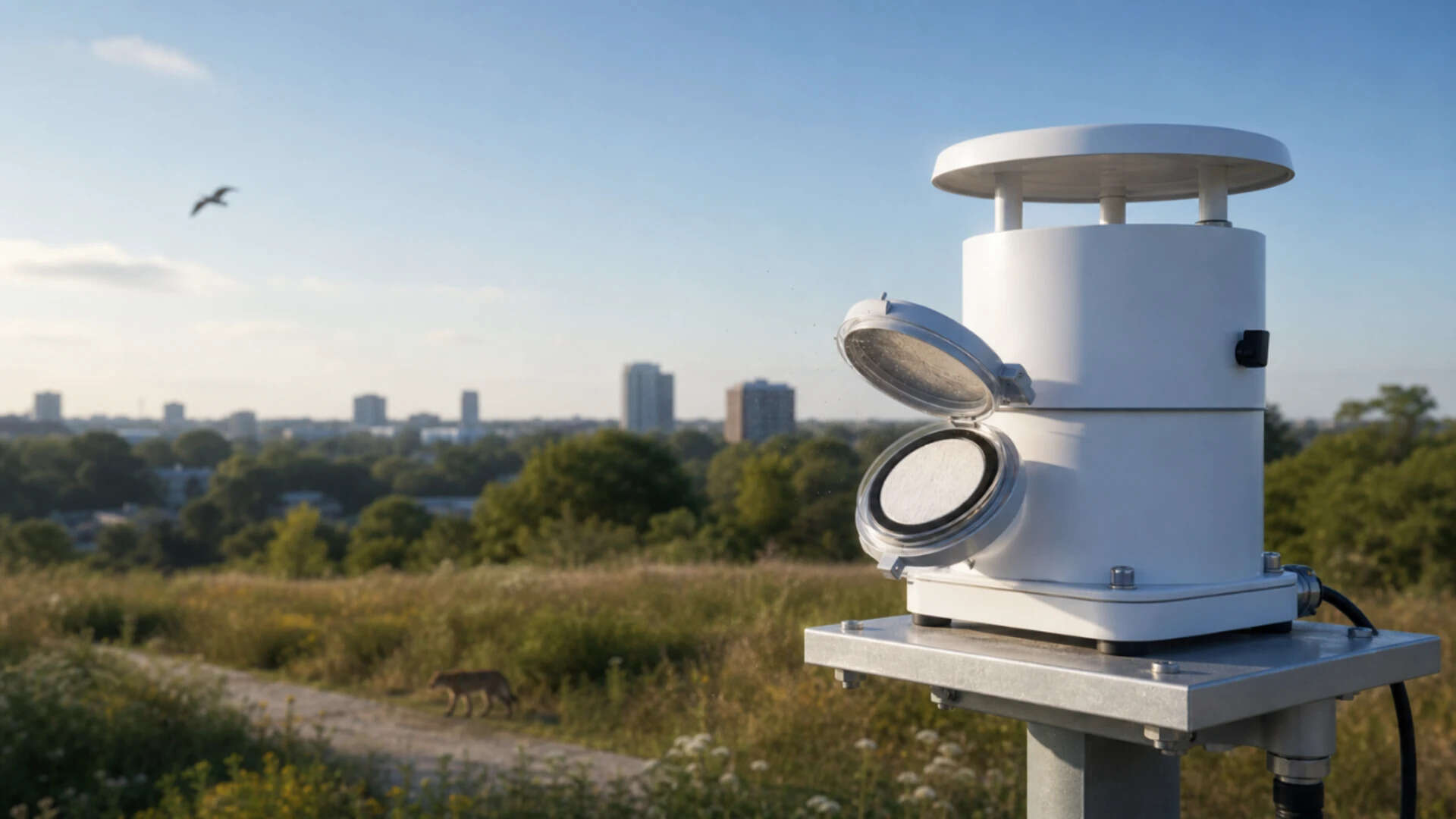
That eerie, apocalyptic orange glow in the sky isn't a filter. It's the visual signature of a massive environmental crisis sweeping across North America.
Right now, smoke from intense Canadian and US wildfires is blanketing millions of people from the Midwest to the East Coast, turning the air we breathe into a toxic soup. While many treat these smoky days as a visual novelty or a minor inconvenience, the reality is far more dangerous.
We have entered an era where summer no longer just means heat waves; it means smoke season. This isn't a temporary blip. It's our new normal, and most of us are completely unprepared for how it's quietly damaging our health.
The True Scale of the Fire Crisis
The numbers coming out of the wildlands are staggering. In the United States alone, close to 40,000 fires have scorched more than 3.6 million acres so far this year. That's roughly a million more acres burned than the 10-year average for this point in the season. Meanwhile, more than 100 wildfires are actively tearing through Canadian forests, pumping massive plumes of smoke high into the atmosphere, where jet streams carry them straight into major US population centers.
The underlying mechanics of this crisis come down to climate extremes. We are dealing with intense, prolonged droughts coupled with extreme heat. This combination turns forests into tinderboxes.
Worst of all, we now contend with "zombie fires"—blazes that smolder deep underground in the peat even during freezing winter temperatures, only to reignite on the surface as soon as spring arrives. The traditional fire season has essentially dissolved. It starts earlier, lasts longer, and is incredibly difficult to contain.
Why Wildfire Smoke is Way Worse Than Regular Pollution
Many people assume wildfire smoke is just like woodsmoke from a cozy campfire. It isn't.
When a wildfire tears through a landscape, it doesn't just burn pine trees. It consumes entire neighborhoods, vehicles, synthetic building materials, plastics, and chemical storage facilities.
The resulting smoke contains a nasty cocktail of carbon monoxide, nitrogen oxides, and volatile organic compounds. A recent breakthrough study from Rutgers Health analyzed the smoke from these climate-driven fires and found shockingly high concentrations of heavy molecular weight polycyclic aromatic hydrocarbons (PAHs)—which are known, potent carcinogens.
At the center of the health threat is $PM_{2.5}$, which refers to fine particulate matter that is 2.5 micrometers or smaller in diameter. To put that in perspective, these particles are about 30 times smaller than the width of a single human hair.
Because they are so incredibly microscopic, your nose and throat can't filter them out. When you breathe them in, they travel:
- Deep into your lungs: Sneaking past your respiratory defense systems and lodging in your alveoli.
- Directly into your bloodstream: Triggering systemic inflammation throughout your entire cardiovascular system.
- To other major organs: Emerging research suggests these ultrafine particles can even cross the blood-brain barrier, potentially leading to neurological issues.
A study published earlier this year estimated that long-term exposure to these tiny particles from wildfire smoke contributes to an average of 24,100 premature deaths annually in the lower 48 states. In Canada, air pollution-related health damages cost upwards of $140 billion per year, with wildfires being the single largest contributor to harmful particulate matter.
The Indoor Air Myth
"If the air outside is bad, I'll just stay indoors."
It sounds logical, but it's a dangerous oversimplification. Outdoor air pollutants easily penetrate our homes through drafty windows, doors, and standard ventilation systems.
Once those fine particles get inside, they settle on your carpets, furniture, and bedding. Every time you walk across the room or sit on the couch, you kick those toxic particles back up into the air to breathe them in again.
Without active filtration, your indoor air quality during a major smoke event can quickly match—or even exceed—the hazardous air outside.
How to Actually Protect Your Health
If you want to protect your lungs and heart when the skies turn hazy, you need to move past passive observation. Here is a no-nonsense, highly effective checklist of actions that actually work.
Upgrade Your HVAC Filter Immediately
Check your home's HVAC filter. If it has a MERV rating lower than 13, it isn't doing anything to stop wildfire smoke. You need a MERV 13 filter or higher to trap those microscopic $PM_{2.5}$ particles. Run your system's fan continuously (turn the setting from "Auto" to "On") to keep the air cycling through the filter.
Deploy True HEPA Purifiers
Put a dedicated air purifier in the rooms where you spend the most time, especially your bedroom. Make sure the unit uses a True HEPA filter, which captures 99.97% of particles as small as 0.3 microns.
If commercial air purifiers are sold out or too expensive, you can build a highly effective DIY alternative known as a Corsi-Rosenthal Box. Simply tape four MERV 13 filters together into a box shape, seal the bottom with cardboard, and duct-tape a standard 20-inch box fan to the top, blowing air upward. Studies have proven these DIY boxes perform exceptionally well, often outperforming expensive commercial units.
Ditch the Cloth and Surgical Masks
If you have to go outside, do not reach for a cloth mask or a standard blue surgical mask. They do absolutely nothing to filter out fine particulate matter because the particles simply leak through the sides and the porous material. You must use a well-fitted, NIOSH-approved N95 or KN95 respirator. It must form a tight seal around your nose and chin to be effective.
Monitor the Air Quality Index (AQI) daily
Don't rely on your eyes to judge how safe the air is. Use tools like AirNow.gov to check the real-time Air Quality Index (AQI) for your specific zip code.
If the AQI creeps above 100, sensitive groups (children, the elderly, and anyone with asthma or heart conditions) should limit outdoor exposure. If the AQI passes 150, everyone, regardless of health status, needs to avoid strenuous outdoor activity.
Keep Windows and Doors Shut
It sounds obvious, but keep your home sealed tight. Avoid using kitchen exhaust fans or bathroom fans that vent to the outside, as they can draw smoky air into your home through small cracks and gaps in your doors and windows.
When driving, set your car’s climate control system to recirculate so you aren't pulling smoky highway air directly into your cabin.
.png?width=1200&auto=webp&trim=0%2C0%2C0%2C0)