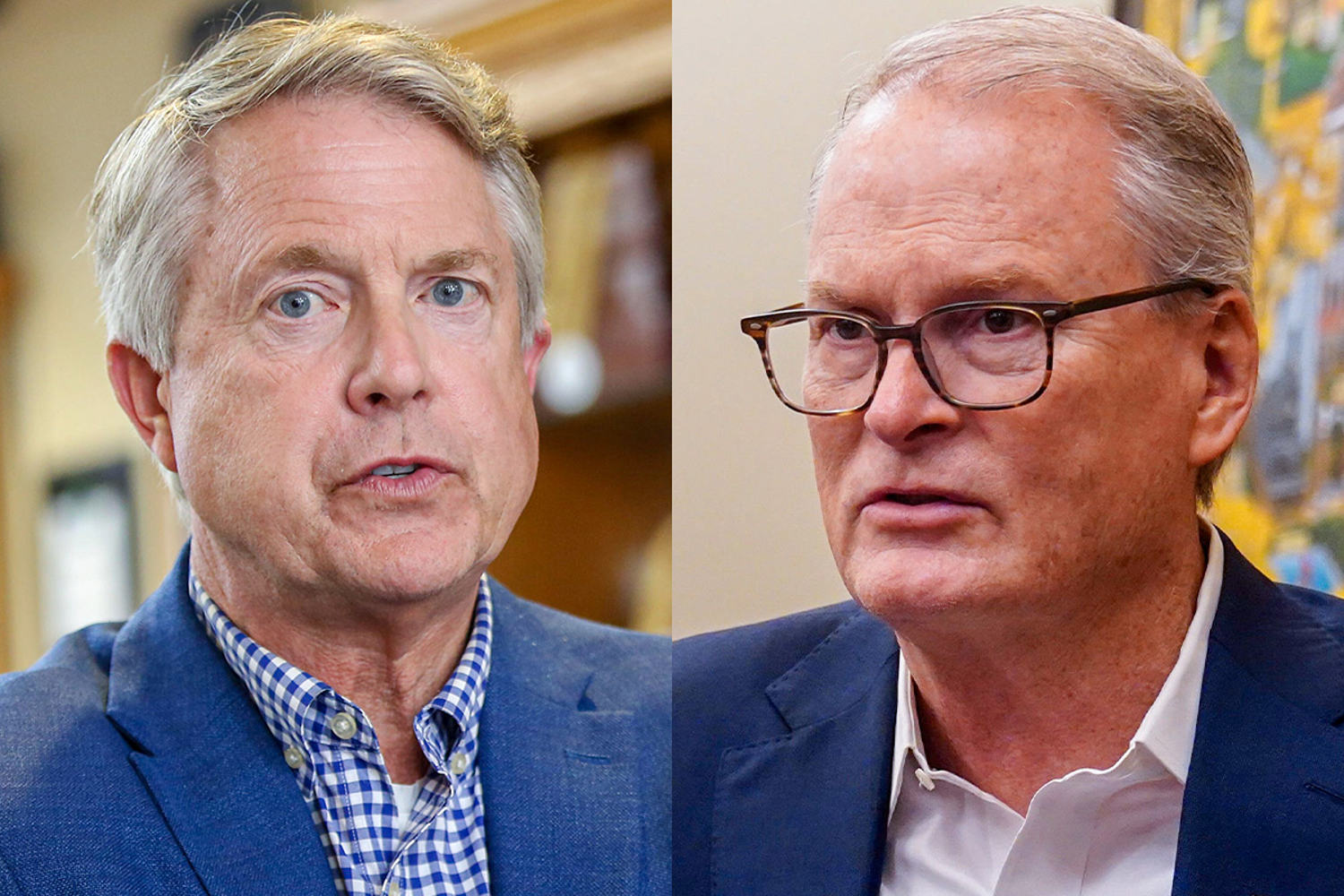
Watching the final Kansas Senate debate felt less like a polite policy forum and more like a high-wire act without a net. Republican incumbent Roger Marshall and Democratic challenger Adam Hamilton clashed over tariffs, foreign wars, Social Security, and character attacks in a race that shocked political analysts by turning genuinely competitive in a state where Democrats hadn't won a Senate seat since 1932.
If you're looking for the short version, the debate exposed a sharp fault line in Kansas politics. Marshall leaned hard into national party alignment, tariffs, and border security while framing Hamilton as a rubber stamp for New York Senator Chuck Schumer. Hamilton, a longtime Methodist pastor, tried to carve out an independent lane, hammering Marshall on tariff costs, fuel prices tied to conflict in the Middle East, and past billing lawsuits against former OB-GYN patients.
What makes this matchup so revealing isn't just the shouting. It's how both men had to contort around realities that don't fit neat partisan boxes.
How The Kansas Senate Debate Exposed Deep Voter Frustration
A typical debate recap focuses on zingers and scorecards. That misses the bigger story. By October 2026, tens of millions of dollars from outside groups were pouring into Kansas because control of the U.S. Senate was on the line and the race had tightened far beyond expectations.
In a state long treated as reliably Republican at the federal level, moderate suburban voters around Kansas City and exhausted rural households were looking closely at pocketbook pressures. You could hear that anxiety in every exchange over fuel, groceries, and trade. Marshall argued that tariffs were sparking a manufacturing comeback and pushing back against China. Hamilton countered that broad tariffs acted like an unpredictable tax on everyday Kansans and made long-term planning a headache for local businesses.
Honestly, neither side offered a painless fix for household costs. Voters watching at home weren't just comparing slogans; they were deciding which set of economic risks felt more manageable.
Foreign Wars, Diesel Prices, And Sharp Clashes
Foreign policy turned into one of the most heated stretches of the night. High fuel and diesel prices hit farmers, truckers, and commuters hard, and both candidates knew energy costs weren't abstract talking points in Kansas.
Hamilton pushed for exiting the conflict involving Iran quickly to ease fuel pressure. Marshall, while wanting the fighting to end, defended the administration's approach and pointed to the war between Russia and Ukraine rather than the Iran conflict as the driver behind high diesel prices. Things escalated further when Marshall suggested he would back getting diesel from Russia if it helped bring Moscow to the negotiating table and end the war, prompting Hamilton to accuse him of selling out allies in Ukraine.
Watching two candidates argue over global supply chains and wartime energy trade-offs reminds you how quickly local kitchen-table issues collide with overseas crises. A single shift in global oil or diesel flows can swing voter mood faster than a polished campaign speech.
Where Roger Marshall And Adam Hamilton Surprised Voters
For all the fireworks, the debate also produced a few moments that cut against standard party expectations. Take Social Security. With the program projected to face a funding shortfall starting in 2032 that could trigger benefit cuts, both candidates addressed the wage cap that currently exempts income above $184,500 from Social Security payroll taxes.
Hamilton argued that exempting higher earnings isn't fair and needs to change. In a move that caught many observers off guard, Marshall went even further on that specific point, saying he would eliminate the income cap altogether. Neither candidate committed to raising the retirement age, leaving the broader solvency math open for debate.
On artificial intelligence and sports rules, the contrast was more subtle:
- AI Oversight: Marshall favored a "light touch" so the U.S. doesn't fall behind China militarily, while Hamilton warned against leaving AI largely unchecked and called for stronger guardrails.
- School Sports: Both stated there are two genders while saying decisions on transgender athletes in girls' and women's sports should rest with organizations like the Kansas State High School Activities Association.
- Party Labels: Marshall repeatedly tied Hamilton to Chuck Schumer and national Democrats, while Hamilton insisted he wouldn't back Schumer for majority leader and pushed back against claims that he helped shape Obama-era immigration policy after spending 38 years as a pastor.
Personal Attacks And Record Scrutiny
No high-stakes Senate debate stays strictly on policy, and personal credibility took center stage. Moderators pressed Marshall on attack ads targeting lawsuits over unpaid medical bills from his earlier career as an OB-GYN. Marshall called the ads a distortion, saying his practice provided plenty of free care and worked to keep patients out of collections.
Hamilton also faced tough questioning regarding past scrutiny over a volunteer situation years earlier at his church, maintaining that authorities investigated and found the matter inconclusive without charges. Meanwhile, critics and supporters alike weighed Marshall's alignment with President Donald Trump against Hamilton's pitch for a more independent, compassionate voice from Kansas.
If you follow state and federal races closely, there's a practical lesson here about how voters process character attacks. Negative ads grab attention, yet voters often weigh whether a candidate's explanation matches what they already feel about the broader direction of the country. Look at how the race actually played out on Election Day on November 3, 2026: Hamilton pulled off a historic upset, becoming the first Democrat to win a U.S. Senate seat in Kansas in 94 years.
What Voters And Observers Can Do Next
If you want to go beyond headlines and judge political debates or election outcomes with a clearer eye, start with a few concrete steps:
- Watch full debate footage, not just clips. Short viral segments often strip away context or highlight only the loudest exchange. Coverage from outlets like PBS NewsHour and Kansas News Service helps fill in full policy answers.
- Fact-check specific numbers and claims. When a candidate mentions a tax cap, a war's impact on fuel, or a past lawsuit, check independent reporting rather than taking either side at face value.
- Track local shifts alongside national narratives. National talking points dominate TV ads, yet county-level turnout and local economic pressures often decide tight races.
Politics rarely fits neatly into red-versus-blue caricatures once you look closely at the numbers and the people behind them.