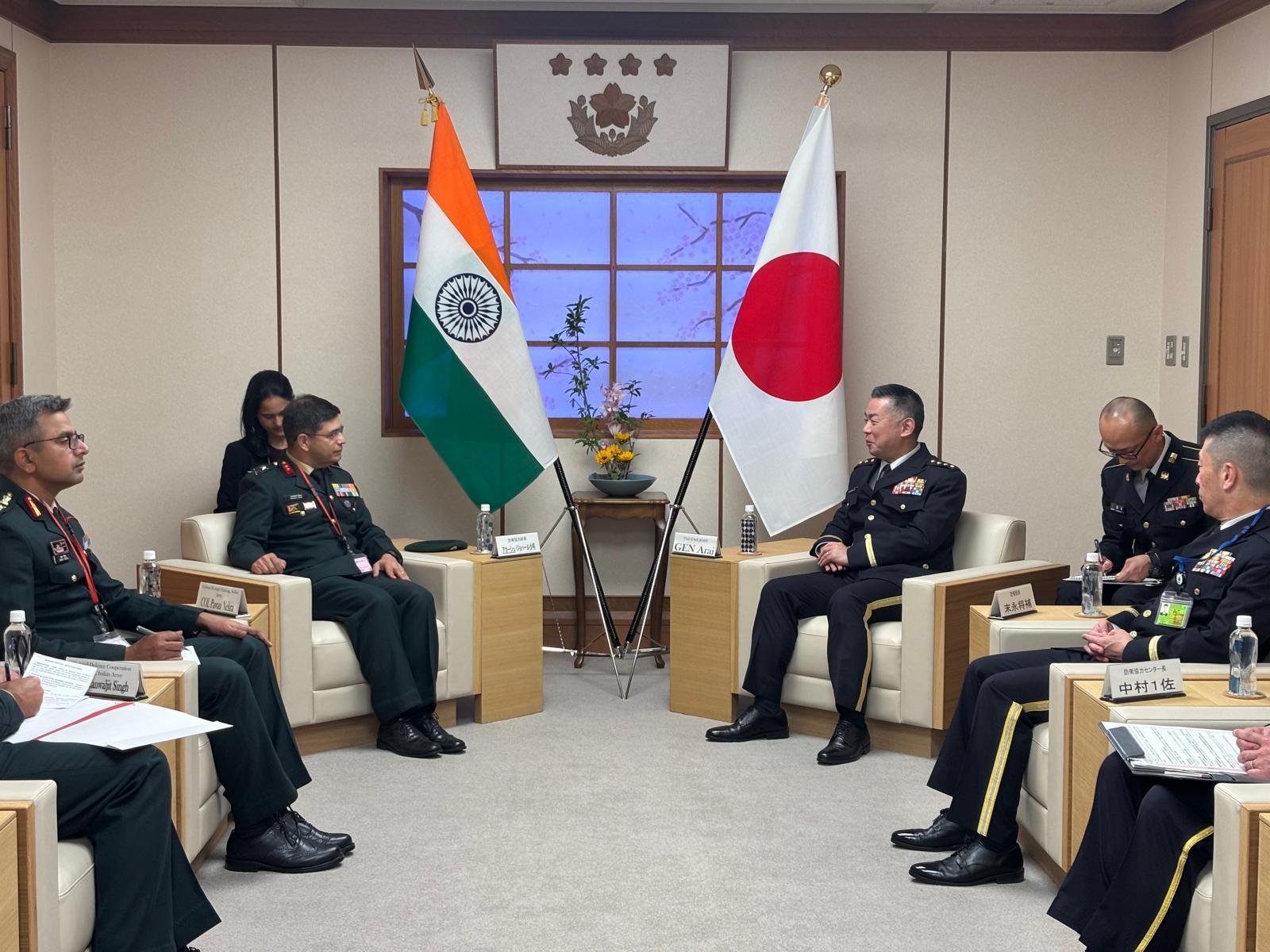
Bilateral defense optics often obscure underlying structural shifts. When a Japanese defense minister visits New Delhi to inspect a ceremonial Guard of Honour alongside the Indian defense minister, standard reporting treats the event as diplomatic theater. This approach misses the operational mechanics. Ceremonial formations reflect institutional alignment, signaling a calculated convergence of defense industrial capacity, maritime security doctrine, and regional deterrence architecture between Tokyo and New Delhi.
The security relationship between Japan and India has evolved from an ad hoc maritime exercise partnership into a foundational pillar of Indo-Pacific stability. Understanding this shift requires examining the structural constraints both nations face, the economic logic driving their defense acquisition strategies, and the specific bottlenecks limiting deeper integration.
The Geopolitical Cost Function
Japan and India operate under distinct geopolitical pressures that generate a shared strategic calculus. Tokyo faces a deteriorating security environment in Northeast Asia, characterized by sustained maritime pressure near the Senkaku Islands and escalating missile developments by North Korea. For decades, Article 9 of the Japanese constitution constrained Tokyo to a strictly defensive posture. The recent shift toward counterstrike capabilities and increased defense spending targets marks a structural break from post-war pacifism.
New Delhi confronts a persistent two-front security challenge along its northern and western land borders, compounded by an expanding Chinese naval footprint in the Indian Ocean. India strategic autonomy doctrine historically precluded formal military alliances. However, the asymmetry of modern naval competition forces a pragmatic reassessment.
The convergence of these two actors is not driven by shared sentiment, but by a matching cost function. Neither nation possesses the unilateral scale required to deter a peer competitor in the maritime domain alone. Tokyo brings advanced sensor technology, quiet submarine propulsion, and high-end electronics. India brings geographic centrality, massive shipyard capacity potential, and operational scale across critical choke points like the Strait of Malacca and the Sunda Strait.
The Three Pillars of Defense Integration
Bilateral defense cooperation rests on three distinct operational pillars. Each pillar addresses a specific capability gap in the Indo-Pacific theater.
1. Maritime Domain Awareness and Choke Point Control
The geographic distribution of the Indian and Pacific Oceans creates natural chokepoints. Intelligence sharing regarding subsurface contacts in these zones dictates operational success. Japan Maritime Self-Defense Force and the Indian Navy maintain regular bilateral exercises, known as Exercise JIMEX, alongside multilateral frameworks like the Malabar exercise with the United States and Australia.
The operational focus centers on anti-submarine warfare and long-range maritime patrol coordination. India operates P-8I aircraft, while Japan utilizes Kawasaki P-1 maritime patrol aircraft. Harmonizing data links and communication protocols between these platforms transforms fragmented regional surveillance into a coherent picture of subsurface activity.
2. Defense Technology Co-Development and Transfer
For decades, Japan maintained a strict ban on the export of defense equipment, enshrined in the Three Principles on Transfer of Defense Equipment and Technology. Relaxing these principles opened the door for bilateral acquisitions. The primary historical friction point was the stalled negotiation over the US-2 amphibious rescue aircraft. That initial hurdle exposed structural incompatibilities in defense procurement timelines, bureaucratic approvals, and pricing models.
Current efforts focus on dual-use technologies, robotics, and uncrewed systems. Tokyo and New Delhi are exploring collaboration on communications technology and sensor suites. The objective is to establish resilient supply chains that bypass single-source vulnerabilities. By diversifying component manufacturing, both nations seek to insulate their defense acquisition pipelines from geopolitical shocks and intellectual property theft.
3. Logistical Interoperability and Cross-Servicing
Military effectiveness relies on logistics. The Acquisition and Cross-Servicing Agreement signed between Japan and India permits the reciprocal provision of supplies and services during joint exercises, UN peacekeeping operations, and humanitarian assistance missions.
This mechanism reduces the friction of forward deployment. Japanese naval vessels can access logistical support facilities in the Andaman and Nicobar Islands, while Indian naval assets gain routine servicing access at facilities in Yokosuka or other maritime self-defense force bases. This mutual logistical access extends the operational range of both fleets without requiring the immediate establishment of permanent foreign military bases.
Structural Bottlenecks and Limitations
Despite the strategic logic driving this partnership, significant structural constraints limit the velocity of integration. A rigorous analysis must account for these friction points to avoid overstating the current level of interoperability.
Bureaucratic inertia remains a primary obstacle. Japan Acquisition, Technology, and Logistics Agency operates under rigorous civilian oversight and conservative risk tolerances regarding technology security. Conversely, India defense procurement procedures are notoriously complex, characterized by lengthy bureaucratic cycles and shifting domestic content requirements under the Atmanirbhar Bharat initiative.
Furthermore, doctrinal differences persist. Japan operates within a tightly integrated alliance framework centered on the United States, utilizing systems designed for seamless interoperability with US forces. India maintains a diversified defense procurement portfolio, acquiring hardware from Russia, France, Israel, and domestic state-owned enterprises. Integrating Japanese sensors or communication suites into a mixed Soviet-Western inventory requires complex systems integration work that neither defense industrial base has fully solved at scale.
Finally, political risk calculations differ. While Tokyo views regional security through the lens of a direct threat to its sea-lines of communication and territorial integrity, New Delhi maintains diplomatic equities in multilateral forums like the BRICS and the Shanghai Cooperation Organisation. Navigating these overlapping diplomatic architectures requires careful statecraft to prevent friction during periods of heightened international tension.
Strategic Execution and Future Deployment
To transition from high-level diplomatic alignment to functional deterrence, defense planners in Tokyo and New Delhi must alter their execution strategy. Joint production initiatives must move beyond memoranda of understanding and focus on specific component-level manufacturing agreements within the defense supply chain.
Priority should be given to standardized uncrewed undersea vehicle architecture and secure tactical data networks. By focusing on modular, interoperable sub-systems rather than complex platform-level acquisitions, both nations can circumvent bureaucratic delays and build immediate operational utility. The measure of success will not be found in ceremonial reviews or joint communiques, but in the seamless sharing of subsurface tracking data during routine patrols across the Indo-Pacific corridor.