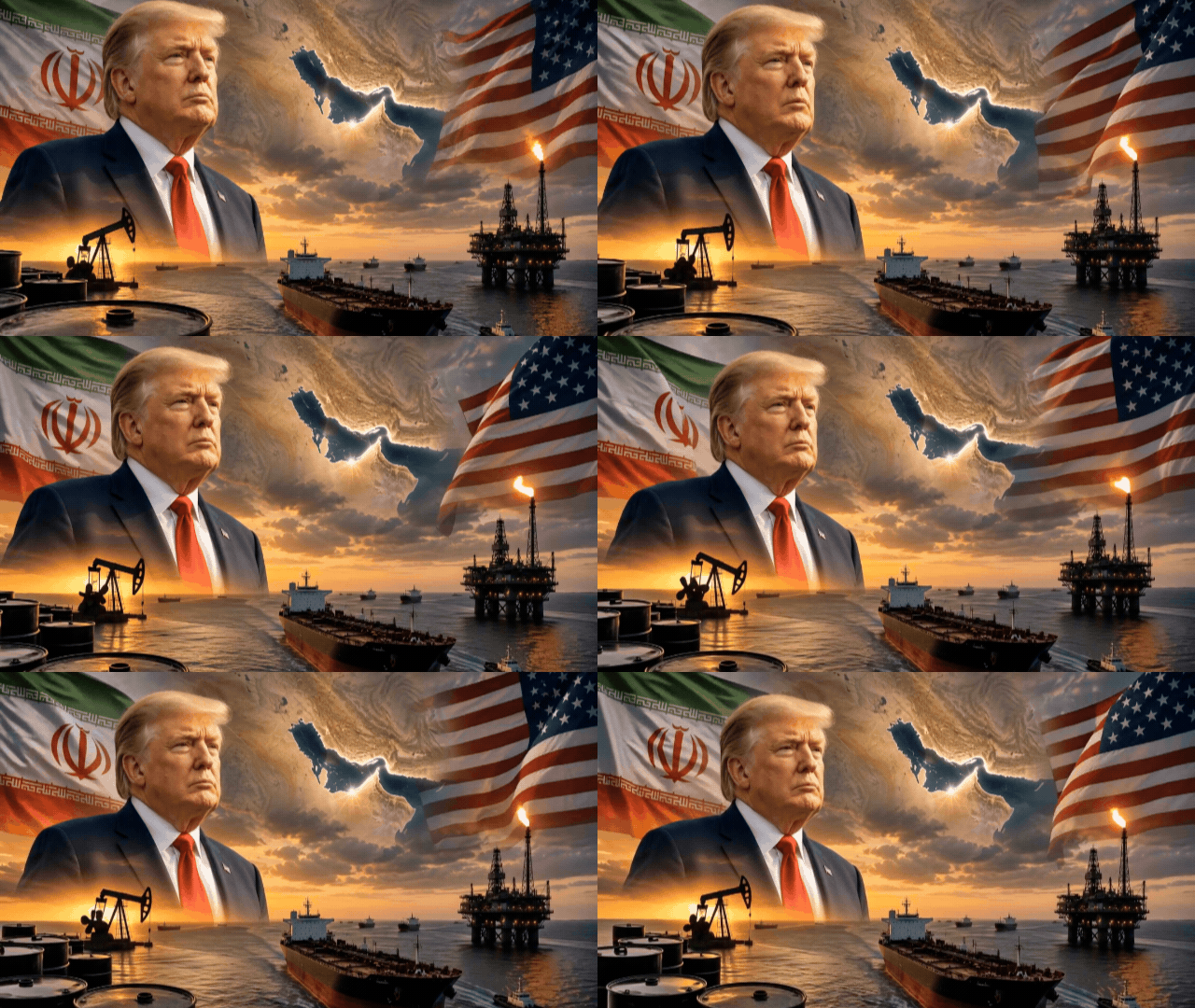
The financial press is running the same tired playbook again. Oil prices dip, and the immediate consensus from the trading desks to the headlines is perfectly synchronized: the Israel-Lebanon ceasefire is paving the way for an Iran nuclear deal, injecting a massive dose of optimism into global energy markets.
It is a comforting narrative. It is also completely wrong.
Mainstream financial analysts love to view complex geopolitical conflicts through a neat, linear lens. They assume that a pause in hostilities between Israel and Hezbollah automatically translates to a diplomatic breakthrough with Tehran, which will then unleash millions of barrels of Iranian crude back into the global economy. This lazy consensus ignores the structural realities of the Middle East, the physical constraints of oil production, and the actual mechanics of global energy compliance.
The recent dip in oil prices is not a reflection of impending peace or a looming supply glut. It is a mathematical miscalculation driven by algorithmic trading and short-term speculative panic.
The Myth of the Ceasefire Domino Effect
Let us dismantle the foundational premise of the current market narrative. The idea that a ceasefire in Lebanon naturally segues into a broader diplomatic resolution with Iran assumes that these geopolitical actors are pieces on a static chessboard. They are not.
Hezbollah and Iran are intricately linked, but a localized cessation of hostilities is an operational pause, not a philosophical shift. To believe that Israel’s tactical adjustments in Lebanon mean the regional shadow war is over is to misunderstand the last forty years of Middle Eastern history.
More importantly, the market is pricing in an "Iran Deal" that cannot exist in the form Wall Street expects. Analysts point to potential sanctions relief as the catalyst for a massive supply surge. But here is the reality from someone who has spent decades analyzing compliance data and tanker tracking metrics: Iranian oil never actually left the market.
The Ghost Fleet Reality: For the past several years, Iran has consistently bypassed Western sanctions through a sophisticated network of ghost tankers, ship-to-ship transfers in the South China Sea, and rebranded blending hubs in East Asia.
When a mainstream report notes that an Iran deal will "bring back" crude, they are fundamentally misunderstanding the data. You cannot bring back oil that is already being bought, sold, and refined.
The Mathematics of the Non-Existent Supply Glut
To understand why the market’s reaction is flawed, we have to look at the hard numbers of global production capacities and OPEC+ dynamics.
The narrative suggests that sanctions relief will instantly flood the market with 1 to 1.5 million barrels per day (bpd) of Iranian crude. Let us look at the actual capacity constraints:
- Current Estimated Underground Production: Iran is already pumping close to its sustainable capacity, hovering around 3.2 million bpd, with a significant portion of that volume smuggled directly to independent refiners in China.
- True Surge Capacity: The actual volume of shut-in capacity that Iran could realistically bring online within a six-month window under a total sanctions lift is closer to 300,000 to 500,000 bpd.
- Infrastructure Decay: Decades of underinvestment mean that Iran’s oil fields suffer from severe natural decline rates. Reaching and sustaining pre-sanctions peak capacity requires billions in capital expenditure and Western oilfield services equipment that cannot be deployed overnight.
When you strip away the speculative hype, the "tsunami" of new oil promised by the commentators shrinks to a drop in the bucket. A 400,000 bpd increase in a 102 million bpd global market is statistical noise, easily absorbed by standard demand growth or counterbalanced by a minor production tweak from Saudi Arabia.
Why Algorithmic Trading Distorts Geopolitical Truths
If the fundamentals do not support a sustained price drop, why did oil settle lower? The answer lies in the plumbing of modern financial markets, not the actions of diplomats in Geneva or Beirut.
Today's commodities markets are dominated by Commodity Trading Advisors (CTAs) and quantitative algorithms. These algorithms do not read history books or understand regional nuances. They scan headlines for keywords like "ceasefire," "deal," and "peace," match them with technical breaking points in the crude futures charts, and execute massive sell orders in milliseconds.
[Headline: "Ceasefire Reached"] ➔ [Algo Scan: Keywords Detected] ➔ [Trigger: Automated Short Positions] ➔ [Result: Artificial Price Drop]
This creates a feedback loop. The algorithm drives the price down, and the human financial journalist invents a rationalization after the fact, attributing the move to "hopes for an Iran deal." It is a classic case of confusing the symptom with the cause.
I have watched institutional desks lose tens of millions of dollars trying to trade geopolitical headlines based on this exact flaw. They treat crude futures like a tech stock reacting to an earnings report, completely oblivious to the physical constraints of the wet barrels moving across the ocean.
The Hidden Danger: Structural Underinvestment
By focusing entirely on short-term diplomatic theater, the market is blinding itself to the real crisis facing the energy sector: the catastrophic lack of capital expenditure in long-cycle oil projects.
While traders celebrate a temporary $2 dip based on a ceasefire headline, the global depletion rate of existing fields continues at roughly 4% to 5% annually. To just stay even, the world needs to replace around 4 million bpd of capacity every single year.
The real contrarian play right now is recognizing that the downside risk to oil prices is artificially capped by this structural supply crunch. The political pressure to transition away from fossil fuels has starved traditional upstream projects of capital for a decade. No temporary diplomatic breakthrough with Iran can fix a systemic global investment deficit.
Deconstructing the "People Also Ask" Flawed Premises
When looking at the broader sentiment, the questions being asked by market participants reveal exactly how skewed public understanding is.
Will an Iran nuclear deal permanently lower gas prices?
No. This question assumes retail gasoline prices are tied exclusively to the headline spot price of Brent or WTI crude. It ignores the severe bottleneck in global refining capacity. The United States and Europe have been shutting down or converting refineries at a rapid pace. You can have all the crude oil in the world sitting in tanks, but if you do not have the refining capacity to turn it into octane, the price at the pump will remain stubbornly high.
Does peace in the Middle East mean cheap energy?
This is the most naive premise of all. Historically, periods of relative stability in the Middle East often allow OPEC+ to exercise tighter, more disciplined control over production quotas. When regional tensions are high, individual nations frequently overproduce to fund their security needs or break ranks out of geopolitical desperation. True stability actually empowers cartel discipline, which generally leads to higher, floor-supported pricing, not a race to the bottom.
The Downside of the Contrarian Stance
To maintain total transparency, this contrarian view carries its own distinct risks. If you bet on higher structural oil prices based on underinvestment and the illusion of Iranian supply surges, you must accept two major blind spots:
- A Global Macroeconomic Collapse: If the world enters a deep, synchronized industrial recession, demand destruction will override any supply constraints. In that scenario, crude drops regardless of geopolitical realities.
- Chinese Economic Decoupling: Since China is the primary buyer of sanctioned Iranian crude, any massive internal economic shift or a total restructuring of their independent refining sector could abruptly alter global flow dynamics in ways that historical patterns cannot predict.
Stop Trading Headlines and Watch the Wet Barrels
If you want to understand where the energy market is actually going, close the news tabs and stop reading the daily briefings detailing every minor statement from a mid-level diplomat.
Look at the physical indicators instead. Watch the supertanker charter rates. Track the time-spreads in the futures curve, specifically the prompt month backwardation, which tells you how badly refiners need actual, physical crude right now, regardless of what happens in Lebanon. Monitor the inventory levels at Cushing and Rotterdam.
The physical market is incredibly tight. The paper market is reacting to a fantasy of sudden, frictionless peace and abundant new supply. History shows that the paper market can hallucinate for weeks, or even months, fueled by algorithmic momentum and lazy journalism. But eventually, reality wins. The physical barrels must show up, and when the imagined Iranian supply fails to materialize, the correction will be violent.
Stop letting headlines dictate your market thesis. The ceasefire is a tactical pause. The Iran deal hype is a mirage. The structural deficit is real. Act accordingly.