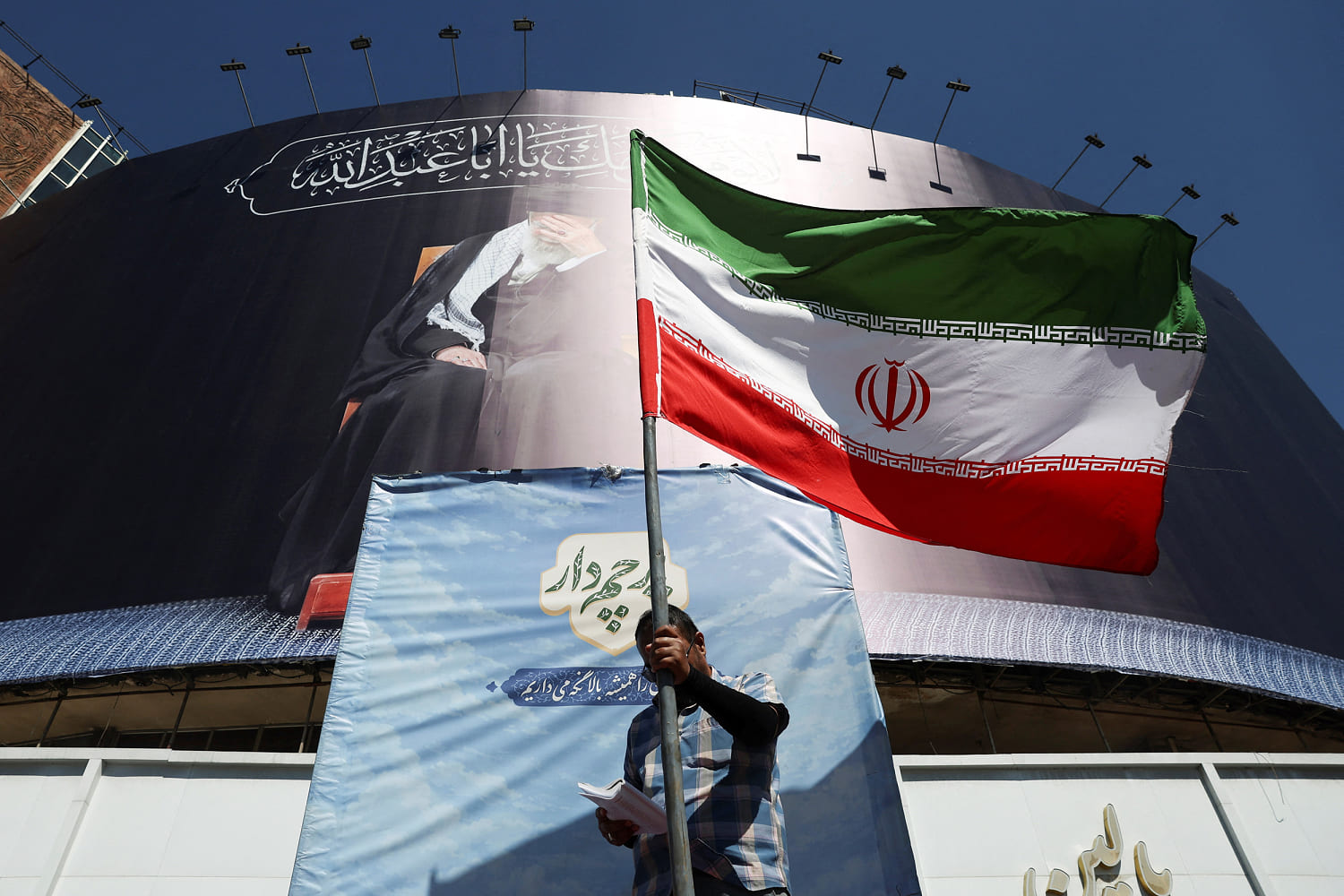
The assumption driving Western diplomacy in the Middle East has long been that regional conflicts can be compartmentalized. For months, Washington backchannel talks with Tehran have operated on a distinct track, attempting to revive a framework for nuclear non-proliferation and sanctions relief independent of the brushfires consuming the Levant. That calculus is dead. The escalating border war between Israel and Hezbollah is no longer a localized sideshow; it is the primary variable that will scupper the US-Iran deal entirely. If the northern front erupts into a full-scale campaign, the political oxygen required to sustain any Washington-Tehran accord will vanish instantly, forcing the White House to abandon diplomacy and pivot toward direct theater containment.
Behind the closed doors of international diplomacy, negotiators often treat state actors as monolithic entities capable of separating their regional proxy strategies from their long-term strategic ambitions. This is a profound misunderstanding of how the Iranian security architecture operates. The Islamic Revolutionary Guard Corps (IRGC) does not view Hezbollah as an external asset to be traded away or managed independently of its nuclear ambitions. Hezbollah is the crown jewel of Iran's forward defense strategy, explicitly designed to serve as a conventional deterrent against a direct military strike on Iran’s nuclear infrastructure.
To expect Tehran to freeze or rollback its uranium enrichment capabilities while its primary deterrent asset faces existential degradation along the Blue Line is a fantasy.
The Deterrence Trap
For decades, the strategic equilibrium between Israel and Hezbollah rested on mutually assured destruction. Hezbollah accumulated an arsenal of over 150,000 rockets and precision-guided munitions, aimed directly at Israel’s civilian and industrial core. Israel maintained the capacity to return Lebanon to the stone age. This tense stability collapsed after the regional realignments triggered by the Gaza conflict.
The current cross-border campaign has evolved far beyond the ritualistic tit-for-tat exchanges of the past. Israel has systematically targeted Hezbollah’s mid-level command structure and sophisticated air defense nodes deep within the Beqaa Valley. Hezbollah has responded by pushing its drone strikes deeper into Galilee, exposing the limitations of Israel's multi-layered defense network.
This shifts the entire baseline of the US-Iran negotiations. When American diplomats offer sanctions relief in exchange for verifiable caps on Iranian centrifuges, they are asking Iran to compromise its long-term strategic depth. Historically, Iran was willing to entertain this trade-off when its conventional proxy network felt secure. Today, with Israel openly preparing for a wider ground maneuver north of the Litani River, Iran perceives itself as operating from a position of acute vulnerability.
A nation that feels cornered does not sign disarmament treaties. It seeks a breakout capability.
The White House Political Nightmare
Even if Iranian negotiators were somehow incentivized to separate the nuclear file from the Lebanese theater, the domestic political landscape in Washington makes a deal impossible under current conditions. A US-Iran deal requires capital. It demands that the administration defend the unfreezing of billions of dollars in oil revenues to a hostile Congress and a deeply skeptical American electorate.
Consider the mechanics of the proposed deal. The framework relies on waivers that allow European and Asian entities to purchase Iranian energy without triggering secondary American sanctions. The funds generated are deposited into monitored accounts, theoretically restricted to humanitarian goods.
Now overlay the visual reality of a major war in Lebanon. If Hezbollah rockets knock out power grids in Haifa or strike infrastructure in Tel Aviv, the weapon systems utilized will be identified as Iranian-supplied variants of the Fateh-110 or Zelzal missiles. The political optics of authorizing billions of dollars in sanctions relief to the primary patron of those missiles during active hostilities is a non-starter.
No American administration can survive the blowback of signing a revenue-sharing agreement with a government whose proxies are actively engaging a primary US ally in a high-intensity war. The hawkish factions in Congress would lock down the regulatory process, utilizing the Iran Nuclear Agreement Review Act (INARA) to force a floor vote that would disintegrate the deal before the ink dried.
The Myth of the Moderate Iranian Interlocutor
A major flaw in Western intelligence assessments is the perpetual hunt for the Iranian moderate. Diplomatic strategies are frequently built on the premise that providing economic incentives will empower pragmatic elements within the Iranian presidency or parliament, allowing them to sideline the hardline clerical and military establishment.
This structural analysis ignores where real authority resides. The supreme leader and the Supreme National Security Council dictate national security policy, not the bureaucratic ministries dealing with Western envoys. When Hezbollah goes to war, the entire Iranian state apparatus mobilizes to support it. The diplomatic corps becomes an instrument of information warfare, not an independent center of policy formulation.
The Israeli Vector of Absolute Veto
The ultimate spoiler of any prospective US-Iran deal remains Jerusalem. Israeli security doctrine has unified around a single, uncompromising principle: the status quo on the northern border prior to recent escalations is permanently untenable. The displacement of tens of thousands of Israeli citizens from their homes in the north has created an internal economic and psychological crisis that no Israeli government can ignore indefinitely.
Israel views a US-Iran nuclear pact not as a stabilizing mechanism, but as an accelerant for regional aggression. Their logic is straightforward. Sanctions relief provides Iran with cash liquidity. Cash liquidity funds the manufacturing and transfer of precision-guidance kits to Hezbollah. Therefore, a diplomatic victory for Iran in Vienna or Oman directly translates to a more lethal threat on Israel's northern border.
Should Washington move closer to a formalized agreement with Tehran, Israel possesses the independent military capability to alter the reality on the ground. A pre-emptive air campaign targeting Hezbollah’s strategic missile depots would instantly trigger a general war. Once that occurs, the United States is pulled automatically into an enforcement and supply role for Israel, rendering any ongoing diplomatic track with Iran functionally dead.
The Structural Failure of Regional De-escalation Frameworks
Previous diplomatic successes, such as the 2015 Joint Comprehensive Plan of Action (JCPOA), occurred during a period of relative regional quiet. The civil war in Syria was contained within specific boundaries, and the maritime shipping lanes through the Bab al-Mandeb strait were free from systematic drone attacks.
The modern Middle East features an integrated offensive front. Drone strikes from Yemen, rocket barrages from Iraq, and artillery duels in Lebanon are coordinated through a single operational nexus in Tehran. Attempting to negotiate a isolated nuclear treaty while ignoring this integrated architecture is akin to repairing a single window while the foundation of the house is being dynamited.
The Economic Calculations of Total War
The financial consequences of a full-scale Israel-Hezbollah war would shatter the economic incentives that make a US-Iran deal attractive to international partners. A wider conflict would inevitably jeopardize maritime traffic in the eastern Mediterranean and potentially spill back into the Persian Gulf via retaliatory strikes on energy infrastructure.
| Region | Primary Maritime/Economic Chokepoint | Strategic Vulnerability |
|---|---|---|
| Levant | Eastern Mediterranean Ports | High risk from Hezbollah anti-ship cruise missiles |
| Persian Gulf | Strait of Hormuz | Asymmetric mining and drone swarms by IRGC Navy |
| Red Sea | Bab al-Mandeb | Sustained anti-ship ballistic missile campaigns |
International corporations and sovereign wealth funds that have quietly explored entry into a post-sanctions Iranian market will not deploy capital into a combat zone. The risk premiums would become prohibitive. For Iran, the primary allure of the nuclear deal—the rapid integration into global financial networks and the modernization of its decaying oil fields—evaporates if the wider region is engulfed in flames.
The Failure of UN Resolution 1701
The international community's reliance on historical security frameworks is a study in institutional inertia. Diplomats frequently cite UN Security Council Resolution 1701, which ended the 2006 war, as the blueprint for resolving the current border crisis. The resolution mandates that Hezbollah withdraw its forces north of the Litani River and that the Lebanese Armed Forces, backed by UNIFIL peacekeepers, serve as the sole armed presence in the south.
The reality on the ground is that Resolution 1701 has been dead for two decades. Hezbollah never withdrew; instead, it built a vast network of subterranean fortifications, tunnels, and firing positions directly underneath the observation posts of international monitors. The Lebanese state lacks the political will and the military capacity to disarm a militia that is more powerful than its own army.
Proposing a diplomatic off-ramp based on the reinstitution of Resolution 1701 is an exercise in empty rhetoric. Israel will not accept a cosmetic withdrawal that allows Hezbollah fighters to walk back to the border fence the moment international attention shifts. Without a verifiable, enforced buffer zone, Israel will eventually choose the military option to clear the border area by force.
The Approaching Breakpoint
The timeline for diplomacy has run out. The uranium enrichment cascades inside Iran's deeply buried facilities at Fordow and Natanz continue to spin, moving closer to weapons-grade thresholds every day. Simultaneously, the exchange of fire across the Lebanese border grows more sophisticated, lethal, and expansive.
The illusion that the United States can manage a controlled diplomatic engagement with Iran while ignoring the active warfare conducted by Iran's primary proxy has collapsed. The two tracks are inextricably linked by geography, funding, and strategic doctrine. A single miscalculation along the hills of southern Lebanon, a stray rocket hitting a high-casualty target, or an Israeli strike that decapitates Hezbollah's senior leadership will trigger a chain reaction that resets the geopolitical map.
When that flashpoint occurs, the diplomatic papers being drafted in Western capitals will not be revised. They will be shredded.