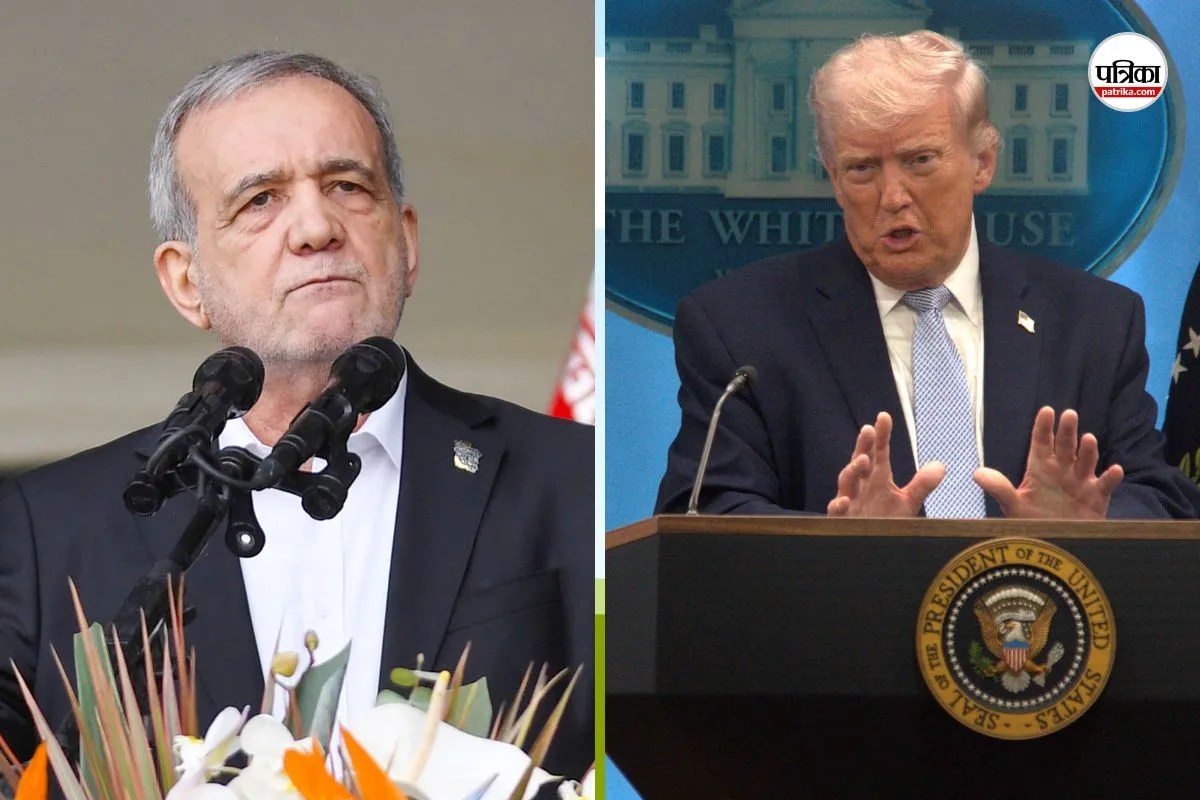
The signing of the 14-point Islamabad Memorandum of Understanding (MoU) by US President Donald Trump and Iranian President Masoud Pezeshkian establishes a temporary equilibrium following a 100-day kinetic conflict that fundamentally altered Middle Eastern geopolitics. Rather than a comprehensive peace treaty, the text functions as a transactional, time-bound framework designed to manage immediate economic bottlenecks and establish a 60-day negotiation runway. Deconstructing this agreement requires evaluating its mechanics across three main axes: maritime logistics, immediate liquidity injections, and nuclear containment verifiability.
The Maritime Equilibrium: Calculable Costs in the Strait of Hormuz
The primary economic objective of the framework is the immediate restoration of commercial shipping through the Strait of Hormuz. The baseline operational cost of the conflict was defined by a total suspension of traffic, driving global energy prices upward and creating structural inflation.
The MoU alters this ecosystem through two reciprocal mechanisms:
- The 60-Day Toll-Free Window: Iran commits to facilitating safe passage for commercial vessels without transit fees for an initial 60 days. This immediately lowers the risk premium for global insurers, allowing maritime traffic to scale toward pre-war volume.
- De-escalation of the Naval Blockade: The United States commits to a phased removal of its naval blockade over a 30-day period.
A critical limitation of this structural arrangement lies in post-framework pricing. Iran’s lead negotiator, Mohammad Baqer Qalibaf, stated that the waterway will not return to pre-war legal conditions. Tehran intends to levy service charges on all transiting vessels after the 60-day window closes. This design element implies that while immediate volatility is suppressed, long-term shipping costs through the Persian Gulf will stabilize at a structurally higher equilibrium than seen historically.
Liquidity Injection vs. Strategic Leverage
The agreement maps out a clear transactional trade-off between western capital access and Iranian operational compliance. Tehran’s primary incentive is immediate economic stabilization, executed through specific financial channels defined in the memorandum:
- Treasury Waivers for Hydrocarbons: The US Department of the Treasury must immediately issue waivers for the export of Iranian crude oil, petroleum products, and derivatives. This re-establishes Iran's baseline revenue generation capacity prior to a final agreement.
- Asset Liquidation: The framework mandates the release of restricted or frozen Iranian assets globally, channeled through procedures designated by the Central Bank of Iran.
- The $300 Billion Reconstruction Fund: A US-and-partner-backed mechanism is outlined to provide up to $300 billion for post-war reconstruction.
The strategic risk for Washington rests in the sequencing of these provisions. The issuance of immediate oil waivers provides Tehran with immediate liquidity before long-term concessions on ballistic capabilities or regional proxy networks are codified. To counter this asymmetry, the US administration structured the agreement with an explicit snapback mechanism. Financial concessions are operationalized as rolling authorizations that can be halted instantly if verification metrics fail.
Nuclear Containment and the Verification Bottleneck
The structural core of the US security objective is the degradation of Iran's nuclear breakout capacity. The MoU achieves an immediate concession by avoiding the complete relocation of nuclear material, focusing instead on on-site degradation.
Iran has committed to the "down-blending" of its highly enriched uranium stockpile. This procedure reduces the enrichment level of the material, converting it from weapons-grade or near-weapons-grade configurations back to lower enrichment levels suitable only for civilian energy production. This process must occur under direct International Atomic Energy Agency (IAEA) supervision.
The operational parameters of this compromise contain specific structural boundaries:
- Enrichment Geography: The material remains inside Iran's borders, satisfying Tehran’s domestic sovereignty requirements.
- Exclusion of Conventional Defenses: The framework explicitly excludes Iran's ballistic missile systems from the negotiation matrix. Iranian state communications confirmed these capabilities remain operational and non-negotiable.
Strategic Forecast
The next 60 days will function as a test of compliance under extreme stress. The framework does not rely on trust; it is built on a highly volatile doctrine of explicit deterrence. President Trump’s declaration that military operations will resume immediately upon a breach underlines the fragile nature of the ceasefire.
The most probable outcome is an asymmetrical negotiation where economic milestones are achieved rapidly while definitive language regarding regional security networks faces bureaucratic gridlock. If the 60-day window is extended, global energy markets will see a prolonged period of pricing stabilization, though shipping networks must permanently factor in the impending reality of Iranian transit fees.