The Smell of Heavy Crude and Quiet Rooms
Morning in the energy trading pits does not arrive with a crash. It arrives as a hum of blue light, the low murmur of men staring at numbers that dictate whether winter heating bills will break a family in Ohio or whether a tanker clears the Hormuz choke point without an escort.
I remember standing on a trading floor years ago when a rumor out of Washington sent Brent crude tumbling three dollars in forty seconds. The speed of it terrified me. You realize then that oil is not merely a commodity. It is blood. It moves through valves, pipelines, and tankers, keeping the lights burning and the engines turning. When someone finds a way to choke that flow without firing a single missile, the market holds its breath. You might also find this related coverage interesting: The Architecture of Public Fund Capture and Political Messaging.
Right now, that choke point has a name few recognize outside of select congressional committees and intelligence briefings: the Graham Act.
Most people think geopolitics is fought with aircraft carriers and late-night tweets. They picture diplomats in dark suits arguing across mahogany tables while translators scramble to keep up. But the real leverage today—the kind that bends nations to a breaking point—is written in dense legal statutes, sanctions architecture, and the invisible plumbing of global finance. As discussed in detailed reports by Bloomberg, the results are widespread.
Consider what happens when a superpower decides it is tired of playing chess. It stops moving pieces and changes the board entirely.
The Architect and the Trap
To understand how the Graham Act functions as a quiet economic guillotine, you have to look past the legislative jargon and see the mechanics of pressure.
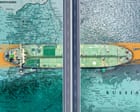
Picture a refinery in Tianjin, China. Massive, roaring towers processing millions of barrels of heavy crude purchased at a steep discount from sanctioned vessels riding low in the water. For years, this trade has been the financial lifeline keeping Tehran solvent and Moscow funded. It is an open secret. Everyone in the shipping lanes knows the transponders go dark near the Malacca Strait. Everyone knows the papers are falsified.
Enter the legislative machinery designed to cut those dark lines.
The strategy hinges on a brutal realization: Russia and Iran are not merely allies of convenience; they are financial hostages to their own primary export. When oil prices stay high, they breathe. When prices drop, their treasuries bleed.
The Graham Act—named for the persistent legislative push to impose secondary sanctions with teeth sharp enough to bite allied economies if they flinch—targets the financial arteries supporting this shadow trade. It does not ask nicely. It tells international banks, insurers, and maritime registries a simple, terrifying truth: choose between doing business with the global dollar economy or clearing transactions for sanctioned oil.
No bank chooses Tehran over New York. No multinational insurer risks its charter to cover a rusted tanker carrying contraband Urals crude through freezing northern seas.
The Anatomy of the Squeeze
Let us be honest about why this matters to you, sitting miles away from any oil rig or trading desk.
When supply from sanctioned states is squeezed too hard, standard economic theory says prices spike. Panic sets in. Drivers see four dollars a gallon, then five, and politicians panic. That is the traditional trap of sanctions. You hurt yourself trying to punish your enemy.
The brilliance—and the ruthlessness—of this modern legislative approach lies in managed abundance paired with targeted financial exclusion. By squeezing the buyers while simultaneously encouraging domestic production flexibility and alternative supply corridors, the strategy aims to starve the adversary of revenue without triggering a global inflationary shockwave.
It is financial judo.
Imagine a shopkeeper who realizes a rival is undercutting him by selling stolen goods out the back door. Instead of getting into a fistfight in the alley, the shopkeeper simply convinces the landlord to lock the back gate. The rival still has the goods, but he has no buyers with cash. Warehouses fill up. Storage tanks reach capacity. Soon, the oil has nowhere to go, and shutting down a wellhead is not like turning off a kitchen faucet. Leave a well capped too long under pressure, and the reservoir fractures. You lose the field forever.
That is the quiet terror facing Moscow and Tehran right now. They are not just losing revenue; they are facing permanent structural damage to their subterranean assets.
The Human Cost Behind the Ledger
We talk about barrels and benchmarks as if they are abstract math. They are not.
In a small town in the Russian interior, a machinist looks at his paycheck and realizes the factory floor is shifting from civil manufacturing to defense output, funded by oil money that is suddenly arriving slower, thinner, and wrapped in bureaucratic red tape. In an apartment in Tehran, a teacher watches the price of imported medicine climb beyond reach because the national currency is being crushed beneath the weight of secondary sanctions that make every international transaction a labyrinth of desperation.
Governments do not feel pain the way people feel pain. Leaders in insulated compounds eat well and sleep soundly. The pressure of these economic levers trickles down through the soil, landing squarely on the shoulders of ordinary citizens who had no say in the wars, the treaties, or the tanker routes.
This is the uncomfortable reality of modern statecraft. We have replaced the siege tower with the SWIFT code. We have replaced the blockade with compliance audits. It is cleaner on television, but it is no less devastating.
The Long Game in the Dark
As the geopolitical chess match accelerates, the margins for error shrink.
If the financial squeeze is applied too loosely, the shadow fleets adapt, finding new shell companies and obscure maritime insurers willing to take the gamble. If it is applied too tightly, global energy markets fracture, sending shockwaves through developing economies that depend on affordable fuel to survive.
There is no neat conclusion to this story. No ribbon is tied around the issue. The tankers are still moving tonight, slipping through dark waters with their transponders dark, crew members staring out into black horizons, watching for patrol boats or electronic surveillance that could end their voyage in a detention slip.
The law is written on paper, but its weight is felt in the dark, heavy silence of an oil tank settling into the harbor, waiting for a clearance that may never come.