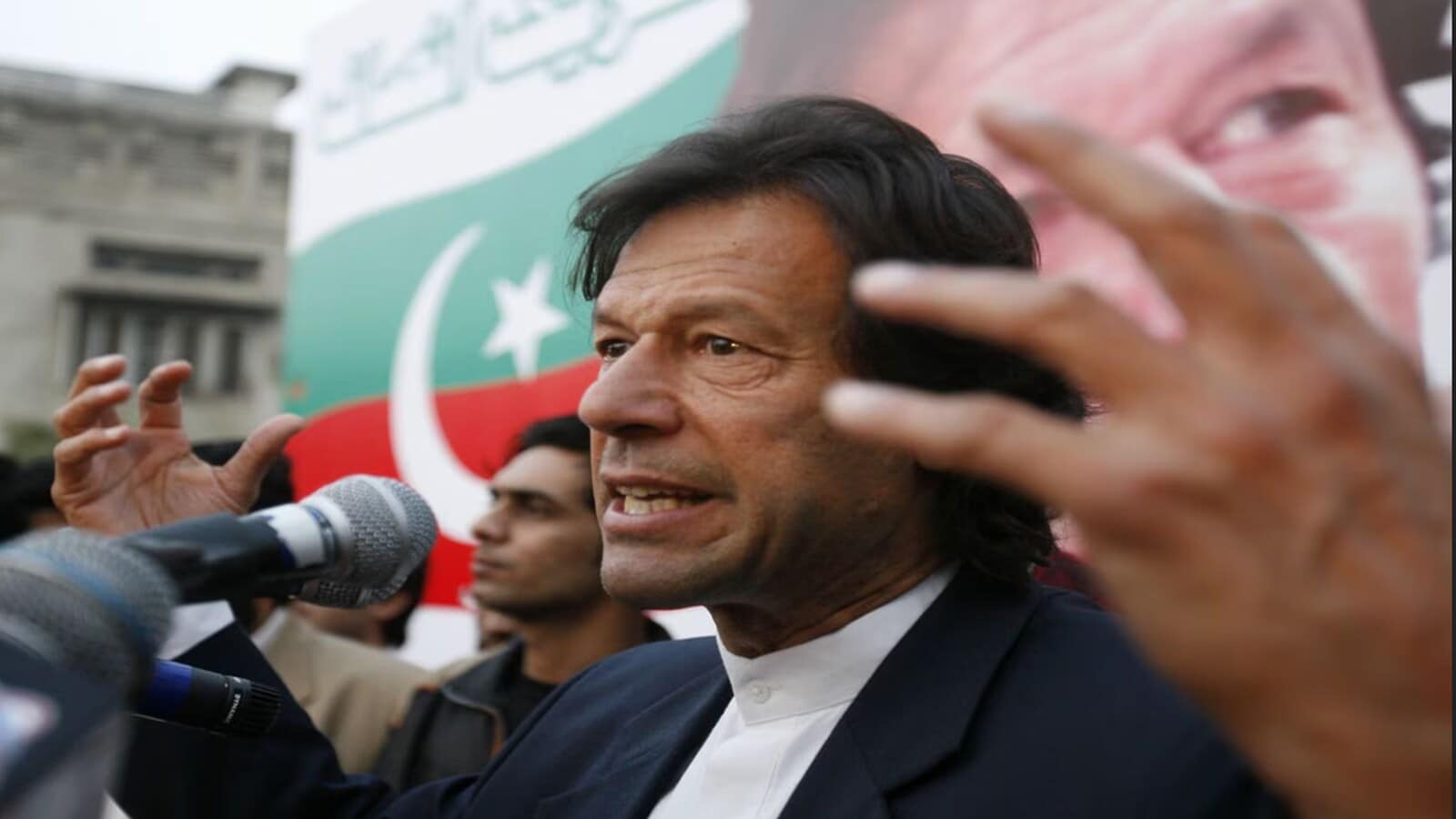
Dawn in Islamabad does not break softly. It arrives with a heavy, bruised light that struggles to pierce the dust hanging low over the capital. In the sprawling neighborhoods where concrete walls meet unpaved alleyways, the air is thick with the scent of woodsmoke, diesel fumes, and an unspoken anxiety that has settled over millions of living rooms.
It was during this fragile hour that the heavy boots arrived.
For months, the political machinery of Pakistan has operated under a crushing, suffocating weight. Every street corner, every tea stall, every courtroom corridor hums with the same anxious question: Who is left to speak when the state decides that silence is the only acceptable form of loyalty?
Aleema Khanum and Uzma Khanum, sisters of the incarcerated former Prime Minister Imran Khan, found their answer not in a parliamentary debate or a constitutional ruling, but in the sharp, urgent rattle of police intervention. Detained by authorities amidst a swirling vortex of security crackdowns and protests, their arrests laid bare a stark and unsettling reality. In the high-stakes game of modern Pakistani politics, family ties have become frontline battlegrounds.
To understand why a dawn detention of two women can paralyze the nerves of an entire nation, you have to step away from the dry prose of morning dispatches and look at how power actually functions on the ground.
Power in Pakistan is personal. It is inherited in political dynasties, guarded jealously in military echelons, and contested fiercely by a populace that has grown weary of broken promises. When Imran Khan was ousted from power through a parliamentary vote of no confidence in April 2022, a political tremor was triggered that has yet to subside. Since then, the Pakistan Tehreek-e-Insaf (PTI) party he founded has faced an relentless campaign of institutional pressure. Offices raided. Rallies blocked. Leaders imprisoned.
And now, the circle of pressure has tightened to include the family members who attempt to keep his voice alive in the public sphere.
Consider what happens when political dissent is treated as a matter of national security rather than a normal facet of civic life. The boundaries blur. The judiciary, the police, and the intelligence apparatus become entangled in a continuous loop of friction. When Aleema and Uzma Khanum were picked up by law enforcement, the state apparatus moved with practiced, mechanical efficiency. There were no negotiations. There was no public debate. There was only the sudden absence of freedom, followed by the predictable wave of condemnation from party loyalists.
The official justifications from the administration are couched in legal jargon. Maintenance of public order. Prevention of unlawful assembly. Security protocols designed to preempt unrest. But walk through the congested markets of Lahore or talk to young professionals in Karachi, and you will hear a different interpretation entirely.
Fear.
That is the word people use when the microphones are turned off. They whisper it over steaming cups of chai. They type it into encrypted messaging apps with cautious, fleeting keystrokes. The state is not merely prosecuting legal cases; it is attempting to sterilize the public square. By detaining figures who serve as emotional and logistical anchors for the PTI’s grassroots movement, the authorities are sending a chilling message. No one is peripheral. No relative is off-limits.
Yet, history suggests a stubborn paradox about political crackdowns. The harder you squeeze a fist full of sand, the faster it slips through your fingers.
Imran Khan’s enduring appeal has never relied solely on his tenure in office or his economic policies. It is rooted in a narrative of outsider defiance—a promise to upend a dynastic political order that ordinary citizens have long viewed as corrupt and self-serving. When authorities target his sisters, they inadvertently validate that narrative. They transform family members into symbols of martyrdom. Every police van that arrives at a dawn doorstep becomes another chapter in a long, grievances-laden saga of political struggle.
The human cost of this unending friction is staggering, even if it rarely makes it onto official balance sheets. It is felt in the exhaustion of citizens who no longer trust the evening news. It is felt in the hesitation of business owners who delay investments because they cannot predict tomorrow’s headlines. It is felt in the quiet kitchens of families across the country where political arguments have fractured lifelong friendships and dinner table conversations.
Democracy, at its core, is not an election held every five years. It is an ongoing, messy negotiation between the governed and the governing. It requires a thick skin for criticism and an absolute tolerance for opposition. When a government begins locking up the relatives of its chief political rival, it steps off the path of democratic governance and onto the slippery slope of authoritarian preservation.
As the afternoon sun beats down on the capital, casting long, sharp shadows across the concrete barriers that guard government enclaves, the silence in the streets is deceptive. It is not the quiet of peace. It is the quiet of a deep breath held before the plunge.
The authorities may hold the keys to the cells, and they may control the movements of prominent critics, but they cannot legislate the public imagination. Long after the police vans have driven away and the official press releases have been filed into dusty archives, the underlying tension remains. Pakistan’s political story is still being written, stroke by bruising stroke, in the unyielding spaces between what the state demands and what the people refuse to forget.