The coffee in the glass-fronted offices of Brussels is always lukewarm by the time the figures align. I sat across from a trade policy analyst last autumn, watching him trace the contour of a desktop monitor with a silver pen. On the screen, a line chart climbed at a terrifying, unbroken angle. It represented the arrival of plug-in hybrid electric vehicles manufactured in the sprawling industrial corridors of China, spilling into European ports faster than the tarmac could cool beneath their tires.
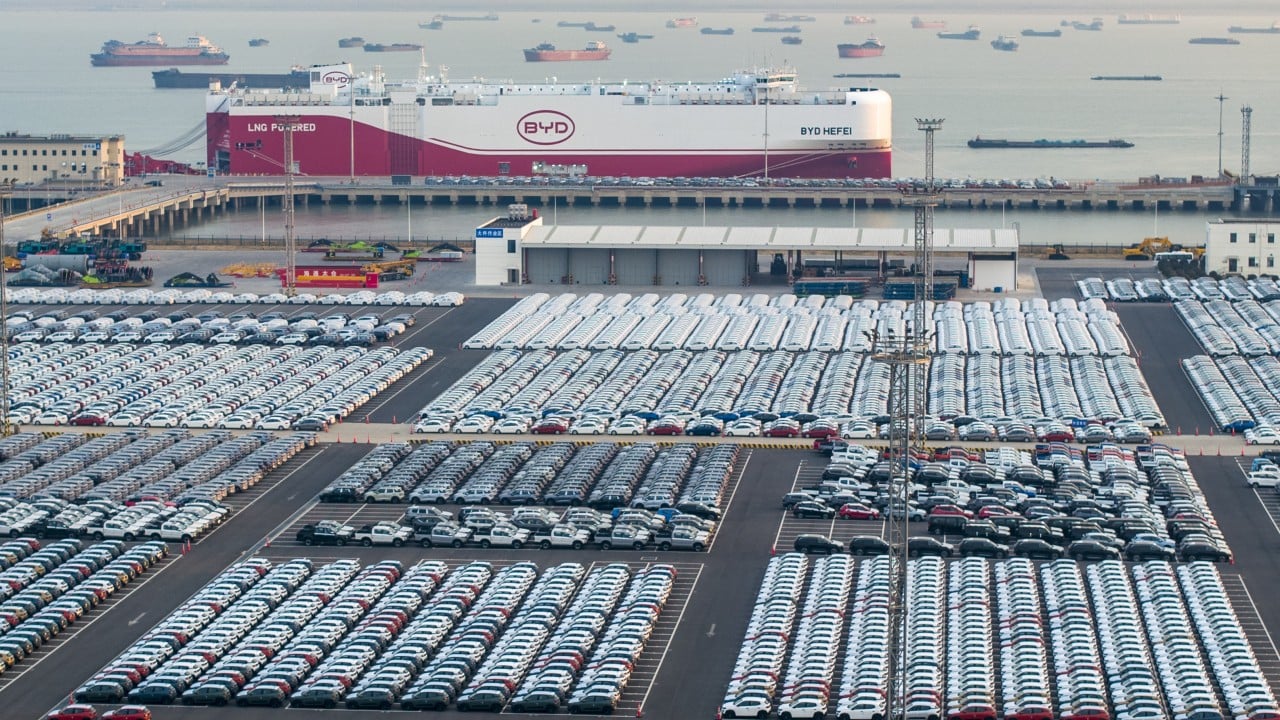
To the spreadsheet, they were units. To the boardroom, they were disruption. But down on the cold asphalt of the Antwerp docks, they were something else entirely: heavy, silent metal wrapped in protective white plastic, waiting for a key that might soon be locked away. In related updates, we also covered: The Automation Trap Hollowing Out Asia's Young Workforce.
Now, the architecture of that containment is hardening. The European Union is moving toward a strict numerical ceiling, capping the entry of Chinese hybrid vehicle imports at 350,000 units a year.
Listen closely to the numbers. Three hundred and fifty thousand. The Wall Street Journal has also covered this important topic in great detail.
It sounds like a compromise. A bureaucratic middle ground born from late-night negotiations, thick dossiers, and the quiet pressure of domestic manufacturing unions whispering in the ears of commissioners. But behind that dry arithmetic lies a profound transformation in how global trade breathes. It is the sound of an iron gate clicking shut, not with a dramatic slam, but with the steady, oiled resistance of a heavy latch.
To understand why this matters, we have to look past the customs ledger and step into the garage of a hypothetical worker named Stefan.
Stefan spends his mornings in a mid-sized component plant outside of Stuttgart. For twenty-eight years, his hands have known the exact weight and tolerance of a cast-iron transmission housing. When he speaks of internal combustion engines, he speaks of them with the proprietary pride of an artisan. He knows the music of a well-calibrated piston; he recognizes the subtle, metallic sigh of a valve seating properly.
When Stefan looks at the new generation of imported hybrids arriving from factories in Anhui or Zhejiang, he does not see a marvel of modern logistics or a triumph of consumer choice. He sees an existential shadow. He sees a machine built with state-backed capital, assembled on lines where robotic precision moves at a velocity his local union shop floor cannot match, selling at a price point that makes his plant manager’s face tighten into a hard, bloodless line.
"They aren't just selling cars," Stefan told me, his thumb hooked into the pocket of his greasy work trousers. "They are selling a future where we don't build anything anymore."
That is the emotional core of the 350,000-unit cap. It is not merely an economic tourniquet; it is an emotional buffer. It is Europe attempting to buy time—precious, expensive time—to reinvent an entire industrial ecosystem that took a century to construct.
For years, the conventional wisdom in Western capitals was that free trade was an ascending tide that lifted all hulls. Open the ports, let the capital flow, let the consumer reap the benefits of hyper-efficient global supply chains. If a company halfway across the world can engineer a plug-in hybrid with an astonishingly dense battery pack and a remarkably affordable price tag, let it roll down the Autobahn.
Then reality intervened. The transition to green mobility collided with the hard physics of industrial geopolitics. European automakers, slow to pivot and burdened by high energy costs, legacy overhead, and rigid labor laws, suddenly found themselves staring across a chasm. The Chinese manufacturers had not merely caught up; in many segments of software integration, battery supply chain control, and vertical manufacturing efficiency, they had sprinted ahead.
The European Commission found itself caught between two competing nightmares.
Nightmare one: Climate goals collapse because green technology remains a luxury item for the wealthy, and the continent fails to hit its aggressive carbon reduction targets.
Nightmare two: The industrial heartland of Europe hollows out. Foundries go cold. Specialized machine shops close their doors. Millions of skilled jobs evaporate, replaced by a service economy dependent on imported hardware.
The 350,000 quota is the policy equivalent of holding up a hand to stop an oncoming tide. It says to the market: You may come, but only up to this line. Beyond this point, our domestic landscape must be given room to heal, to adapt, to catch its breath.
Critics argue that quotas breed complacency. They suggest that artificially restricting Chinese imports penalizes the European consumer, driving up the cost of transitioning away from fossil fuels and insulating legacy automakers from the fierce, clarifying fires of genuine competition. There is truth in that critique. Protectionism is a sedative, not a vitamin. When you shield an industry from the storm, you risk making it soft.
Yet, to dismiss the policy as mere protectionism is to misunderstand the stakes. This is not about protecting inefficient corporate profits. It is about sovereignty over the physical means of production. Once a continent loses the capacity to manufacture its own heavy industrial goods, it ceases to be an independent actor on the stage of nations. It becomes a market—a vast, wealthy consumer base dependent on the logistical goodwill of external powers.
Consider what happens on the ground as this policy takes effect.
Logistical hubs like Rotterdam and Bremerhaven will see subtle shifts in their daily choreography. The vast marshalling yards where imported vehicles sit fender-to-fender will experience a managed rhythm. Importers will have to calculate every ship, every manifest, every allocation with surgical precision. The cars that do make it through the 350,000-vehicle threshold will be the most profitable, the most strategic, the flagship models designed to stake a claim in European minds before the door restricts further entry.
Meanwhile, inside European boardrooms, the panic will not subside; it will simply change shape. Executives at legacy brands will look at the numerical ceiling and realize they have been handed a temporary reprieve. It is a four-year or five-year runway—a fragile window of grace. If they use it to lobby for more protection, they will fail. If they use it to radically restructure their supply chains, strip out bureaucratic bloat, and master battery chemistry and software architecture, they might just survive the storm when the gate eventually opens wider.
And what of the consumer?
You, sitting at your kitchen table, scrolling through car reviews late at night, wondering why the sleek, tech-loaded plug-in hybrid you saw online is suddenly harder to secure or carries a steeper price tag than anticipated. You are feeling the invisible friction of geopolitics. Every trade barrier has a shadow, and that shadow falls across the showroom floor.
The ambition to travel cleanly, efficiently, and affordably is colliding with the heavy machinery of statecraft.
We are living through the messy, contentious unravelling of globalized manufacturing. The era of frictionless borders is fracturing into a patchwork of managed trade, industrial policies, and strategic self-reliance. The 350,000-unit limit on Chinese hybrids is not an isolated regulatory tweak. It is a symptom of a nervous continent drawing lines in the dirt, trying to decide what it still needs to make with its own hands to remain itself.
Out in the harbor at Antwerp, the fog rolls in off the North Sea, dampening the white plastic wrap on rows of silent vehicles. The lights along the pier flicker on, cutting long, yellow beams through the mist. The ships keep coming, their diesel engines thrumming a deep, low bass against the hull of the dock, but the gatekeeper is standing by the ledger, pencil poised, watching the tally rise.