Iran is currently playing a high-stakes game of Tetris with millions of barrels of crude oil, and it’s running out of empty squares. For decades, Tehran has treated US sanctions like a chronic illness—painful, but manageable through a shadowy network of "ghost" tankers and ship-to-ship transfers in the middle of the ocean. But the current US naval blockade has changed the math. This isn't just another round of paper sanctions; it's a physical chokehold on the Strait of Hormuz that's forcing the Islamic Republic to do the one thing oil ministers hate most: shut down the wells.
When you can't sell your oil and you can't ship it, you have to store it. When your tanks are full, you have to stop pumping. It sounds simple, but for a country that relies on oil for its very survival, it’s a slow-motion economic heart attack.
The Physical Reality of a Blockade
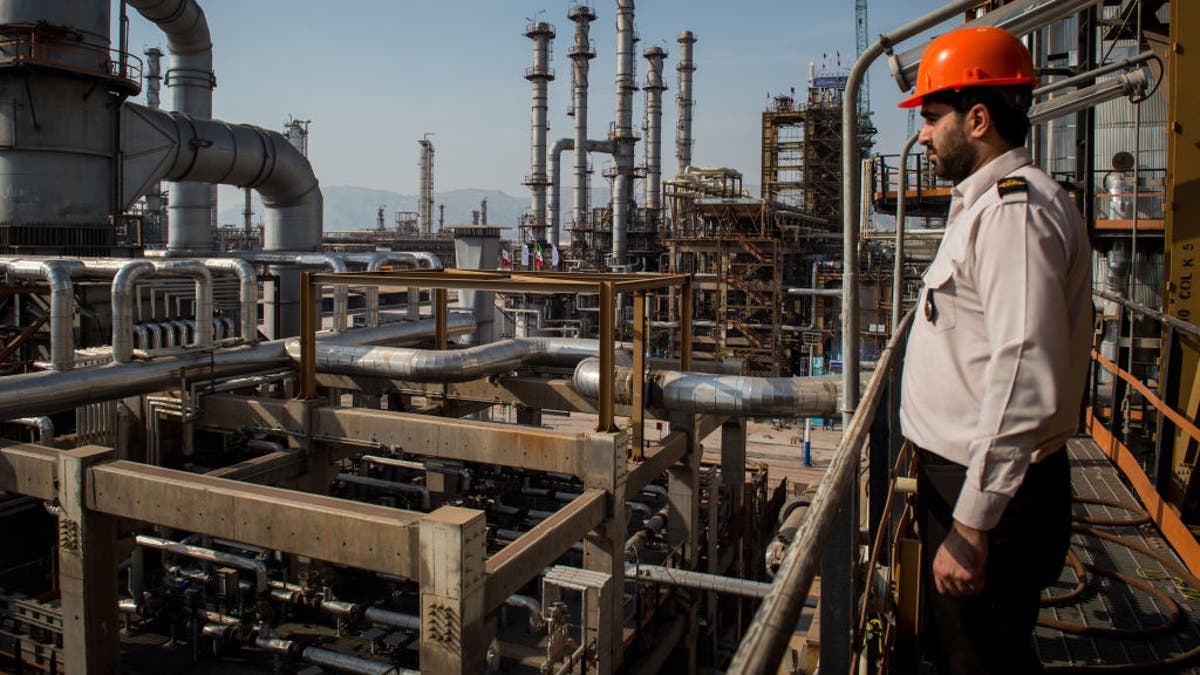
The current blockade has effectively paralyzed the Kharg Island terminal, which handles about 90% of Iran's exports. Satellite imagery from late April 2026 shows a massive pileup. In a single week, Iranian crude stocks jumped by 6 million barrels. That’s a build rate of 1.7 million barrels per day (bpd), a number that only makes sense if exports have basically hit zero.
Honestly, the numbers are staggering. Total onshore storage is sitting at roughly 68 million barrels. If you use the industry standard of 80% maximum operating capacity, Iran only has about 17 days of "breathing room" left before the system hits a hard limit. You can't just fill every tank to the brim; you need "working space" to move oil around the domestic refinery circuit.
The Floating Warehouse
To delay the inevitable, Iran has turned the Persian Gulf into the world’s most expensive parking lot. They've stashed a record 200 million barrels of oil on the water. These tankers aren't going anywhere. They’re just sitting there, acting as floating batteries of energy that no one is buying. This "Ghost Armada" has been the backbone of Iran’s evasion strategy for years, but with US naval assets actively restricting traffic, these ships are sitting ducks rather than secret couriers.
Why Shutting Down a Well Isn't Like Turning Off a Tap
There’s a common misconception that you can just flip a switch on an oil field. You can't. Especially not with Iran’s aging infrastructure. Most of their prolific fields, like those in the Asmari formation, are fractured carbonate reservoirs. They're old, they're temperamental, and they've been under-maintained for decades.
If you shut in a well that has high water content, it might not ever "wake up" again. The fluid column becomes too heavy to flow naturally. To get it moving again, you’d need to inject nitrogen or use high-powered pumps—equipment that Iran can’t easily get because of—you guessed it—more sanctions.
- Corrosion Risks: Stagnant oil and water in a pipe is a recipe for rust.
- Pressure Drops: Long-term shut-ins can cause permanent mechanical deformation in the wellbore.
- The Gas Complication: Much of Iran's gas comes out alongside its oil. If you stop the oil, you stop the gas. That means blackouts in Tehran and no fuel for the factories.
The South Pars Dilemma
The biggest headache isn't even the crude; it’s the condensate. Iran produces massive amounts of natural gas from the South Pars field—the world’s largest gas reservoir. A byproduct of this is condensate, a super-light oil.
Iran consumes most of its gas domestically, but it needs to export the condensate to keep the gas flowing. If the storage tanks for condensate fill up, Iran has to throttle back gas production. We’re already seeing the effects. In March 2026, an attack on the South Pars processing facilities knocked out about 120,000 bpd of capacity. Now, with the blockade, they're squeezed from both ends.
The Economic Endgame
So, what's the actual move here? Iran has already started "dialing back" production to roughly 3.06 million bpd, down from its 2025 highs. But they're still over-producing relative to what they can export or refine.
The government is trying to prioritize "healthy" wells—the ones that can be shut down and restarted with the least risk of permanent damage. It’s a triage operation. They’re sacrificing the older, thirstier wells to save the ones that will fund the country if and when the blockade lifts.
What This Means for You
If you’re watching the global markets, the "Iran discount" is gone. Brent crude has already pushed past $120 per barrel because the world just lost a significant chunk of supply. While Saudi Arabia and the UAE have some spare capacity, it’s not enough to fully offset a total Iranian blackout combined with the closure of the Strait.
If you're an investor or just someone worried about the price at the pump, keep your eyes on two metrics:
- Floating Storage Levels: If this starts to drop without an increase in exports, it means Iran is successfully "blending" its oil into the global market through Malaysia or China.
- Domestic Gas Rationing: If Tehran starts seeing regular power cuts, it’s a sign they’ve been forced to shut in the South Pars gas wells, meaning the storage crisis has reached its breaking point.
The next two weeks are critical. Iran is about to hit its "tank-top" limit. When that happens, the technical reality of the oil fields will override the political will of the regime. You can't argue with a full tank. For now, the best move is to monitor tanker tracking data via providers like Kpler or UANI, which offer the most transparent look at what's actually moving—or not moving—in the Gulf.