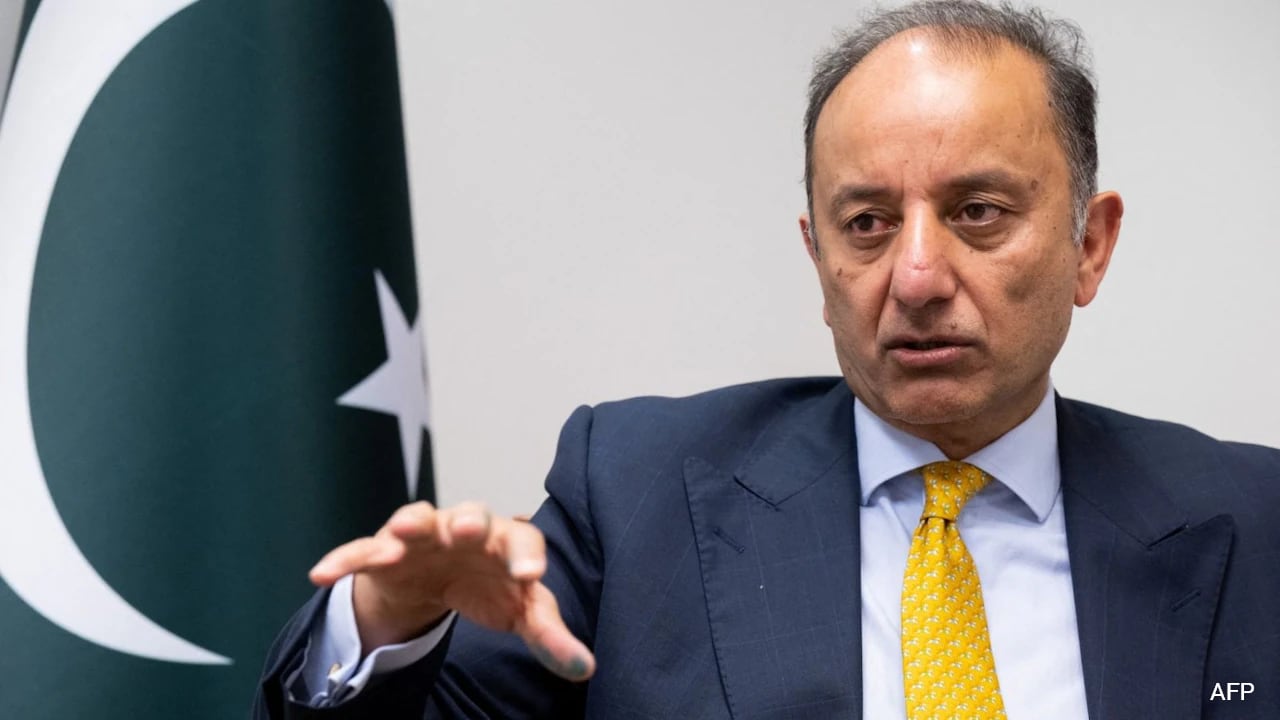
Imagine walking into a small neighborhood store in Iran for groceries, looking behind the counter, and seeing the spitting image of Israeli Prime Minister Benjamin Netanyahu staring back at you. That exact scenario blew up across social media, turning an ordinary Iranian shopkeeper into an overnight internet sensation.
It sounds like a setup for a political satire sketch. Yet the footage is completely real, unscripted, and surprisingly wholesome. When an Iranian shopkeeper goes viral for Netanyahu resemblance, it does more than generate cheap laughs—it exposes how internet humor cuts straight through decades of heavy geopolitical tension.
What Actually Happened in the Viral Clip
The video itself couldn't be simpler. No high-budget production, no scripted punchlines, just a smartphone camera capturing a man behind a shop counter in Iran going about his daily routine.
What stopped people mid-scroll wasn't what he was selling. It was his face. From the distinct silver hair combed neatly to the side to the jawline, brow structure, and facial expressions, the resemblance to Benjamin Netanyahu is uncanny. Viewers immediately began sharing side-by-side comparisons, splicing clips of the shopkeeper ringing up items next to footage of the Israeli leader speaking at the Knesset or the United Nations.
Within hours, the clip crossed language barriers. Persian-speaking users shared it with winking commentary, Arabic and Hebrew accounts picked it up, and English-language X (formerly Twitter) and TikTok feeds soon flooded with reposts.
Why the Internet Can't Resist Political Doppelgängers
Celebrity lookalikes always perform well online, but political doppelgängers hit a very different nerve. Here's why this specific clip took off so fast:
- Stark contrast in status: Seeing one of the world's most controversial heads of state mirrored in a humble local merchant creates instant cognitive dissonance.
- Zero malice in the original moment: The shopkeeper isn't mocking anyone or staging a stunt. He's just working. That authenticity makes the clip infinitely more shareable than forced parody.
- Built-in geopolitical irony: Given the decades-long hostility between the governments of Iran and Israel, finding Netanyahu's twin working a cash register in Iran feels like the universe playing a practical joke.
People love when reality feels slightly glitched. A lookalike living a completely ordinary life on the opposite side of a bitter political divide is peak internet gold.
The Geopolitical Irony Behind the Meme
You can't separate the virality of this video from the broader context of Iran-Israel relations. For years, headlines linking the two countries have revolved around shadow wars, nuclear negotiations, sanctions, and regional proxy conflicts. The rhetoric from official channels in both Tehran and Jerusalem is relentlessly grim.
Then along comes a guy selling everyday goods in an Iranian storefront who happens to share DNA-level facial geometry with Israel's longest-serving prime minister.
Suddenly, comment sections that usually devolve into toxic political arguments shifted tone. Users from Tehran, Tel Aviv, Los Angeles, and London found themselves laughing at the exact same thing. Humor doesn't erase real-world conflict, and nobody is pretending a viral TikTok solves Middle Eastern diplomacy. Still, it temporarily strips away the heavy ideological armor people wear online.
How Ordinary Citizens React vs. State Narratives
One of the biggest mistakes outside observers make is assuming everyday Iranians are a monolith who mirror their government's messaging 24/7. Anyone who actually follows Persian social media knows Iranians have one of the sharpest, fastest meme cultures on the planet.
From economic inflation to international news, humor is a primary coping mechanism and form of social commentary in Iran. When a local shopkeeper turns out to look like Netanyahu, Iranian netizens don't hesitate to turn it into comedy. They crack jokes about him taking a side hustle, hiding out in plain sight, or running local price controls.
Meanwhile, Israeli social media users reacted with equal parts shock and amusement. Many pointed out that if you put a suit and tie on the shopkeeper, even seasoned political reporters might do a double take.
The Science and Psychology of Uncanny Lookalikes
Why do two completely unrelated people thousands of miles apart end up looking nearly identical? It feels eerie, almost impossible, yet genetics and human perception explain it pretty clearly.
Research into human facial recognition—including notable studies conducted by Dr. Manel Esteller at the Josep Carreras Leukaemia Research Institute in Barcelona—has shown that unrelated lookalikes often share remarkably similar genetic variants affecting facial structure, height, and even behavioral traits. With over eight billion people on Earth, the statistical odds of having a facial twin somewhere on the globe are actually quite high.
Why Our Brains Lock Onto Familiar Faces
Human brains are hardwired for pattern recognition, especially when it comes to faces. Neuroscientists refer to the fusiform face area (FFA) as the region of the brain dedicated to processing facial features rapidly.
When you see a face millions of times on television news—like Benjamin Netanyahu's—your brain builds a hyper-detailed template of his proportions:
- Hairline and color: That specific silver-gray sweep is an instant visual trigger.
- Eye-to-brow spacing: Deep-set eyes paired with heavy, expressive eyebrows anchor recognition.
- Lower face geometry: The width of the jaw and set of the mouth seal the illusion.
Once those three markers align on a stranger's face, your brain fills in the rest automatically. Even slight differences in nose shape or skin texture get overruled by the overall impression.
Other Famous Political Lookalikes That Broke the Internet
The Iranian shopkeeper isn't the first everyday worker to go viral for resembling a major world leader. Social media has a long track record of elevating ordinary people into accidental celebrities based purely on bone structure.
Barack Obama's Indonesian Doppelgänger
Back in 2009, shortly after Barack Obama took office, an Indonesian photographer named Ilham Anas became an international sensation. Living in Jakarta—ironically, a city where Obama spent part of his childhood—Anas bore such a striking resemblance to the 44th U.S. president that he appeared in commercials, television shows, and charity events across Asia. Unlike politicians who spend millions on PR, Anas didn't ask for the spotlight; his face simply matched the biggest news story on Earth.
Vladimir Putin Lookalikes in Everyday Jobs
Over the past decade, multiple ordinary men across Russia and Eastern Europe have gone viral for looking like Russian President Vladimir Putin—ranging from construction workers to commuters spotted napping on subway trains. Every time one surfaces, the internet treats it like an undercover sighting, spawning endless captions about covert operations.
Donald Trump's Spanish Farmer Twin
In 2018, a photo of Dolores Leis Antelo, a potato farmer from Galicia, Spain, went wildly viral because her wind-swept blonde hair and stern expression looked remarkably like Donald Trump. Journalists tracked her down on her farm, where she famously shrugged off the internet frenzy, caring far more about potato blight than American politics.
What connects all these stories? In every single case, the humor comes from scale contrast. Seeing someone who resembles a person holding nuclear codes or global economic power doing completely mundane, grounded work humanizes the image instantly.
The Hidden Risks of Going Viral Overnight
While most viewers enjoy the clip and move on, going viral in a politically sensitive region isn't always harmless fun for the person on camera. Western audiences often forget that internet fame carries real-world consequences depending on where you live.
When an ordinary business owner in Iran suddenly becomes the center of global attention because he looks like an Israeli leader, several complications can arise quickly:
- Unwanted local scrutiny: Sudden viral attention in Iran can attract questions from local authorities, especially when the subject touches on Israel, a country the Iranian state treats as an adversary.
- Loss of privacy: A quiet neighborhood shop can quickly become a tourist attraction for locals filming TikToks, disrupting actual business operations and putting the owner on edge.
- Context collapse: Clips get downloaded, stripped of their original captions, and reposted with misleading claims—sometimes falsely accusing the person of political activism they never participated in.
How Viral Clips Get Weaponized or Misinterpreted
If you watch how viral videos travel across platforms like X, Telegram, and TikTok, you'll notice a predictable pattern. The first wave of posts is pure humor. The second wave starts adding fabricated backstories.
Accounts chasing engagement bait will invent fake quotes, claim the shopkeeper was arrested without evidence, or falsely label old footage as breaking news. Without reliable verification from established news outlets, rumors outpace facts in minutes. That's why checking original sources matters before sharing dramatic follow-up claims attached to viral lookalike videos.
What Viral Moments Like This Actually Tell Us About Social Media
Algorithms are usually designed to reward outrage, tribalism, and division. Platform engineers know angry users click more, comment longer, and stay glued to their screens. Yet every so often, something absurd slips through the cracks and unites wildly different audiences around a shared laugh.
The Iranian shopkeeper clip proves that human curiosity and humor still override algorithmic tribalism when the premise is strong enough. You don't need a shared language or shared politics to recognize an uncanny resemblance.
Spotting Real Viral Moments vs. AI Deepfakes
Because we're living in an era flooded with generative AI video tools, skepticism is healthy whenever a political lookalike goes viral. People immediately ask whether a clip like this is a face-swap filter or an AI-generated deepfake.
You can usually tell authentic candid footage apart from synthetic manipulation by looking closely at a few details:
- Lighting consistency: In real smartphone footage, shadows across the cheekbones, neck, and hairline shift naturally as the person turns their head. Face-swap filters often flatten skin texture or leave subtle blurring around the jaw edge.
- Peripheral movement: Watch the background objects, hands, and merchandise in the shop. Authentic videos show natural, unscripted interaction with physical items without warping.
- Micro-expressions: Real people blink irregularly, squint under fluorescent shop lights, and move their mouths asymmetrically when speaking casually.
In the case of the Iranian shopkeeper, the natural lighting, unposed posture, and ordinary storefront environment make it clear you're looking at a genuine coincidence rather than digital trickery.
How to Verify Viral Lookalike Stories Before Sharing
Next time a video like this hits your feed, take ten seconds before hitting repost with a dramatic caption:
- Separate the clip from the caption: Look at what the video actually shows versus what a random account claims happened afterward.
- Check reputable regional reporting: Reliable Middle East correspondents and established newsrooms verify whether any real-world fallout occurred rather than relying on anonymous engagement accounts.
- Respect the person behind the counter: Remember that behind every viral meme is a regular person trying to earn a living, not a public figure who signed up for global fame.
The internet will inevitably move on to the next uncanny doppelgänger within days. Still, for a brief moment, a guy behind a counter in Iran reminded millions of people around the world that beneath all the heavy political noise, humans everywhere still laugh at the exact same absurdities.