The Middle East just shifted into a bizarre new phase of "peace" where ships are being boarded, gunboats are buzzing tankers, and yet the White House insists everything is going according to plan. On Wednesday, the Trump administration made it clear: Iran’s seizure of two international vessels in the Strait of Hormuz doesn't count as a violation of the current truce.
If you’re confused, you’re not alone. Usually, when a country starts hijacking commercial ships, the word "ceasefire" goes out the window. But in 2026, the rules of engagement have been rewritten by a U.S. naval blockade that has effectively turned the Iranian Navy into a memory. Learn more on a connected issue: this related article.
The Loophole in the Truce
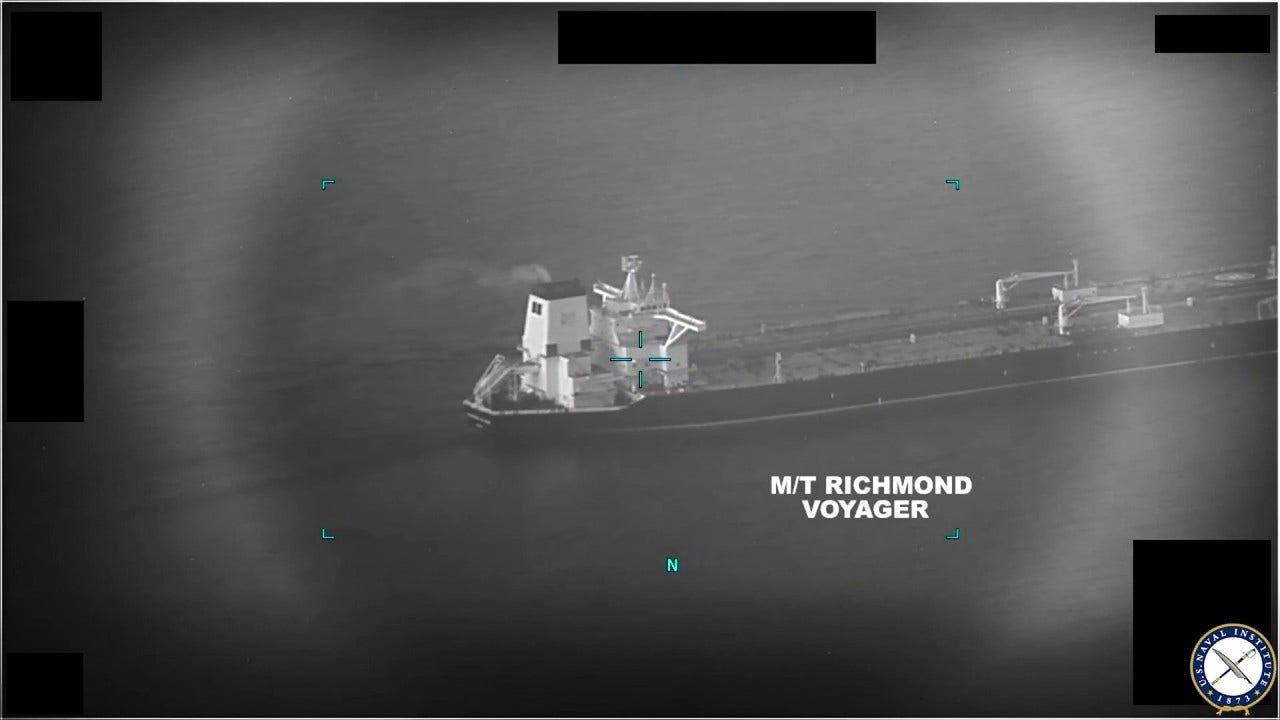
White House spokesperson Karoline Leavitt spelled it out plainly. The ships taken—the Panama-flagged MSC Francesca and the Liberia-flagged Epaminondas—weren't American. They weren't Israeli. According to the administration’s logic, if it’s not "ours," it’s not a breach of the unilateral truce extension.
It’s a cold, pragmatic stance. The U.S. is currently running a massive naval blockade on all Iranian ports, a move President Trump claims "scares the Iranians more than the bombing." By refusing to call these seizures a violation, the U.S. keeps the diplomatic door open in Pakistan while maintaining a stranglehold on Iran’s economy. More journalism by The Guardian explores related views on this issue.
Basically, the U.S. is saying: We'll keep our side of the deal as long as you don't touch our stuff.
From Naval Power to Piracy
The real story isn't just the legal technicality; it's the state of Iran's military. A year ago, Iran held the most lethal navy in the region. Today, after 158 of their ships ended up at the bottom of the sea during the recent conflict, they're reduced to using "speedy gunboats" to harass merchant vessels.
The White House isn't even calling them a military force anymore. They’re calling them pirates.
- The Blockade Effect: The U.S. hasn't just blocked the ports; they’ve obliterated the conventional Iranian Navy.
- The Toll War: Iran tried to charge tolls for transit through the Strait. The U.S. responded with a blockade that applies to every ship entering or exiting Iranian waters.
- Desperation Interdictions: Iran’s seizure of the Francesca and Epaminondas is being framed by Tehran as "enforcing navigation laws," but it looks a lot more like a desperate attempt to show they still have some grip on the Strait.
What Most People Get Wrong About the Strait
There’s a common misconception that the Strait of Hormuz is closed. It’s not. The White House is adamant that the waterway is open for international business—just not for Iran.
The Pentagon is currently playing a high-stakes game of maritime keep-away. While Iran’s Revolutionary Guard (IRGC) claims these ships were trying to "secretly exit" without a license, the U.S. is busy boarding Iranian-linked vessels like the M/V Touska and the M/T Tifani halfway across the world in the Indian Ocean.
It’s a lopsided fight. The U.S. is using about 10% of its naval power to maintain this "polite" blockade. Iran is using 100% of what’s left of its fleet just to stay relevant.
The Deal on the Table
Don't expect a quick resolution. Trump has already shot down rumors of a three-to-five-day deadline for the ceasefire. He's in no rush. The strategy is to let the blockade do the work that the bombs started.
Secretary of War Pete Hegseth put it bluntly: Iran has no defense industry left and no way to rebuild. They can move things around, but they can't reconstitute. The "golden bridge" offered by U.S. negotiators is simple: give up the nuclear ambitions and the enriched material, or watch the economy vanish under the weight of the blockade.
The Immediate Risks for Global Shipping
If you’re involved in maritime logistics or commodity trading, the "truce" is a bit of a misnomer. While the U.S. and Iran aren't actively trading missile volleys, the "gray zone" activity is at an all-time high.
- Check Your Flag: Iran is targeting vessels with no direct U.S. or Israeli ties to avoid triggering a full-scale American retaliation.
- Expect Delays: Every ship in the Gulf of Oman is being vetted. Since April 13, the U.S. has turned back or redirected dozens of commercial vessels.
- Insurance Spikes: Even with a ceasefire in place, the "piracy" label used by the White House means war risk premiums aren't dropping anytime soon.
The situation is a stalemate where the U.S. holds all the high cards. Iran can seize a few tankers with gunboats, but they can't break the wall of steel sitting off their coast. For now, the "truce" holds because the U.S. says it does—regardless of who gets snatched in the Strait.
Watch the ship tracking data for the Euphoria, which is currently stranded in Iranian waters. Its fate will tell us more about the "truce" than any press briefing out of D.C.