The scoreboard at SoFi Stadium read 2-2 after the final whistle blew on June 15, 2026. On paper, Iran coming from behind twice to secure a gritty draw against New Zealand is a classic World Cup story. But if you think this match was just about tactical shifts or group stage points, you missed the real narrative entirely.
Sporting events don't exist in a vacuum. Sometimes, a pitch becomes a stage for grief, geopolitics, and a level of tension that ninety minutes of football can barely contain. While the players on the field fought for a result, the stands and the jerseys told a story of a nation carrying fresh, bleeding wounds onto the global stage.
The Tragedy Behind the Minab 168 Tribute
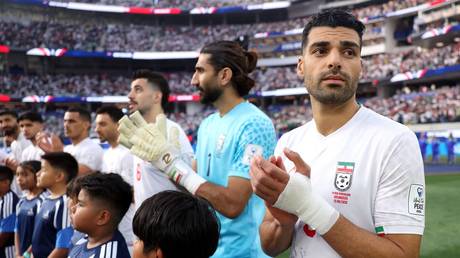
To understand why this game felt so heavy, you have to look closer at what the Iranian players were wearing. Every member of Team Melli stepped onto the pitch in Inglewood wearing gold lapel pins stamped with the number 168.
The number isn't a random statistic. It represents the 168 victims, mostly young children and teachers, who died on February 28, 2026, when a missile strike flattened the Shajare Tayyebe Elementary School in the southern Iranian city of Minab. The Iranian government blamed a U.S. Tomahawk missile attack for the tragedy. On the other side, U.S. Central Command claimed the school sat within a missile launch facility, an assertion Iran's Foreign Ministry quickly blasted as a baseless fabrication.
The team has leaned heavily into this mourning. They even registered for the tournament under the moniker "Minab 168." It's an aggressive, highly visible political stance for a squad playing on American soil. This isn't the first time they've used football to highlight the tragedy either. Back in March, during a warm-up friendly against Nigeria in Antalya, Turkey, the players stood during the national anthem holding pink and purple school backpacks before laying them on the grass.
By the time the team arrived at their training base in Tijuana, Mexico, after facing massive visa delays from U.S. authorities, the pins were already firmly fixed to their jackets. The message was clear before they ever crossed the border.
A Stadium Divided by Two Flags
If the pitch was a unified display of national grief, the stands inside SoFi Stadium were a chaotic battlefield of identity.
Thousands of Iranian fans filled the arena, but they weren't singing from the same lyric sheet. A massive contingent of supporters defied strict FIFA regulations by smuggling in and waving the pre-revolutionary Iranian flag, the lion and sun emblem that stands in direct opposition to the current Islamic Republic government. Outside the stadium gates before kickoff, hundreds of demonstrators gathered to protest the Tehran regime, creating an incredibly charged atmosphere.
This creates a bizarre paradox for the average viewer. You have a team wearing official government-sanctioned tribute pins to honor dead children, playing in front of an expatriate crowd that largely despises the government funding that team. Yet, when Iran scored to equalize, the stadium erupted. It turns out you can hate a regime but still love the kids from your home neighborhoods wearing the shirts.
The players are caught squarely in the middle. They are tasked with representing a fractured nation while carrying the emotional weight of a recent domestic tragedy, all while playing in the country they blame for that very disaster.
Logistics, Visas, and the Long Road Ahead
The tension isn't going away anytime soon. Iran's path through this tournament is a logistical nightmare born out of diplomatic hostility.
Because the U.S. government delayed and outright denied visas to several members of the Iranian delegation, particularly those with alleged ties to the Revolutionary Guard, Team Melli has been forced to set up its home base across the border in Mexico. They are effectively commuting to their own World Cup games.
- June 15: Earned a 2-2 draw against New Zealand in Los Angeles.
- June 21: Travel back to Inglewood to face Belgium.
- June 26: Fly up to Seattle to match up against Egypt.
If things break a certain way, the drama could reach a boiling point on July 3. If both Iran and the United States finish second in their respective groups, they will face each other in the Round of 32 at the Dallas Cowboys' stadium in Arlington, Texas.
Predicting a football match under these conditions is useless. Team Melli isn't playing with standard athletic motivation. They're playing with anger, grief, and a point to prove. Keep your eyes on the gold pins, because the real tournament is happening outside the touchlines.