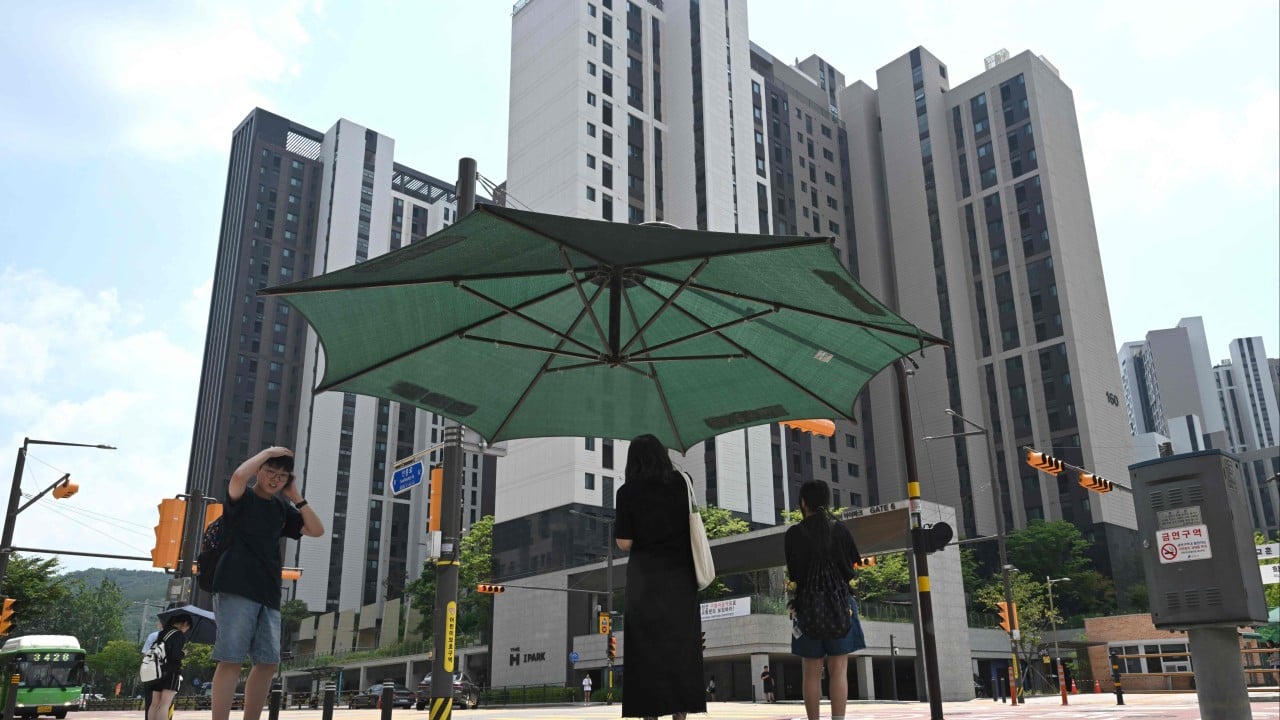
The air does not move. It hangs in the narrow alleyways of Seoul like a heavy, invisible wool blanket, smelling faintly of hot asphalt and the damp earth of construction pits. By mid-morning, the thermometer has already ceased to be a tool of measurement and has become an instrument of intimidation.
It is 36 degrees Celsius. But numbers lie. Numbers are polite. They reduce human suffering to neat digits on a glowing smartphone screen. They do not tell you what it feels like to breathe air that feels thick enough to chew. They do not tell you about the elderly woman on the third floor of a walk-up tenement in Guro-dong who keeps her windows shut tight to trap the scant coolness of the early morning, unaware that her small apartment has quietly transformed into a slow cooker.
South Korea is burning.
Prime Minister Han Duck-soo stepped to a podium under the glare of television lights and uttered words that governments rarely speak until the damage is already done. He called it what it is. A national disaster.
Nineteen lives. That is the official tally of the dead as the heat grips the peninsula in a relentless, suffocating fist. Nineteen people who woke up, brewed their morning tea, opened their doors to step outside, and never made it back to the quiet safety of dusk.
Consider what happens next. When a heatwave is classified as a national disaster, bureaucratic machinery groans into motion. Emergency funds are unspooled. Cooling centers are ordered to fling open their heavy glass doors. Text messages buzz frantically on millions of handsets, warning citizens to stay indoors, to drink water, to avoid the midday sun.
Yet, bureaucracy moves at the speed of paperwork. The sun moves at the speed of light.
To understand why a heatwave kills, you have to look past the macro-level statistics of rising global temperatures and carbon trajectories. You have to look at the micro-level tragedy of human vulnerability.
Imagine a hypothetical worker named Kim. Kim is sixty-eight years old. He does not have the luxury of a climate-controlled office where the hum of a ventilation system masks the reality of the climate crisis outside. Kim works on a scaffolding site in Incheon, hauling steel rebar under an unfiltered sky. His skin is seasoned leather, beaten by decades of seasonal labor. He thinks he knows heat. He has survived Korean summers his entire life.
At 1:00 PM, Kim stops for a sip of lukewarm water from a plastic tumbler. His head swims. The world tilts on its axis for a fraction of a second, graying at the edges. He shakes it off. He has a family to support, a grandson’s tuition to think about, a pride that refuses to buckle before the weather. He tells himself he is just tired.
That is the insidious nature of extreme heat. It does not announce itself with the dramatic fury of a typhoon or the sudden, shattering violence of an earthquake. It creeps in through the back door. It whispers. It dulls your cognitive function first, convincing you that you are fine right up until the moment your organs begin to fail from heat exhaustion and heatstroke.
By the time Kim collapses, his internal thermostat has shattered. His body temperature climbs past 40 degrees Celsius. His sweat glands give up, leaving his skin hot and dry to the touch.
This is the hidden cost of the modern temperature spike. It preys on the margins. It finds the elderly living alone in aging apartments without air conditioning. It finds the outdoor laborers pushing past their physical limits because the daily wage is the difference between eating and going hungry. It finds the homeless population sleeping under overpasses where the concrete radiates stored thermal energy long after the sun has dipped below the horizon.
Public health officials issue warnings, but warnings require resources to heed. If you live on a fixed pension, the decision to turn on an air conditioner for twelve hours a day is a terrifying mathematical equation. You weigh the preservation of your physical life against the destruction of your financial survival. You choose the latter. You gamble with your life, betting that your body is stronger than the air around you.
Often, you lose.
The government's emergency declaration is a necessary step, a vital acknowledgement that the environment has shifted from a backdrop to an adversary. Sirens blare. Municipal workers fan out across neighborhoods, checking on senior citizens, handing out bottles of frozen water, converting community centers into air-conditioned sanctuaries.
Yet, the deeper challenge remains unsolved.
We are living through a slow-motion transformation of our daily reality. Summers in East Asia are no longer just seasons; they are grueling endurance tests. The high-pressure systems that lock stagnant, scorching air over the peninsula are becoming more frequent, more stubborn, and far more lethal.
The nineteenth victim of this crisis did not make international headlines. Their name was swallowed by the sheer volume of daily news cycles. But in a quiet neighborhood in Seoul, a pair of shoes sits by a genkan entryway, waiting for feet that will never slide into them again.
Outside, the cicadas scream in the roadside trees, their rhythmic noise vibrating through the stifling afternoon. The asphalt shimmers. The invisible weight of the midday sun presses down, testing the limits of what a city, and the people who build it, can endure.

.png?itok=1mb05mKJ)

