The trading floor smells of stale coffee and silent panic. On a glowing terminal in Tokyo, a red line dips lower, slicing through support levels that have held for decades. Seven thousand miles away, a factory owner in São Paulo stares at an invoice for German machinery, realized in a currency he does not use but cannot escape.
The US dollar is climbing. Again.
To the casual observer, a strong currency sounds like a badge of honor. It evokes images of economic supremacy, of a nation firing on all cylinders while the rest of the world struggles to keep pace. But money is a see-saw. When one side ascends with terrifying velocity, everyone else is left dangling in mid-air, legs kicking wildly, looking for a footing that keeps moving further away.
For months, finance ministers from London to Seoul have watched the greenback strangle their domestic recoveries. It chips away at their purchasing power. It forces their central banks to hike interest rates into the teeth of recessions just to defend their bleeding currencies. The pressure is mounting, breeding a quiet, desperate nostalgia for the autumn of 1985.
Back then, the world’s financial architects pulled off a miracle. They gathered in a gilded room at the Plaza Hotel in New York City, signed a piece of paper, and consciously forced the overvalued dollar down. It was elegant. It was coordinated.
It is also never happening again.
The Mirage of 1985
To understand why the ghost of the Plaza Accord cannot save us today, we have to look at the men who conjured it. Imagine James Baker, the slick, pragmatic US Treasury Secretary, sitting across from his counterparts from Japan, West Germany, France, and the United Kingdom.
The problem they faced was remarkably similar to ours. The dollar was monstrously strong, crushing American manufacturers who could no longer compete abroad, while inflating dangerous bubbles elsewhere.
But the chemistry of that room was unique. These five nations were not just trading partners; they were geopolitical blood brothers. The Cold War was still chillingly real. West Germany and Japan relied entirely on the American military umbrella for their survival. When Washington suggested that an out-of-control dollar was a threat to the Western alliance, the others fell in line.
They sold dollars in unison. They bought yen and deutsche marks.
The market watched this display of absolute, unbroken solidarity and blinked. Speculators backed down. Within two years, the dollar fell by 40%. The global economy rebalanced without a single shot fired or a major bank collapsing.
It was a masterclass in collective willpower. It was also a historical anomaly, a product of a world neatly split in two, where a single superpower could nudge its closest dependents and dictate the price of money.
The Fractured Room
Now, shift your gaze to the modern arena.
If you were to gather the players necessary to move the global financial needle today, the room would look entirely different. The cozy club of five Western allies has been replaced by a sprawling, discordant assembly. You cannot talk about global currency manipulation without inviting China. You cannot ignore India.
But how do you convince Washington and Beijing to hold hands and engineer a currency shift when they are locked in a cold war over semiconductors, artificial intelligence, and naval dominance in the Pacific?
You don't.
Money has become a weapon of economic statecraft. A strong dollar harms American exporters, yes, but it also acts as a massive vacuum cleaner, sucking capital out of emerging markets and forcing rivals to burn through their foreign reserves just to keep their economies afloat. In the high-stakes game of geopolitical chicken, a crushing currency is not an emergency to be corrected; it is leverage.
Consider a hypothetical central banker in a developing nation. Let's call her Elena. Elena spent her entire career studying the lessons of the late twentieth century. She knows that when the Federal Reserve raises interest rates to combat domestic inflation, the rest of the world pays the price.
Elena’s country borrows in dollars but collects taxes in pesos. As the dollar surges, the real value of her nation’s debt balloons. She is forced to burn through the country's rainy-day fund of US Treasuries to prop up her local currency. If she lets the peso slide too far, importing food and oil becomes prohibitively expensive, sparking riots in the streets. If she raises interest rates to match the Fed, she suffocates local businesses, triggering a wave of bankruptcies.
She is trapped.
In 1985, Elena could have hoped for a savior from the Plaza Hotel. Today, she knows no one is coming. The major economies are too busy protecting their own perimeters to care about the collateral damage happening at the margins.
The Monster in the Machine
Even if the political will existed, the sheer mathematics of the financial system have mutated beyond recognition.
In the mid-eighties, the foreign exchange market was a manageable beast. Central banks possessed enough ammunition to genuinely terrify private speculators. If the Fed and the Bank of Japan decided to flood the market with dollars, they could alter the supply-and-demand dynamic through brute force.
Today, the foreign exchange market trades over $7 trillion every single day.
That is not a misprint. Seven trillion dollars.
Most of this volume is not driven by companies buying auto parts or tourists changing cash at the airport. It is driven by algorithmic trading, high-frequency hedge funds, and automated systems reacting to microsecond shifts in interest rate differentials. It is an ocean.
Against this backdrop, the reserves of even the wealthiest central banks look like buckets of water thrown into a hurricane. A coordinated intervention today would be swallowed whole by the market in an afternoon. Speculators would view a government-mandated target as a massive target, a one-way bet to be exploited.
The mechanics are fundamentally broken. The global financial system has grown too large, too decentralized, and too chaotic for a group of elites in tailored suits to control it with a press release.
The American Exception
The final, insurmountable roadblock lies in Washington itself.
For an accord to work, the country issuing the dominant currency must want it to weaken. In 1985, American manufacturing was screaming for relief from Japanese competition. Today, the political calculus has flipped.
The United States is currently running a massive, structural budget deficit. It is spending far more than it collects, funding the difference by issuing an endless stream of government debt. Who buys that debt? Global investors.
Why do they buy it? Because the US dollar offers high yields and unmatched security in an unstable world.
If the US government were to actively participate in an agreement to devalue its own currency, it would be intentionally sabotaging the very asset it relies on to fund its national balance sheet. It would drive up the cost of borrowing for the US Treasury, sending domestic mortgage rates soaring and throwing sand into the gears of the American consumer economy.
No American president, regardless of party, is going to sacrifice domestic economic stability to ease the pressure on emerging markets or European allies. The era of global economic stewardship has yielded to a fierce, unapologetic age of national self-interest.
Living on the Edge of the Wall
Where does this leave us?
It leaves the global economy running on a dangerous asymmetry. The United States continues to print, spend, and set interest rates based entirely on its internal economic temperature. The rest of the world is forced to adapt to those choices, building economic shelters out of whatever material they can find.
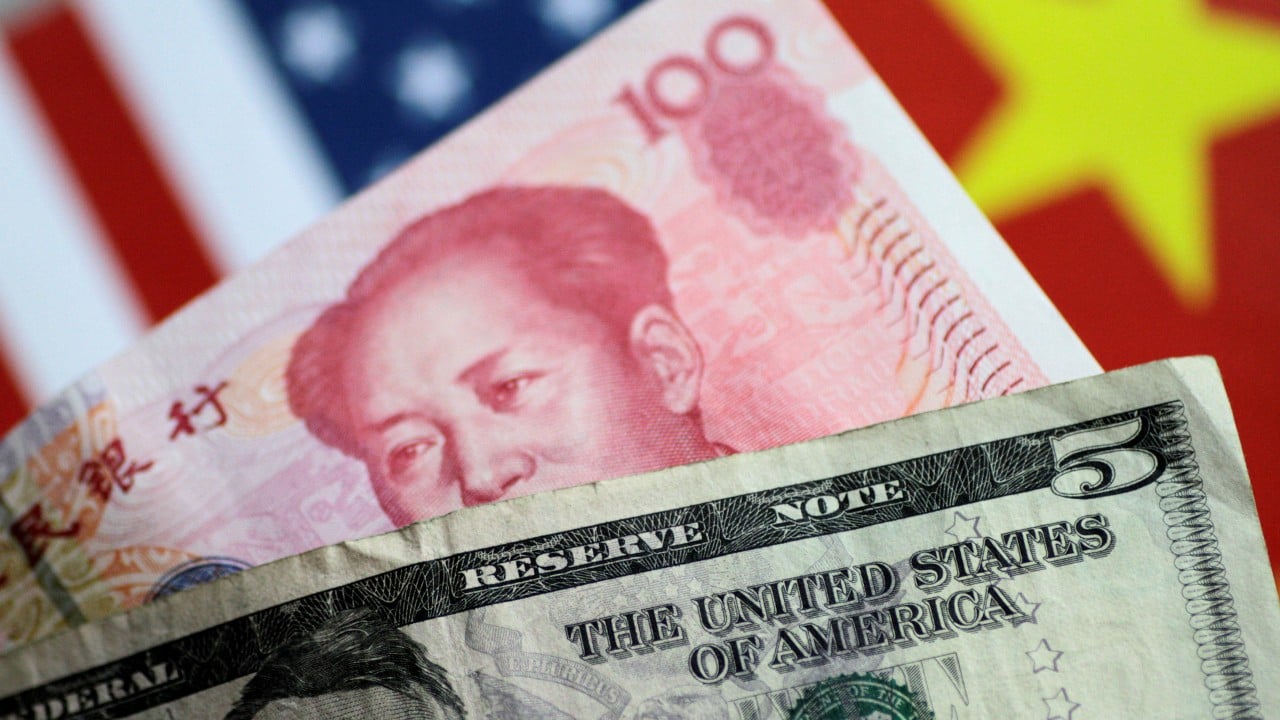
We are witnessing a slow, quiet balkanization of the financial world. Countries are actively seeking ways to bypass the greenback entirely. They are setting up direct trade mechanisms in yuan, rupees, and dirhams. They are accumulating gold at rates not seen since the mid-twentieth century.
They are doing this not out of malice, but out of sheer survival instinct. They realize that relying on a single, volatile global currency managed by a distracted superpower is like building a house on a fault line.
The red line on the Tokyo terminal continues its downward march. The factory owner in São Paulo cancels his order for new machinery, deciding to patch up his aging equipment for another year. Elena sits in her office, watching her nation's reserves tick down, calculating exactly how many days of stability she can afford to buy before the market discovers she is out of ammunition.
The world is waiting for a modern Plaza Accord, a moment of sanity where the powerful step in to stabilize the system for the collective good. They are looking at history through a romantic lens, forgetting that the conditions that allowed for that legendary compromise have evaporated into the ether.
The green wall is staying up. It is getting taller, thicker, and harder to climb. The nations of the world are realizing that the old rules no longer apply, and the architects who built the global financial system have long since left the building, leaving the rest of us to figure out how to live in the shadow of their creation.