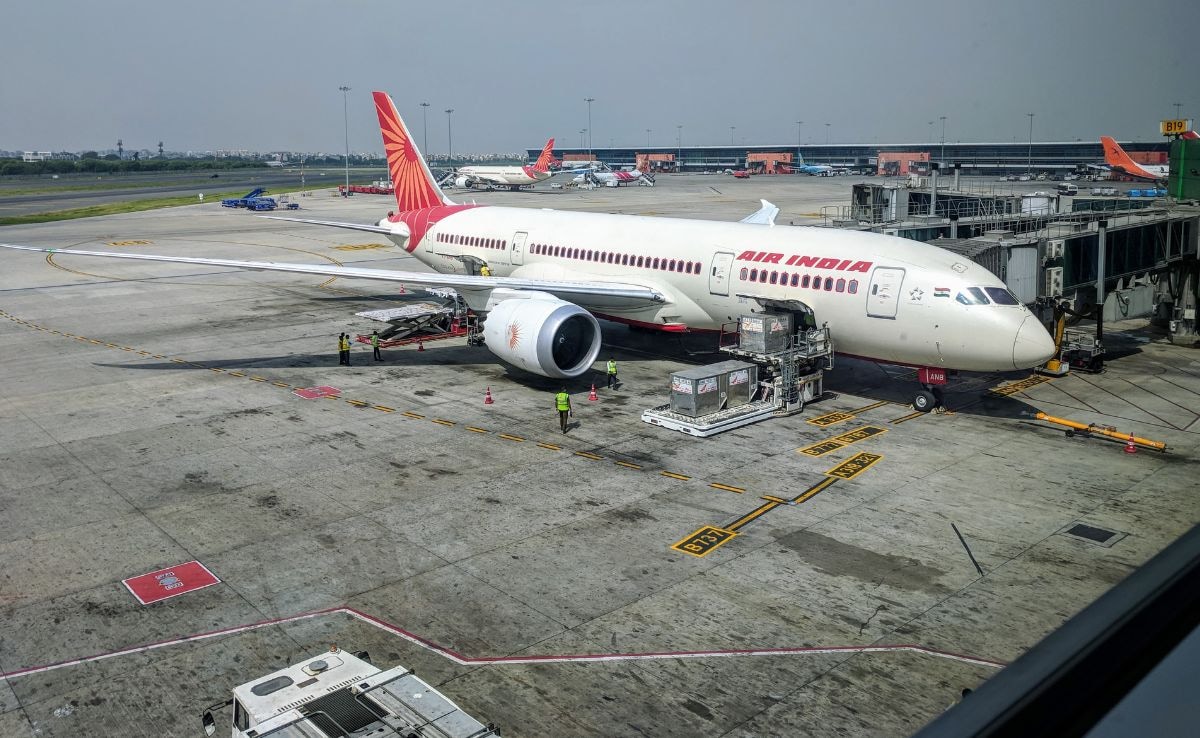
The cabin of a Boeing 787 Dreamliner cruising at 38,000 feet is an exercise in engineered serenity. Passengers sip gin and tonics, doze under synthetic blankets, or watch movies on flickering seatback screens. Outside, the air is a lethal minus fifty degrees Celsius. The aluminum and carbon-fiber tube hurtles through the stratosphere at eight hundred kilometers per hour, powered by two massive turbofan engines that swallow air and spit out fire.
To the person sitting in 22A, looking out over the endless grey expanse of the North Sea on a flight from London Heathrow to Delhi, the journey feels static. It feels like time suspended. But beneath the floorboards, a quiet revolution is burning through the fuel lines.
For decades, commercial aviation has relied on a single, unyielding Faustian bargain. We get to cross oceans in hours, but we must dig up ancient sunlight in the form of crude oil and pump it into the sky. Every flight leaves a ghost trail of carbon. Travelers feel this weight. It is the modern commuter’s guilt, a low-frequency hum of anxiety about the planet we are leaving behind, wrapped in the undeniable convenience of global travel.
Then came a quiet announcement from Air India. It did not make front-page headlines. It did not trend on social media. The airline confirmed the successful completion of a long-haul flight from London to Delhi using a blend of Sustainable Aviation Fuel—commonly known as SAF.
The report was dry. It used terms like "fully functional" and "operational parameters." But if you listen closely to the metal and the machinery, the story is entirely human.
The Anatomy of a Drop
To understand why this matters, we have to look at what happens inside the wing of an airplane.
Imagine a traditional jet engine as a highly picky eater. It doesn't just want fuel; it wants a precise molecular structure. Standard Jet A-1 fuel is a complex soup of hydrocarbons. It provides the immense energy density required to lift a 200-ton aircraft into the heavens. For years, the cynical consensus was that you couldn't change the menu without redesigning the entire kitchen.
SAF changes the menu without touching the stove.
Derived from renewable sources—cooking oil, agricultural waste, municipal solid waste, and even captured carbon—SAF is a "drop-in" fuel. This means it is chemically engineered to mimic conventional jet fuel so perfectly that the engine cannot tell the difference.
Think of it like replacing a missing puzzle piece. If the piece is carved from plastic or carved from reclaimed wood, the puzzle still fits together perfectly.
During the Air India flight, the Boeing 787’s Genx engines burned a blend containing SAF. The pilots didn't have to flip a special switch. The mechanics didn't need to install custom valves. The fuel flowed through the same stainless-steel lines, pressurized by the same pumps, and ignited in the same combustion chambers as ordinary kerosene.
It was entirely uneventful.
That uneventfulness is precisely why it is spectacular. In aviation, boring is beautiful. When nothing goes wrong, everything has gone right.
The Hidden Alchemy of the Ground Crew
Let us step away from the cockpit for a moment and stand on the tarmac at Heathrow before departure.
Consider a hypothetical fuel technician. Let's call him David. David has spent twenty-four years walking the oil-stained concrete of major airports. He knows the smell of jet fuel like he knows the scent of his morning coffee. He hooks up the heavy black hoses to the underside of the Dreamliner’s wing.
To David, the fluid pumping into the tanks looks the same, weighs the same, and flows the same as the millions of gallons he has handled before. But the origin story of that fluid is entirely different.
The carbon in conventional jet fuel was trapped underground for millions of years. When we burn it, we add brand-new carbon to the atmosphere. The carbon in SAF, however, was already here. It was in the plants that grew last year, or the cooking oil used in a kitchen last month. By converting these waste streams into fuel, we are recycling existing carbon rather than introducing ancient stores.
It can reduce lifecycle greenhouse gas emissions by up to eighty percent compared to conventional jet fuel.
But a shadow hangs over this alchemy.
The flight to Delhi ran on a blend, not pure SAF. Currently, international aviation standards limit the mix to a maximum of fifty percent SAF blended with traditional kerosene. The reason is a tiny, stubborn detail of chemistry: aromatics.
Conventional jet fuel contains specific ring-shaped molecules called aromatics. These molecules cause the rubber seals inside an airplane’s fuel system to swell slightly, creating a perfect, leak-proof barrier. Most current SAF variants lack these aromatics. If you ran a commercial flight on one hundred percent pure synthetic fuel today, those seals might shrink, and fuel could weep from the joints.
The industry is working on this. Synthetic aromatics are being developed. But for now, the path forward is a compromise. A blending dance.
The Economics of Inertia
If SAF is so remarkable, why isn't every flight powered by it? Why are we celebrating a single test run between London and Delhi instead of demanding it on every boarding pass?
The answer lies in a brutal, uncompromising truth. Money.
Right now, SAF costs between two to four times more than fossil-based jet fuel. In an industry where profit margins are razor-thin and fuel represents the single largest operating expense, that price gap is a chasm.
Airports do not have separate underground pipelines for green fuel. There are no "green pumps" at the gate. To make this work, SAF must be produced, transported to major hubs, and blended into the main fuel farm. It requires an immense logistical effort for a fraction of the total fuel volume.
Air India’s test flight wasn't just a validation of Boeing's engineering or GE's engines. It was a statement of intent. It was a willingness to absorb the cost of a premium molecule to prove that the route is viable.
When an airline flies from London to Delhi, it crosses multiple borders, navigates diverse regulatory environments, and interfaces with different supply chains. Demonstrating that a sustainable blend can be sourced, loaded, and flown across continents without a single operational hiccup is a victory over inertia.
The View from 22A
Let us return to the passenger looking out the window.
The sky looks clean from an airplane seat. The air is crisp and blue, and the clouds look like fields of pristine cotton. The environmental damage caused by flight is invisible to the naked eye. It exists in abstract numbers, in parts per million, in melting glaciers thousands of miles away.
This abstraction makes the problem incredibly difficult to solve. Human beings are wired to react to immediate threats—a sudden drop in cabin pressure, a flash of lightning outside the window. We are poorly equipped to grieve a slow, invisible warming.
The transition to sustainable flight is not about sudden, dramatic transformations. There will be no morning where we wake up and all airplanes are suddenly powered by batteries or liquid hydrogen. The physics of flight are stubborn. Batteries are too heavy; hydrogen requires entirely new aircraft architectures and massive, insulated tanks that shrink passenger cabins.
The future of travel will be built on invisible changes.
It will be built on flights like Air India’s 787, where the passengers notice absolutely nothing. The coffee tastes the same. The cabin pressure remains comfortable. The arrival time stays identical.
The only difference is the origin of the molecule that kept them aloft.
As the Dreamliner descends into the warm, hazy air of Delhi, the tires chirp against the runway. The reverse thrusters roar, slowing the massive machine to a taxi. The passengers unbuckle their seatbelts, reach into the overhead bins, and turn on their phones to text loved ones that they have arrived safely.
They walk down the jet bridge, through terminal security, and out into the bustling streets of India, entirely unaware that they were part of a quiet milestone. They do not know that the sky behind them is just a fraction cleaner than it was yesterday.
The metal has cooled. The engines are silent. In the quiet spaces between the hangar doors, the blueprint for the next century of flight has just been verified, one drop at a time.